Tesla Sinks 18% in a Month as Lucid Climbs 21%, Rivian Gains 9%: SpaceX Anxiety or Cracks Under the Hood?
Tesla is bleeding market share in investor portfolios to Lucid and Rivian even as it posts record deliveries, and the reason points to a CEO distraction that could get louder before it fades.

Shares of Tesla (NASDAQ:TSLA | TSLA Price Prediction) are trading at $308.05 in Friday afternoon action, down 4% on the day and 18% over the past month. The slide accelerated after Tuesday’s Q2 2026 report and has bled into today’s session.
Meanwhile, EV peers Lucid Group (NASDAQ:LCID) and Rivian Automotive (NASDAQ:RIVN) have moved the other way. Lucid stock is up 21% and Rivian shares are up 9% over the same month, even with all three dipping today.
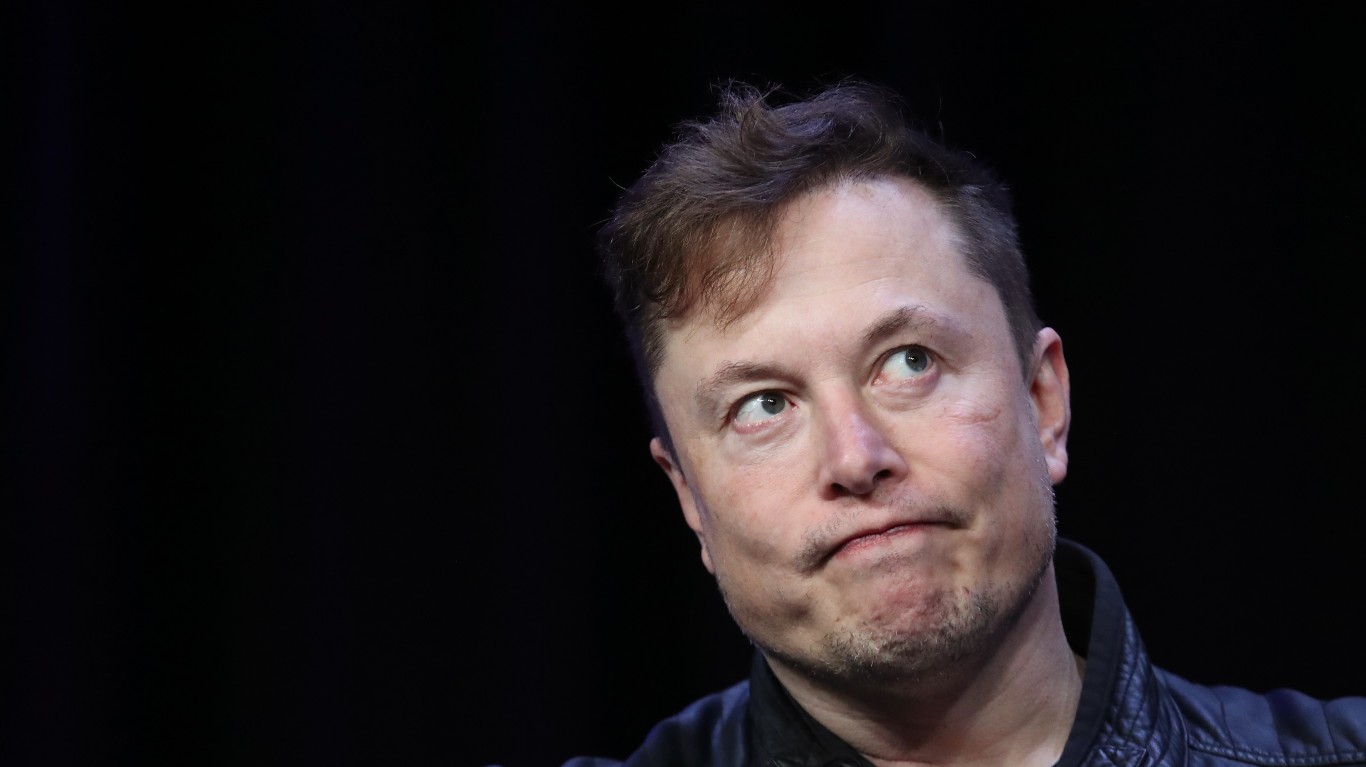
That divergence tells the story. This is a Tesla problem and, more specifically, a problem pertaining to Tesla CEO Elon Musk. There’s a lot to unpack here, as the immediate share-price mover is Tesla’s own Q2 miss, with a SpaceX (NASDAQ:SPCX) anxiety layer stacked on top.
Earnings Miss Fuels the Slide
Tesla’s Q2 2026 report delivered a tale of two results. Revenue came in at $28.24 billion, up 25.5% year over year (YoY) on record deliveries of 480,126 vehicles. However, Tesla’s adjusted EPS of $0.33 missed the $0.50 consensus, and adjusted EBITDA of $3.2 billion trailed the $4 billion bar.
The margin picture is where the cracks show. Tesla’s operating income fell 56.9% YoY to $398 million, operating margin compressed to 1%, and free cash flow flipped to negative $1.09 billion (better than the negative $3.64 billion feared). The automaker’s full-year capex is confirmed above $25 billion, funding AI infrastructure, Robotaxi, and Optimus buildouts.
Analyst price-target trims on Tesla stock followed. Canaccord cut its price target to $410 from $450 (Buy), Cantor moved to $485 from $510 (Overweight), JPMorgan to $445 from $475 (Neutral), and Morgan Stanley to $400 from $417 (Equal Weight). Still, the ratings held, signaling a show-me stance on the AI and robotics pivot rather than a wholesale downgrade.
The SpaceX Anxiety Layer
The Musk factor is undeniable. SpaceX IPO’d on June 12 at $135, peaked at $225.64 on June 16, and now trades at $113, 50% below its peak. Musk’s net worth has retreated from a $1.45 trillion June peak to about $738 billion.
Musk cited “more and more overlap” between Tesla and SpaceX and floated a combination to Reuters, though he acknowledged it would need “the appropriate process.” Polymarket assigns a 22.5% probability of a merger announcement by year-end; treat that as speculation, not a plan.
Starship Flight 13 is targeted for this evening, with Polymarket pricing 81% odds of a successful launch and 72% odds of a controlled splashdown. A Raymond James note flagged that Starship becoming operational is the critical path to the SpaceX thesis, which is why the launch outcome matters for TSLA sentiment too.
Peers Take the Rotation
Lucid stock sits at $6.24, riding Gravity SUV ramp momentum and its robotaxi partnerships with ride-hail, autonomy, and AI-chip players. Meanwhile, Rivian shares trade at $15.95, backed by raised 2026 delivery guidance of 65,000 to 70,000 units and imminent R2 customer shipments.
Reddit chatter reflects the split too, with retail investors on r/stocks weighing Tesla’s operational wins against Alphabet‘s (NASDAQ:GOOGL) cleaner AI capex narrative. The Global X Autonomous & Electric Vehicles ETF (NASDAQ:DRIV) carries heavy Tesla weighting, so anyone leaning on that fund for diversified EV exposure is effectively taking on the same Musk-specific concentration and volatility.
What to Watch
The bull case for Tesla stock still holds: record deliveries, a revenue beat, cash burn better than feared, and optionality on Robotaxi (now in 7 U.S. metros), Optimus, and FSD (1.48 million subscriptions, up 56%). The bear case is the flip side: thin operating margin, negative free cash flow, a stretched Tesla stock valuation, and Cox Automotive’s call for U.S. EV sales to fall 20% after the federal tax credit expired.
Given the crosscurrents, investors may want to size their TSLA stock positions modestly and let execution catch up to the story. Tonight’s Starship attempt, SpaceX’s first quarterly report on August 4, and the August 6 lockup expiry freeing roughly 900 million insider shares are the next scheduled catalysts.
Traders can watch for whether TSLA stabilizes above the mid-$300s, whether Rivian confirms its initial R2 customer deliveries, and whether Lucid teases its Midsize platform. Ultimately, the Tesla-to-peers rotation could persist or fail on those cues.
Contact [email protected] for any questions or corrections.
David Moadel is financial writer specializing in stocks, ETFs, options, precious metals, and Bitcoin. David has written well over 1,000 articles for leading online publications, helping investors understand markets, income strategies, and risk.His work has appeared in The Motley Fool, InvestorPlace, U.S. News & World Report, TipRanks, ValueWalk, Benzinga, Market Realist, TalkMarkets, Finmasters, 24/7 Wall St., and others.With a master’s degree in education, David has taught at the elementary, high school, and college levels. That teaching background shapes his writing style: clear, educational, and practical. David has also built a loyal social-media audience by providing trustworthy financial content on YouTube, X/Twitter, and StockTwits.