Apple’s Fight With Micron Just Took a Wild Turn — And It Could Reshape the Memory Market
Apple is lobbying Washington for permission to buy memory chips from a Chinese company blacklisted for military ties, and the reason it's willing to take that political risk reveals something uncomfortable about how Silicon Valley's most profitable company talks about…


The AI boom has transformed semiconductors from a cyclical business into one of the world’s most strategically important industries. Memory chips, once viewed as commodity components, have become a bottleneck for everything from smartphones to AI servers. That has given suppliers unusual pricing power while forcing customers to rethink their supply chains.
Nowhere is that tension more visible than in Apple‘s (NASDAQ:AAPL | AAPL Price Prediction) reported push to buy lower-cost memory from China’s ChangXin Memory Technologies (CXMT), even though the company has been blacklisted by the U.S. government because of its ties to the Chinese military and state. The dispute says as much about the future of the memory industry as it does about Apple.
Apple Wants Cheaper Memory, but the Politics Are Expensive
According to multiple media reports, Apple is lobbying the Trump administration for permission to source memory from CXMT. Buying chips from the company is reportedly not outright illegal, but doing so without government approval could expose Apple to political criticism and reputational damage because of CXMT’s placement on U.S. restricted-entity lists.
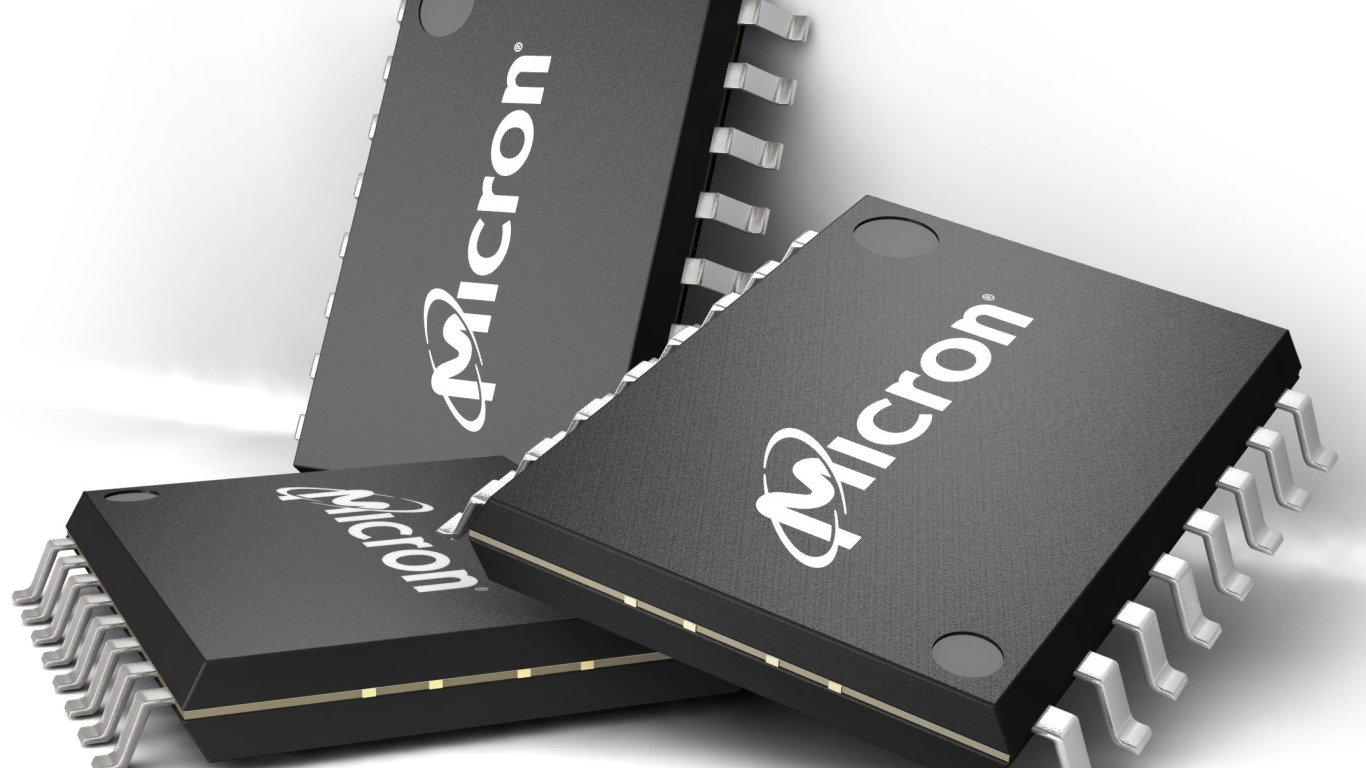
Apple’s reported argument is straightforward. It claims Micron Technology (NASDAQ:MU) is taking advantage of today’s tight memory market by charging excessive prices. That criticism comes after Micron’s gross margins climbed above 80% as AI demand continues to outpace supply.
Ironically, Apple has long been known for charging premium prices itself. Just weeks ago, CEO Tim Cook announced price increases of roughly 20% across several MacBook and iPad models, saying Apple could no longer absorb higher component costs. Cook even described today’s memory shortage as a “100-year flood” event.
That makes Apple’s accusations of price gouging harder to separate from its own efforts to protect product margins.
Micron Says Customers Created the Problem
Micron has reportedly pushed back against Apple’s proposal while lobbying the administration to reject any exemptions for CXMT.
The company’s argument is that large device makers, including Apple, spent years squeezing suppliers for lower prices. Those aggressive negotiations hurt profitability across the memory industry and discouraged investment in new manufacturing capacity. When generative AI suddenly sent demand soaring, the industry did not have enough supply.
Micron argues that today’s higher prices reflect genuine scarcity and tens of billions of dollars being invested in new fabrication plants, including major U.S. manufacturing projects supported by the CHIPS Act.
| Company | AI Memory Products | Highest-Margin Business |
| Micron | HBM, DDR5, LPDDR5X | High-bandwidth memory (HBM) |
| CXMT | DDR5, LPDDR5X, LPDDR4X, RDIMM, MRDIMM | Conventional DRAM |
That distinction matters. CXMT manufactures mainstream DRAM used in PCs, smartphones, and enterprise servers. It does not produce high-bandwidth memory (HBM), the advanced chips powering Nvidia‘s (NASDAQ:NVDA) AI accelerators.
Because HBM commands much higher prices and margins than commodity DRAM, it remains the engine behind Micron’s earnings growth.
The Bigger Story Isn’t Apple
Surprisingly, this dispute has less to do with Apple than with how valuable advanced memory has become.
Apple wants lower-cost conventional DRAM to protect margins on consumer devices. Micron wants pricing that supports years of capital spending needed to expand production. Meanwhile, the fastest-growing part of the industry — HBM — faces little competitive pressure because only a handful of companies can manufacture it at scale.
That leaves Micron in an enviable position. Even if Apple eventually receives approval to buy some lower-cost conventional memory from CXMT, it would do little to weaken Micron’s leadership in AI memory, where demand continues to outstrip supply.
Key Takeaway
In short, Apple’s reported campaign highlights the growing tension between technology companies trying to control costs and semiconductor manufacturers finally earning healthy returns after years of razor-thin profitability. Granted, Apple has every incentive to lower its bill of materials. But accusing suppliers of gouging rings hollow when Apple has long charged premium prices for its products and raised its own prices by roughly 20% while defending those increases as necessary.
For investors, the bigger investment thesis hasn’t changed. Conventional DRAM pricing may fluctuate as new suppliers emerge, but HBM remains the profit center that matters most. As long as AI infrastructure spending continues at today’s pace, Micron’s competitive advantage rests far less on commodity memory pricing than on its ability to supply the premium chips powering the AI revolution. Ultimately, that’s the market smart investors should be watching.
Contact [email protected] for any questions or corrections.
After two decades of patrolling the dark corners of suburbia as a police officer, Rich Duprey hung up his badge and gun to begin writing full time about stocks and investing. For the past 20 years, he’s been cruising the markets looking for companies to lock up as long-term holdings in a portfolio while writing extensively on the broad sectors of consumer goods, technology, and industrials. Because his experience isn’t from the typical financial analyst track, Rich is able to break down complex topics into understandable and useful action points for the average investor. His writings have appeared on The Motley Fool, InvestorPlace, Yahoo! Finance, Money Morning, and, of course, 24/7 Wall St. He has been featured in both U.S. and international publications, including MarketWatch, Financial Times, Forbes, Fast Company, and USA Today.