Micron’s 85% Gross Margin Tops Meta, Microsoft, and Google — Here’s Why It Could Climb Even Higher
A hardware company that three years ago posted negative gross margins has quietly surpassed Meta, Microsoft, and Alphabet to become the most profitable business in tech, and the reason behind that reversal reveals something unsettling about where AI's real power…

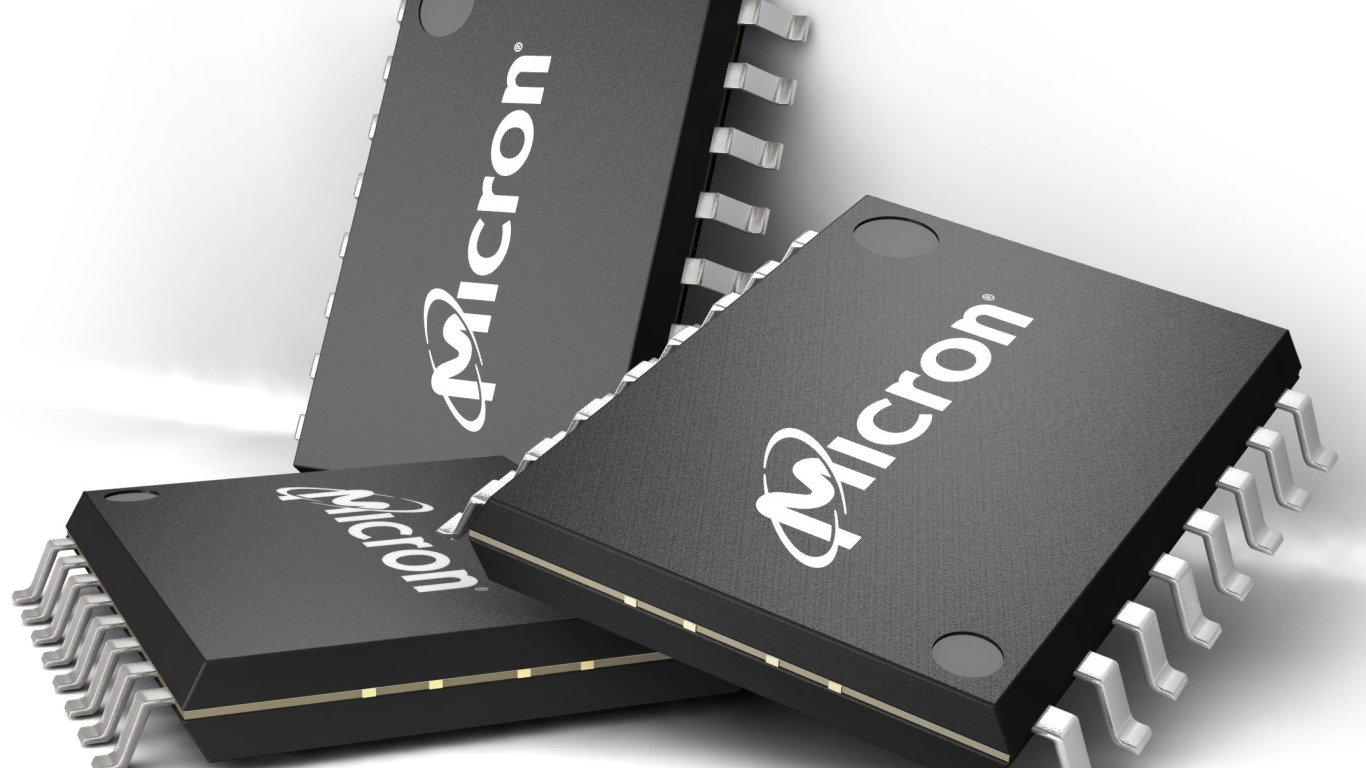
Artificial intelligence has done more than ignite a spending boom. It has reshaped who holds the pricing power across the technology industry. For years, the biggest profits flowed to software platforms and internet giants with low operating costs and recurring revenue. Today, the companies building AI infrastructure are discovering that some of the biggest winners are the suppliers making the critical components no one can do without.
That shift has turned memory maker Micron Technology (NASDAQ:MU | MU Price Prediction) into one of the AI era’s biggest beneficiaries, but it also raises an important question for investors: just how long can these extraordinary profits last?
AI Has Turned Memory Into A Strategic Asset
Meta Platforms (NASDAQ:META), Alphabet (NASDAQ:GOOG), and Microsoft (NASDAQ:MSFT) continue pouring hundreds of billions of dollars into AI infrastructure because the payoff could redefine their businesses for years to come. Those investments have also handed suppliers unprecedented leverage.
Here’s what the latest earnings reports show:
| Company | Gross Margin | Primary Profit Engine |
| Meta Platforms | ~81% | Digital advertising |
| Microsoft | ~67% | Productivity & Business Processes and Intelligent Cloud |
| Alphabet | ~61% | Search and advertising |
| Micron | ~85% | DRAM, NAND, and HBM memory |
That last figure stands out. Micron is fundamentally a hardware manufacturer, a business that historically carried far lower margins because fabrication plants cost billions of dollars to build and operate. Three years ago, the company was posting negative gross margins as excess supply crushed pricing. Today, fiscal third-quarter gross margin reached 84.9%, more than doubling from a year earlier thanks to soaring prices for AI memory.
To put that into context, Meta and Alphabet generate enormous profits from advertising, while Microsoft’s software ecosystem enjoys naturally high margins because each additional customer costs relatively little to serve. Micron, by contrast, manufactures physical chips — and yet it is temporarily earning more on every dollar of sales than all three.
Supply Constraints Have Shifted Pricing Power
The reason is simple: memory has become one of AI’s biggest bottlenecks. Only three companies — Micron, Samsung Electronics, and SK Hynix (NASDAQ:SKHY) — produce the advanced memory needed for AI servers at scale, controlling about 90% of the market. With hyperscalers racing to build data centers, supply has struggled to keep pace.
Industry pricing reflects that imbalance. High-performance memory prices have roughly doubled over the past year, while some segments have risen even more as AI demand absorbed available supply.
Ironically, Apple (NASDAQ:AAPL) has become one of the loudest critics of today’s pricing environment. CEO Tim Cook recently described memory inflation as a “hundred-year flood” and accused Micron of “gouging,” arguing that the industry needs more suppliers after rising DRAM costs pressured Apple’s margins.
Micron executives have countered that perspective by noting the memory industry spent years enduring razor-thin — or even negative — margins after aggressive customer negotiations discouraged investment in new capacity. In other words, today’s shortage is partly the result of yesterday’s pricing pressure.
The Margin Story Isn’t Over — But It Won’t Last Forever
Granted, memory has always been cyclical. Micron shares have already fallen roughly 36% from their June peak as investors worry that Micron, SK Hynix, and Samsung are all investing heavily to expand production. Eventually, those new fabs should bring supply and demand back toward equilibrium.
That said, semiconductor manufacturing doesn’t change overnight. Building advanced memory capacity takes years, not quarters. Several industry forecasts continue pointing to tight HBM supply through 2027, with some analysts expecting pricing strength to extend into 2028 before meaningful relief arrives.
Key Takeaway
In short, Micron’s industry-leading margins are unlikely to represent a permanent new normal. Memory has always been cyclical, and eventually today’s supply shortages will ease.
Regardless, that turning point does not appear imminent. AI infrastructure spending continues accelerating, capacity additions remain years from full production, and the industry’s limited number of suppliers still holds the negotiating leverage.
For investors, that means Micron’s margin advantage could persist well into next year — and perhaps beyond — even if the clock is already ticking on this remarkable chapter in memory’s long history.
Contact [email protected] for any questions or corrections.
After two decades of patrolling the dark corners of suburbia as a police officer, Rich Duprey hung up his badge and gun to begin writing full time about stocks and investing. For the past 20 years, he’s been cruising the markets looking for companies to lock up as long-term holdings in a portfolio while writing extensively on the broad sectors of consumer goods, technology, and industrials. Because his experience isn’t from the typical financial analyst track, Rich is able to break down complex topics into understandable and useful action points for the average investor. His writings have appeared on The Motley Fool, InvestorPlace, Yahoo! Finance, Money Morning, and, of course, 24/7 Wall St. He has been featured in both U.S. and international publications, including MarketWatch, Financial Times, Forbes, Fast Company, and USA Today.