Data Centers — Not Iran — Are Fueling the U.S.’s Coming Energy Crisis
Iran's conflict is spiking oil prices and rattling markets, but a quieter energy threat is already reshaping how Americans pay their utility bills, and Big Tech may be the one responsible.


Oil markets are once again reminding investors how quickly geopolitical risks can ripple through the economy. As the Iran conflict has intensified, crude oil has climbed back to roughly $100 per barrel, up about 35% in just a few weeks. According to AAA, the national average price of gasoline has risen to $4.11 per gallon, crossing the psychologically important $4 threshold that tends to weigh on consumer confidence.
Because transportation, manufacturing, and shipping all depend on petroleum, higher oil prices threaten to rekindle inflation. Yet as disruptive as this energy shock appears, it may prove to be only the opening act.
The Bigger Energy Problem Is Already Here
Higher oil prices grab headlines because consumers see them every time they fill up. But electricity is quietly becoming the scarcer resource.
According to a recent Bloomberg report, U.S. data centers are on pace to consume nearly 20% of all electricity generated in the U.S. by 2035, up from approximately 5.9% today. That would represent more than a threefold increase in electricity demand over the next decade.
Unlike gasoline demand, which tends to fluctuate with economic activity, AI data centers require around-the-clock power. Every chatbot query, AI model training run, and cloud computing workload depends on thousands of servers operating continuously.
The result is that utilities are being forced to build generation capacity at a pace not seen in decades, while transmission infrastructure struggles to keep up.
Consumers Are Already Paying The Price
The impact isn’t theoretical anymore. Across several regions, utilities have requested rate increases specifically tied to rising infrastructure costs and growing power demand from large data center projects. Consumer advocates and regulators have warned that residential customers are increasingly being asked to shoulder part of those expenses, with some households seeing electric bills double — or even triple — as utilities recover investments in new generation and transmission assets.
Ironically, this creates a second inflation problem. Oil prices raise transportation costs across the economy. Electricity inflation raises the cost of simply living.
If data centers expand from using 5.9% of America’s electricity to one-fifth of total generation, utilities will need hundreds of billions of dollars in new investment. Unless alternative power sources shoulder much of that burden, consumers could face years of rising utility bills while portions of the grid operate closer to capacity.
It’s no surprise that communities across the country are beginning to push back against proposed data center developments, citing higher utility costs, water consumption, and grid reliability.
Investors Should Watch The Companies Solving The Bottleneck
That said, the outlook isn’t entirely bleak. Many technology companies recognize that relying solely on the existing electrical grid isn’t sustainable. Instead, they’re investing directly in new sources of generation.
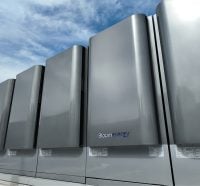
Microsoft (NASDAQ:MSFT | MSFT Price Prediction), Amazon (NASDAQ:AMZN), Google, Oracle (NYSE:ORCL), and Meta Platforms (NASDAQ:META) have all announced investments or partnerships involving advanced nuclear power, small modular reactors, geothermal energy, hydrogen fuel cells, or large-scale battery storage. Their goal isn’t simply cleaner energy — it’s securing reliable electricity without overwhelming local utilities.
The AI boom isn’t just creating winners in semiconductors. It’s expanding opportunities across nuclear technology, electrical equipment manufacturers, utilities, hydrogen infrastructure, and grid modernization companies.
Granted, these projects require years to develop, while AI demand continues growing today. That timing mismatch explains why the political backlash against new data centers could intensify before additional generating capacity comes online.
Key Takeaway
In short, the Iran conflict may be driving today’s inflation fears, but AI infrastructure could become tomorrow’s larger energy challenge.
Oil prices can retreat as geopolitical tensions ease. Electricity demand from AI data centers is moving in the opposite direction, with Bloomberg projecting they could consume 20% of U.S. power generation by 2035. That trend is already influencing utility rates, sparking opposition to new developments, and forcing the technology industry to invest billions in alternative energy sources.
Ultimately, smart investors should look beyond the daily movements in oil prices. The more durable investment theme may be the companies building the power infrastructure that AI will require over the next decade. If they succeed, they’ll relieve pressure on both consumers and the electric grid. If they don’t, electricity — not gasoline — could become the defining energy story of the AI era.
Contact [email protected] for any questions or corrections.
After two decades of patrolling the dark corners of suburbia as a police officer, Rich Duprey hung up his badge and gun to begin writing full time about stocks and investing. For the past 20 years, he’s been cruising the markets looking for companies to lock up as long-term holdings in a portfolio while writing extensively on the broad sectors of consumer goods, technology, and industrials. Because his experience isn’t from the typical financial analyst track, Rich is able to break down complex topics into understandable and useful action points for the average investor. His writings have appeared on The Motley Fool, InvestorPlace, Yahoo! Finance, Money Morning, and, of course, 24/7 Wall St. He has been featured in both U.S. and international publications, including MarketWatch, Financial Times, Forbes, Fast Company, and USA Today.