Elon Musk Spent Months Trying to Cut Government Spending. Now He Says The Treasury Should Just “Issue People Checks”
The man who spent months wielding a chainsaw against federal spending told The Economist the Treasury should start writing checks to everyone. What happened between DOGE and that Gigafactory interview is a stranger story than the headline suggests.

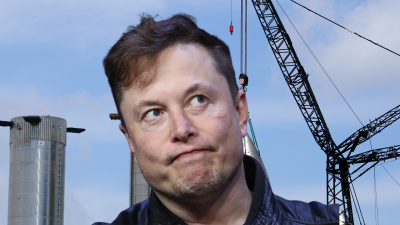
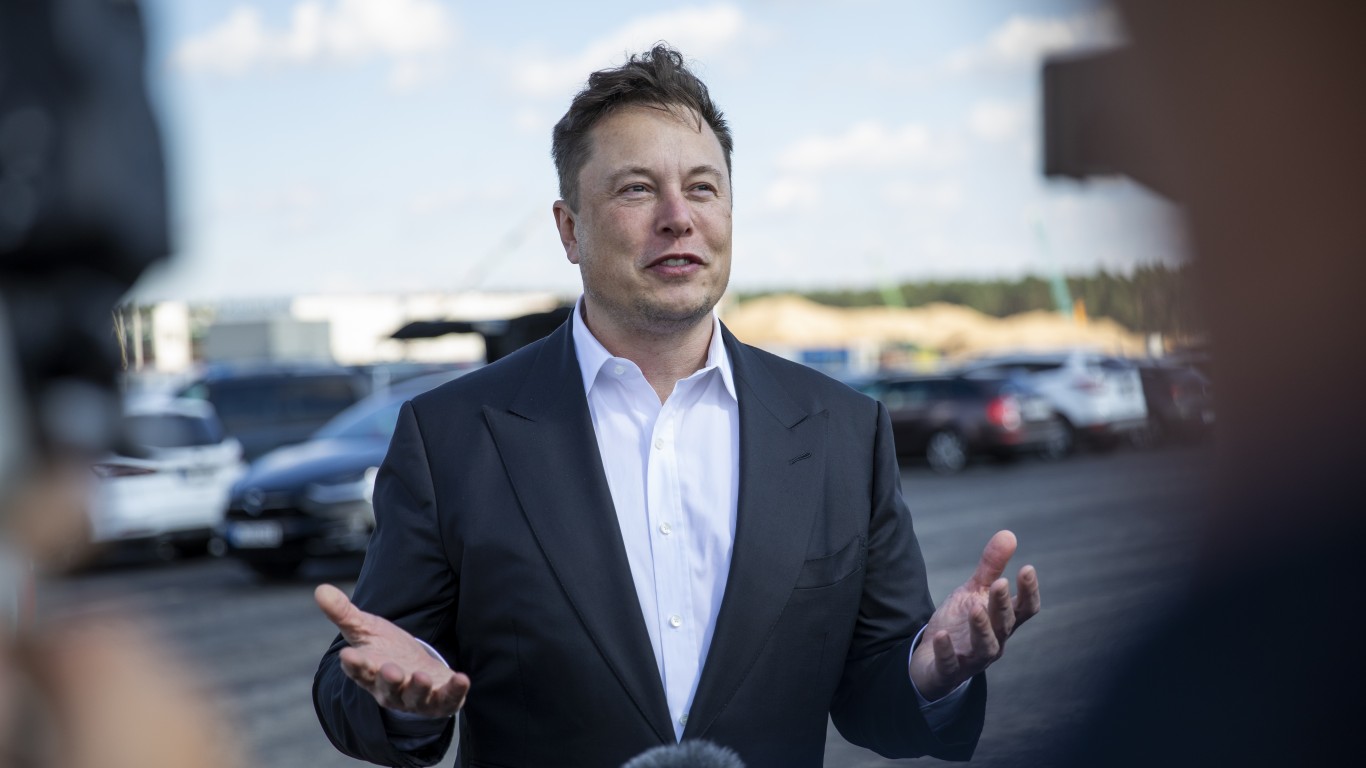
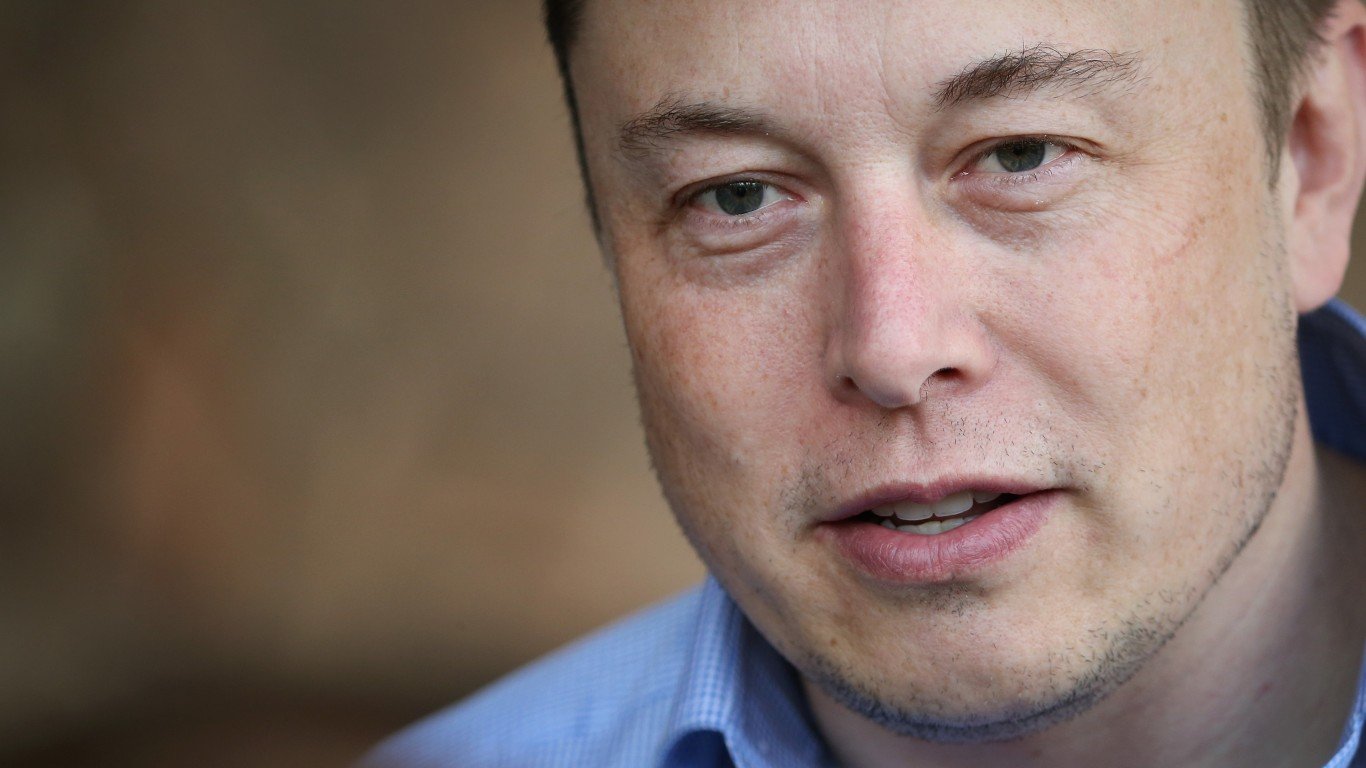
In a wide-ranging interview with The Economist’s Zanny Minton Beddoes, filmed at the Tesla (NASDAQ:TSLA | TSLA Price Prediction) Gigafactory in Texas, Elon Musk offered a prescription for the American economy that would have been unrecognizable coming from him a year ago. “I think the treasury should just simply issue people checks,” he said. This is the same person who, from January 20, 2025 until his May 28, 2025 departure, ran the Department of Government Efficiency with a mandate to take a chainsaw to federal outlays.
From $1 Trillion in Cuts to a Universal Payout
DOGE launched with an audacious target: $2 trillion in federal spending cuts. That was later lowered to approximately $1 trillion. By the time Musk walked away roughly four months in, DOGE was claiming $215 billion in total savings through workforce reductions, canceled office leases, and terminated grants. Analysts found many of those figures overstated, temporary, or unverifiable. An August 6, 2026, report from the nonpartisan Government Accountability Office reviewed $110.34 billion of those claimed savings and found that significant portions could not be independently confirmed. In one telling example, DOGE claimed $113 million from lease cuts but the GAO found the actual verifiable figure was $53.5 million. For fiscal year 2026 specifically, only about $5.02 billion in savings could be independently verified.
The macro scoreboard was worse. During the relevant period, federal outlays rose from roughly $7.135 trillion to $7.558 trillion, about a 6% increase, because most federal spending is entitlement-driven and requires congressional action that DOGE could not unilaterally take. DOGE did produce what has been described as the largest peacetime federal workforce reduction on record, with more than 260,000 federal employees leaving through layoffs, forced buyouts, and early retirements. But it did not bend the spending curve. By November 2025, the Office of Personnel Management director publicly confirmed that DOGE no longer existed as a centralized entity, with OPM absorbing most of its remaining functions. The formal charter expired on July 4, 2026.
The New Frame: “Universal High Income”
The reasoning behind the check-writing pitch is technological. Musk told The Economist that “work is going to be optional” and that artificial intelligence “will be able to do any job better than any person can do that job.” He labeled the destination “universal high income,” explicitly distinguishing it from universal basic income. He also predicted “deflation will be the issue, not inflation” as AI reshapes production, and added that “money won’t matter in 2036” once robots and AI produce more goods and services than any person could consume. The 85-minute interview, part of The Economist’s Insider series, is striking for how far it goes: Musk framed the check-writing idea not as a policy proposal but as an inevitable consequence of AI abundance.
That deflation call runs against the current data. M2 money supply sits at $23.05 trillion as of May 1, 2026, in the 90.9th percentile historically. The personal savings rate has fallen from 6.2% in 2024 Q1 to 3.9% in 2026 Q1. Consumer sentiment printed at 44.8 in May 2026, below the 60 recessionary threshold. The Treasury General Account, from which any such checks would flow, closed at $877,201 million on July 23, 2026.
This Is Not a New Idea for Musk
The Economist interview is best understood as the latest in a long series of similar statements rather than a sudden reversal. At the UK AI Safety Summit in 2023, Musk told then-Prime Minister Rishi Sunak that AI would produce “universal high income” and could make jobs optional. At the VivaTech conference in Paris in 2024, he repeated the framing. On March 11, 2026, he appeared remotely at the Abundance Summit in Los Angeles and told XPRIZE founder Peter Diamandis that he expected “universal high income” as AI and robots drove deflationary abundance. The “universal high income via checks” line even has a DOGE-era prequel: during Musk’s tenure, a proposal circulated that imagined payments of as much as $5,000 per tax-paying household, contingent on DOGE meeting its original savings targets. That proposal never became law.
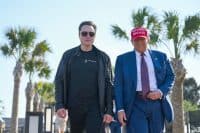
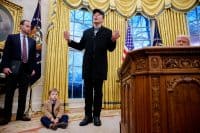
Since this article was first published in late July, Musk has continued to amplify the idea. On September 29, 2026, he stood at the White House alongside President Trump and other technology executives after signing the White House Accord on Super Intelligence. Asked about AI and jobs, he told reporters: “I think by far the most likely outcome is an age of abundance where we don’t have just universal basic income; we have universal high income.” The International Monetary Fund has estimated that AI will affect roughly 40% of jobs worldwide, and has warned that gains tend to flow to those who own the capital behind the models, chips, and data centers. Musk offered no detail on funding mechanisms or eligibility criteria in any of these statements.
His Own Tax Bill
Musk framed his own relationship to redistribution in the Economist interview. He said he currently pays about 45% in taxes, that another roughly 45% will go to taxes at death, leaving him “a quarter of whatever I have.” He also claimed to have “set a record for the most amount of taxes ever paid by a human,” predicted he would ultimately “pay many trillions in tax,” and added that he is “fine with that.” The focus on his own tax burden is notable given that the “universal high income” concept has no identified funding source.
What Changed
The through line between DOGE and the Gigafactory interview is a shift in frame, not a change in worldview. In 2025, Musk approached the federal budget as an efficiency problem: too much spending, too many employees, too many leases. In the Economist interview, he approaches it as a distribution problem in a post-scarcity economy: too much output, not enough claimants. Those two frames are not as contradictory as they sound. A government stripped of bureaucratic overhead could, in theory, become a cleaner mechanism for writing checks. Whether that logic gains traction in Washington’s fiscal 2027 budget debate, or remains a Gigafactory soliloquy from the world’s richest AI investor, is the question worth watching.
Editor’s note: This article has been updated to reflect the GAO’s August 2026 audit finding that significant portions of DOGE’s $215 billion in claimed savings could not be independently verified, DOGE’s formal July 4, 2026 charter expiration, and Musk’s September 29, 2026 White House remarks reaffirming his “universal high income” prediction alongside other technology CEOs signing the White House Accord on Super Intelligence.
Contact [email protected] for any questions or corrections.
AJ spent 10 years writing about financial markets at The Motley Fool. His coverage centers on technology stocks and the broader macroeconomic trends, from interest rates to geopolitics, that shape where markets are headed next. AJ is drawn to the stories where big-picture economics and individual companies collide.