Elon Musk Predicts ‘Money Won’t Matter in 2036.’ Is This His Worst Prediction Yet or Prophetic?
Elon Musk told a crowd at Tesla's Texas Gigafactory that currency itself will become pointless within a decade, and economists are lining up on both sides of whether that claim deserves serious analysis or a spot on his list of…

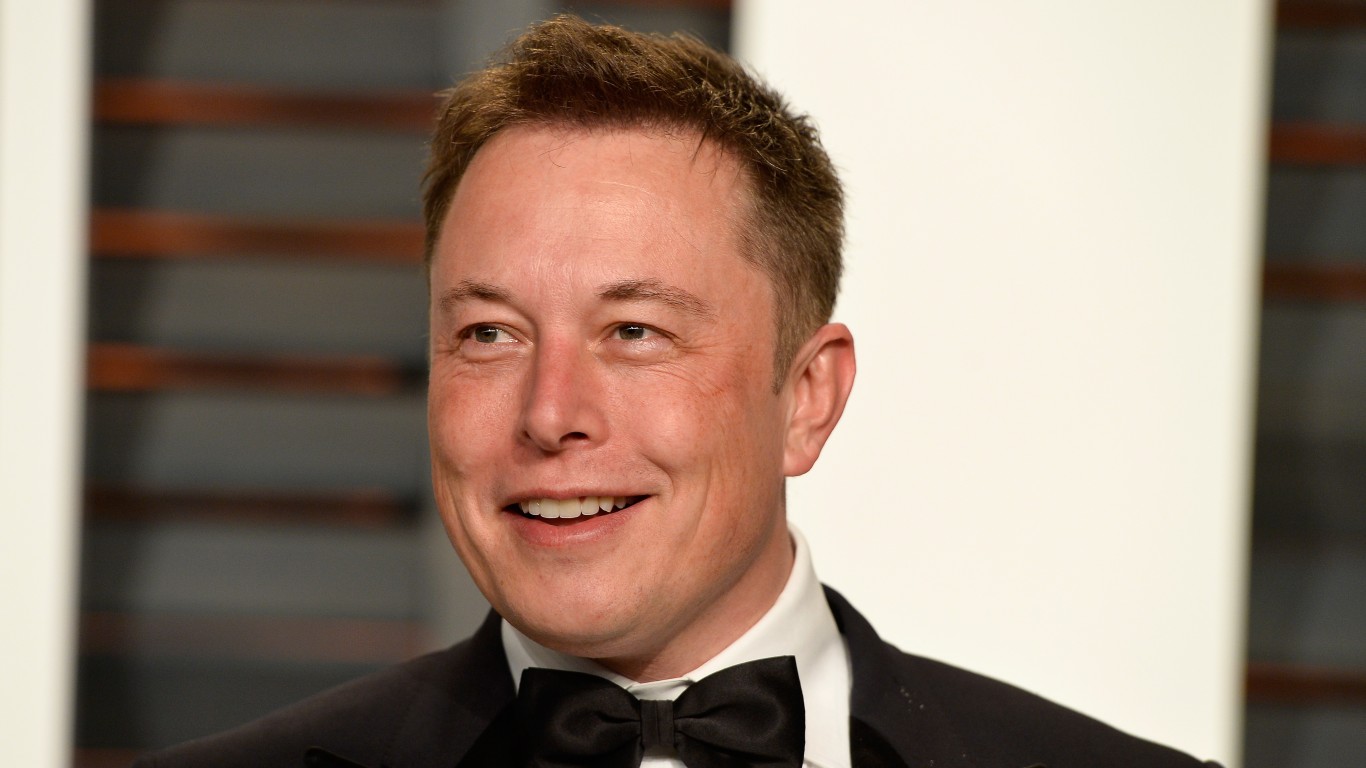
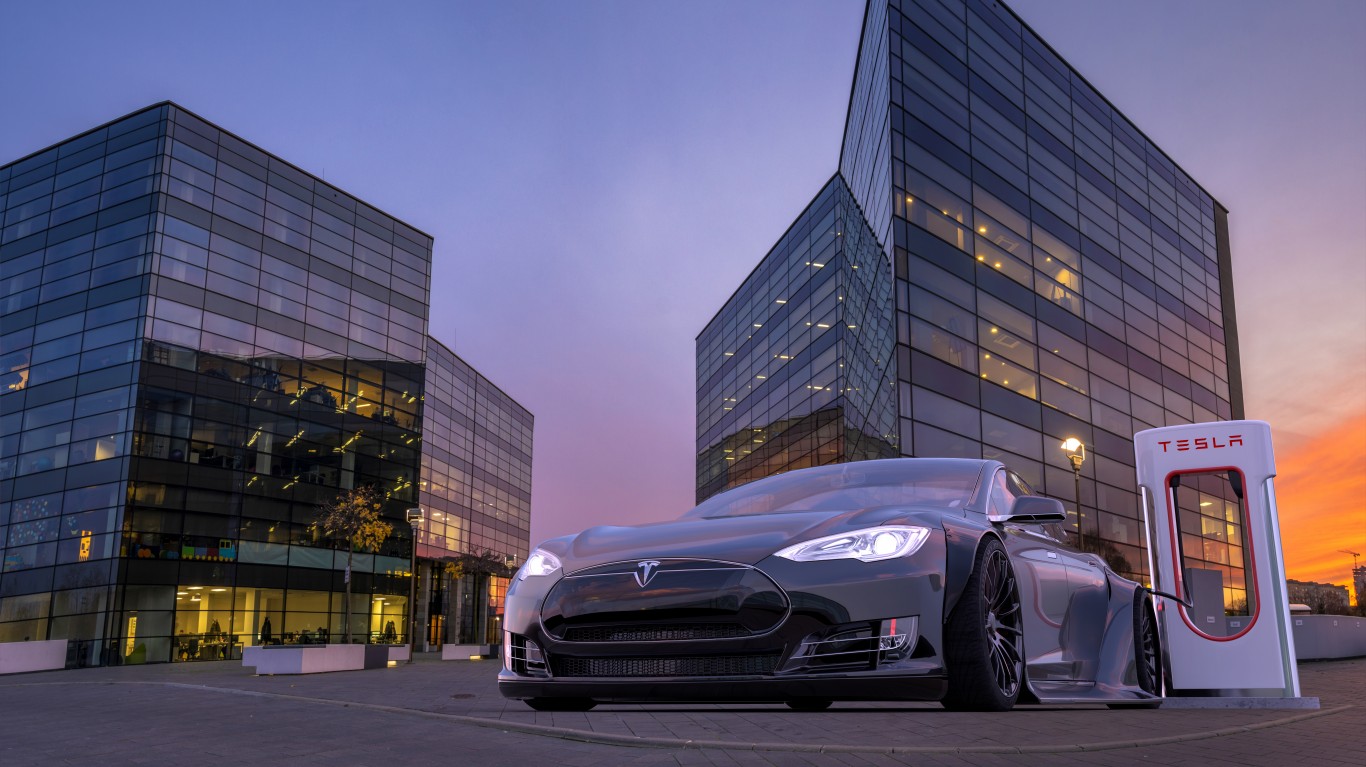
Tesla (NASDAQ:TSLA | TSLA Price Prediction) CEO Elon Musk claimed at the company’s Texas Gigafactory in late July that “Money won’t matter in 2036.” AI and humanoid robots will drive the cost of core needs so low that currency becomes obsolete, asking AI will exceed “the sum of human intelligence within five years.” “You want money for food, housing, transport, entertainment. If that is so abundant, what do you need money for in that case?” The question for investors is whether this is a prescient prophecy or another wildly optimistic timeline.
The forecast assumes no “World War 3,” and expects deflation rather than inflation. Musk floated government “universal high income” payments and conceded that the transition would be “bumpy.” So, will money actually be irrelevant in 10 years?
The Case Money Might Actually Stop Mattering
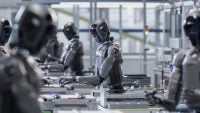
Musk’s abundance thesis rides on humanoid robots collapsing labor costs. Tesla’s Optimus has first-generation production lines being installed at Fremont, and Musk has publicly stated that he wants 80% of Tesla’s long-term value to come from Optimus.
Tesla just posted record Q2 2026 deliveries of 480,126 vehicles and grew its revenue by 25.5% year over year (YoY) to $28.24 billion, per the automaker’s Q2 2026 earnings filing. Active Full Self-Driving (FSD) subscriptions reached 1.48 million, up 56% YoY, and the robotaxi service runs across seven U.S. metros.
Why This Could Be Musk’s Worst Prediction Yet
Economists including Tyler Cowen and Noah Smith argue that cheap manufactured goods do not end scarcity; it shifts to status goods, prime real estate, and people’s limited attention, all of which money still rations. Furthermore, Musk’s track record on timelines is uneven; he has predicted that work will become “optional” within roughly 10 to 20 years, and forecast that robots would outnumber human surgeons within a decade, but Optimus itself has faced repeated production delays. Polymarket assigns only a 14.5% probability that Tesla releases Optimus by December 31.
Besides, Core Personal Consumption Expenditures (PCE) climbed to 130.27 in June, and unemployment sits at 4.2%. While 2036 is still a long way out, the current conditions are hardly the deflationary, jobless future that Musk describes.
Robotics Stocks to Watch
Still, investors may still be interested in robotics stocks, especially if they concur with Musk’s thesis that humanoid robots will reduce labor costs. So, here are a few robotics stocks to watch in 2026.
Teradyne (NASDAQ:TER) is the established large-cap with a collaborative-robot and automation segment. Teradyne stock is up 102% year to date (YTD) with a trailing P/E ratio of 53.87x. CEO Greg Smith stated Q3 2026 guidance reflects “robust AI-related demand.”
Symbotic (NASDAQ:SYM) automates warehouses and counts Walmart as a marquee customer. Symbotic stock is down 21% YTD with no trailing 12-month P/E ratio because the company isn’t profitable on a trailing 12-month timeline, making SYM stock a more speculative bet.
Serve Robotics (NASDAQ:SERV) operates sidewalk delivery and hospital robots across 44 cities. Serve Robotics stock is down 46% YTD; the company is unprofitable on a trailing 12-month horizon, and it’s the smallest, most volatile name in the group.
The ROBO Global Robotics & Automation Index ETF (NYSEARCA:ROBO) holds more than 80 positions across industrial automation and AI semiconductors. The ETF is up 21% YTD with a trailing 12-month P/E ratio of 30.96x, and Tesla itself sits at just 0.96% of net assets.
The Takeaway
Musk’s 2036 abundance call may prove directionally right and chronologically off, fitting his pattern. The physical AI thesis is real, capital is flowing, and Teradyne’s numbers back the demand story. However, currency-eliminating post-scarcity within a decade requires a productivity leap that no serious economic dataset currently signals.
Investors interested in the robotics theme can weigh exposure across the risk spectrum: the ROBO ETF for diversification, Teradyne shares as a more proven operator, and speculative names like Symbotic and Serve Robotics for higher-variance bets. Position sizing should reflect that Musk’s timelines have historically slipped, even when his direction proves right.
Additionally, investors can stay tuned for Optimus production milestones from Tesla through the back half of the year, take note of robotaxi expansion beyond the current seven metros, and check for whether Teradyne’s 2027 growth commentary holds up. Ultimately, these data points may say more about the timeline than any interview could.
Contact [email protected] for any questions or corrections.
David Moadel is financial writer specializing in stocks, ETFs, options, precious metals, and Bitcoin. David has written well over 1,000 articles for leading online publications, helping investors understand markets, income strategies, and risk.His work has appeared in The Motley Fool, InvestorPlace, U.S. News & World Report, TipRanks, ValueWalk, Benzinga, Market Realist, TalkMarkets, Finmasters, 24/7 Wall St., and others.With a master’s degree in education, David has taught at the elementary, high school, and college levels. That teaching background shapes his writing style: clear, educational, and practical. David has also built a loyal social-media audience by providing trustworthy financial content on YouTube, X/Twitter, and StockTwits.