Trump Blasts Oil Companies For Making “Too Much Money” During Iran Conflict As Chevron and Exxon Profits Skyrocket
Trump is furious at the oil companies profiting from a war his own administration is fighting, and now a DOJ probe and a possible export ban are putting billions in quarterly earnings directly in the crosshairs.


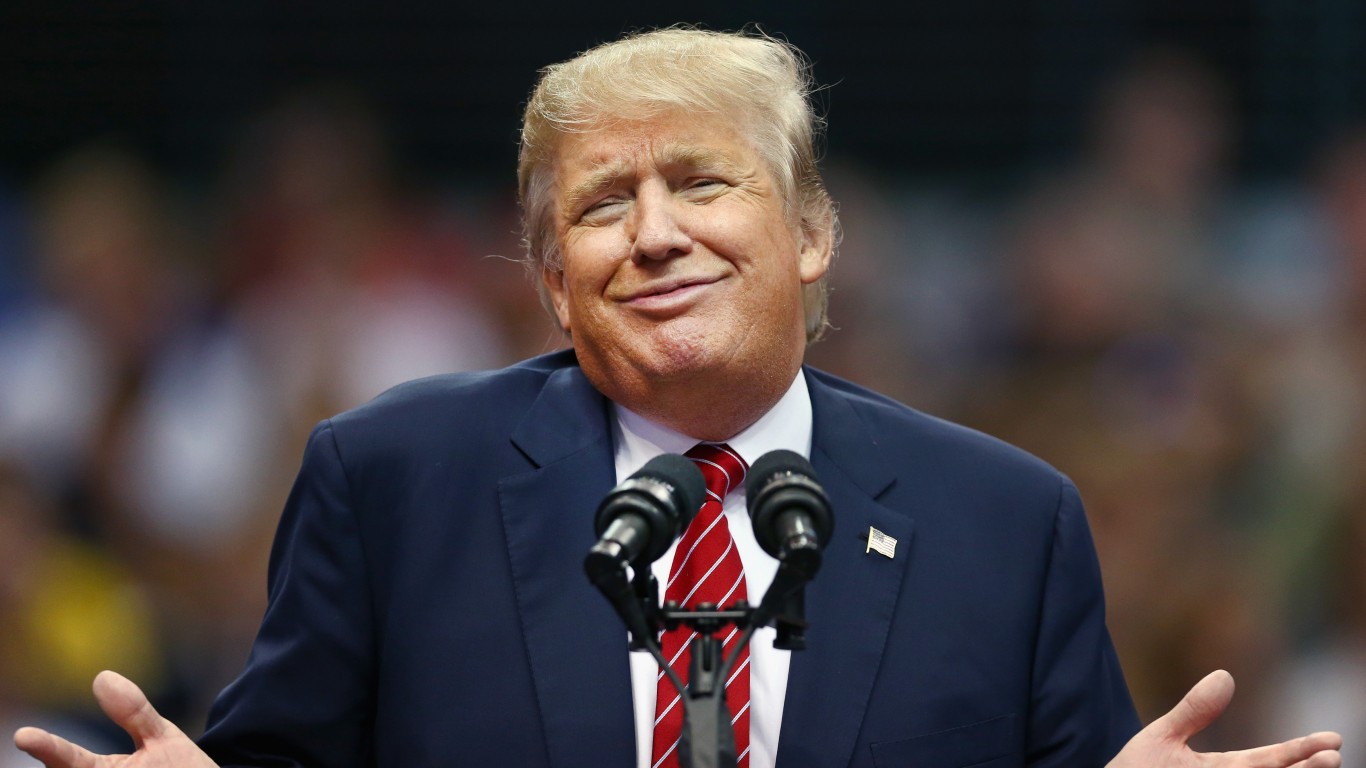
The two largest American oil companies just booked a combined $26.5 billion in second-quarter net income, their strongest showing in years, and the president is furious about it. “They’re making too much money,” President Trump said Monday, according to CNBC. “I don’t like it.” A fuller version relayed by France 24: “I don’t like it. They’re making too much money, okay? Based on a shortage, they’re making too much money.” The shortage he refers to is one his own administration is helping create.
Chevron (NYSE:CVX | CVX Price Prediction) posted roughly $12.1 to $12.2 billion in net income, up about 384% from $2.5 billion a year earlier, aided by the Hess integration that lifted worldwide production to 4,070 MBOED. Downstream did the heavy lifting: refining profit jumped to $4.9 billion from $737 million, with 97% U.S. refinery utilization and record crude throughput. Exxon Mobil (NYSE:XOM) delivered $14.5 billion in net income, double the year-ago quarter and its best result since the post-Ukraine-invasion spike. Its refining arm earned $5.5 billion after losing $1.3 billion in the first quarter. CFO Neil Hansen has flagged that the binding constraint has shifted from crude to the shrinking availability of refined products like gasoline and diesel.
That constraint traces to the war. The U.S.-Israel conflict with Iran began February 28, 2026. Iran declared the Strait of Hormuz “closed” starting March 4, a chokepoint carrying roughly 20% of global oil trade. The EIA later assessed that Persian Gulf producers shut in 10.5 million barrels per day in April, driving Brent to $138.21 on April 7. Prices have since eased, with WTI at $84.25 on July 27, but the refined-product squeeze remains. Middle East refinery outages, lost Russian capacity from the Ukraine war, and China’s tight export posture have all compounded the crunch. The U.S. national average pump price reached $4.11 on July 31, versus roughly $2.93 a month before the war intensified.
On June 24, Trump accused Exxon, Chevron, Shell, and BP of price gouging and ordered a Department of Justice investigation, arguing crude had fallen roughly 36% without pump prices following. Six weeks later, crude is elevated because of a war his administration is prosecuting, and he objects to that too. In June the complaint was that oil companies were not passing along cheaper crude. In August the complaint is that they are cashing in on genuinely expensive crude. Chevron CFO Eimear Bonner and the American Petroleum Institute pushed back in June, citing the lag between crude and retail prices.
The DOJ probe appears still live, and a crude export ban is reportedly no longer being dismissed. Chevron has warned that restricting exports would discourage investment and ultimately shrink future supply. Trump has meanwhile stuck to a $2.25-per-gallon target, a level last seen during the pandemic driving collapse, a benchmark difficult to reproduce under wartime conditions. Investors have voted with capital: XOM is up 43.65% over the past year, CVX up 35.24%.
The same day, per Bloomberg, Trump separately criticized Chevron’s CEO for not sufficiently praising the administration’s pro-fossil-fuel policies. The signal to watch over the next quarter is whether the DOJ probe produces a subpoena, or an actual export restriction lands. Either would turn a personal grievance into policy that reshapes the barrel.


Contact [email protected] for any questions or corrections.
AJ spent 10 years writing about financial markets at The Motley Fool. His coverage centers on technology stocks and the broader macroeconomic trends, from interest rates to geopolitics, that shape where markets are headed next. AJ is drawn to the stories where big-picture economics and individual companies collide.