Bill Ackman Says Mamdani’s New $500 Million Tax Could Sink NYC High-End Property Values by Up to 18%
Bill Ackman ran the math on New York City's new pied-à-terre tax and arrived at a number that should alarm Mayor Mamdani far more than any hedge fund tweet.

This post may contain links from our sponsors and affiliates, and Flywheel Publishing may receive compensation for actions taken through them.
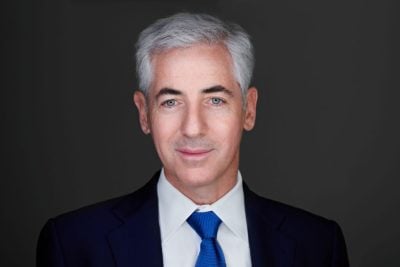
On Saturday, August 1, 2026, hedge fund manager Bill Ackman took to X with a back-of-envelope calculation aimed squarely at New York’s newest revenue experiment. His claim: Mayor Zohran Mamdani’s $500 million pied-à-terre tax on non-resident luxury property owners could shrink the value of the very properties it targets by 7.5% to 18.75%. If Ackman is right, the policy would erode its own tax base before the first full year of collections closes.
What the Tax Actually Does
The measure, announced by Mamdani and Governor Kathy Hochul and passed by the state legislature on May 27, 2026, is New York’s first statewide pied-à-terre tax. It applies to one-to-three-family homes, condos, and co-ops valued above $5 million where the owner’s primary residence sits outside New York City. Single-family homes above that line face a 0.8% to 1.3% surcharge; condos and co-ops carry stiffer tiers, running 4% between $1 million and $3 million, 5.25% between $3 million and $5 million, and 6.5% above $5 million. Hochul’s office estimates roughly 13,000 properties, about 0.4% of city housing, will be hit, though about 31,000 properties out of a roughly 960,000-property citywide database clear the valuation threshold. The Department of Finance has already mailed 17,000 letters instructing owners to pay or contest, with an exemption-application deadline of September 18, 2026.
Ackman’s Cap-Rate Math
Ackman’s argument runs through standard real estate valuation logic. A permanent annual cost added to ownership, he wrote, gets capitalized into the asset price. He estimates the 5% surcharge on assessed value translates to roughly 0.3% to 0.75% of market value each year. Divide that annual drag by an assumed 4% capitalization rate, and the present-value hit lands in the 7.5% to 18.75% range. It is a model, not a market forecast: the assumed cap rate, the pace of behavioral response, and the mix of properties actually caught by the tax could each move the answer. But the framing is what stings. If prices fall, so does the assessed base, and so does the recurring surcharge the city expects to collect.
The Revenue Fight Is Already Live
The Mamdani administration projects roughly $500 million a year. The city comptroller’s office pegs the figure closer to $340 million to $380 million once residency restructuring, rentals, and exclusions are baked in. That institutional gap gives Ackman’s self-defeating-tax framing some quiet echo inside city government itself, even if no one on payroll is willing to endorse an 18.75% price shock.
Not a One-Off Fight
Ackman has been a repeat critic since the proposal surfaced. He recently defended Ken Griffin’s $238 million New York penthouse against Mamdani’s broader vacant-home rhetoric, arguing “we should be applauding Ken” rather than penalizing wealthy owners. The back-and-forth has become a defining public feud of Mamdani’s early term.
The Counterpoint
Not everyone buys the alarm. Forbes writer Giacomo Tognini argued on July 31, 2026, that the tax will “barely dent” billionaire fortunes in practice. Scale supports that read at the aggregate level: citywide real estate taxes generated $39.6 billion in 2025, nearly half of the city’s local tax revenue, per the Real Estate Board of New York. Against that base, the pied-à-terre take is a rounding error. The question Ackman is really posing is whether that rounding error carries a much larger signaling cost, one that shows up in the next Case-Shiller reading for Manhattan luxury and in the comptroller’s revised revenue tables next spring.
Contact [email protected] for any questions or corrections.
Joel South covers large-cap stocks, dividend investing, and major market trends, with a focus on earnings analysis, valuation, and turning complex data into actionable insights for investors.
He brings more than 15 years of experience as an investor and financial journalist, including 12 years at The Motley Fool, where he served as an investment analyst, Bureau Chief, and later led the Fool.com investing news desk. He has also co-hosted an investing podcast and appeared across TV and radio discussing market trends.