GE Vernova Set to Be Biggest Winner From AI Data Center’s Massive Power Shortfall
Building faster chips turned out to be the easy part of the AI buildout. The real bottleneck has sent investors hunting for a winner in a completely different industry, and one company already controls the market for the solution Morgan…

The artificial intelligence investment boom has created an unexpected reality: building the world’s fastest chips is no longer the hardest part of expanding AI infrastructure. Finding enough electricity to power those chips has become the new challenge.
Utilities are racing to expand generation, electricity prices are climbing in many regions, and communities are pushing back against the rapid construction of power-hungry data centers. New York even became the first state to impose a one-year moratorium on new data center construction.
As investors look for the next phase of the AI buildout, the companies supplying electricity — not semiconductors — may offer a bigger opportunity.
AI’s Biggest Constraint Isn’t Chips — It’s Power
Morgan Stanley believes U.S. data centers will require another 68 gigawatts (GW) of electricity between 2026 and 2028. Yet the investment bank estimates projects already under construction account for only 15 GW, while another 15 GW is covered through available or contracted grid capacity. That leaves a 38 GW gap before any alternative solutions are considered.
To put that into perspective, GPUs sitting in idle data centers generate no revenue. AI infrastructure only produces returns when electricity is available to run it. Power has become the scarce resource.
Morgan Stanley modeled several ways the industry could narrow that gap:
| Solution | Estimated Capacity |
| Natural gas turbines | 15 GW to 20 GW |
| Fuel cells | 5 GW to 8 GW |
| Co-located nuclear plants | 3 GW to 5 GW |
| Repurposed Bitcoin mining sites | 10 GW to 19 GW |
Even after assigning probabilities to each solution, Morgan Stanley’s base case still leaves a 1 GW to 11 GW supply deficit through 2028.
That matters because even a narrow shortfall means some planned AI deployments will likely face delays, higher construction costs, or cancellation. It also points to tighter regional electricity markets, higher wholesale power prices, greater demand for behind-the-meter generation, and a faster shift toward facilities that already have grid access.
Why GE Vernova Has The Strongest Position
Every company helping solve this bottleneck stands to benefit, but not every solution carries the same weight.
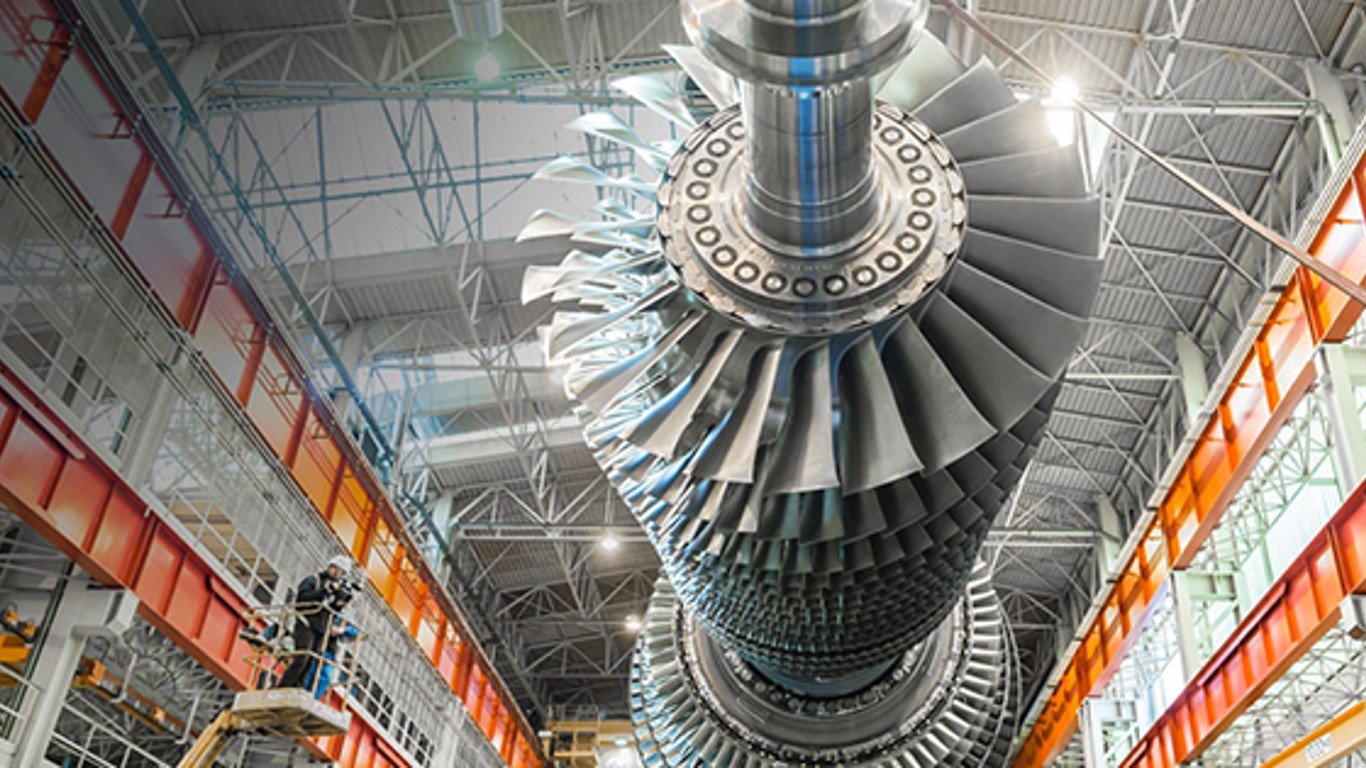
Morgan Stanley’s analysis identifies natural gas turbines as the largest contributor toward closing the power gap. That makes GE Vernova (NYSE:GEV | GEV Price Prediction) the clearest beneficiary because it dominates the market for large-frame gas turbines and already has a multiyear order backlog driven in part by data center demand.
Other companies also fit the theme.
| Company | Why It Benefits |
| Bloom Energy (NYSE:BE) | Fuel cells can be deployed faster than waiting years for grid interconnections. |
| Constellation Energy (NYSE:CEG), Vistra (NYSE:VST), Talen Energy (NYSE:TALO) | Existing nuclear fleets make co-location with hyperscale data centers possible. |
| Core Scientific (NASDAQ:CORZ), IREN (NASDAQ:IREN), Cipher Mining (NASDAQ:CIFR) | Existing grid connections at Bitcoin mining facilities can be converted to AI computing campuses. |
Ironically, some of the biggest AI infrastructure winners may not be AI companies at all. Owners of existing power assets suddenly possess something every hyperscaler desperately needs: electricity that can be delivered today instead of years from now.
Key Takeaway
In short, Morgan Stanley’s research suggests the AI industry’s biggest obstacle has shifted from semiconductor supply to electricity supply. Even if every practical solution is deployed, the U.S. could still face a 1 GW to 11 GW power shortage through 2028, enough to delay portions of planned AI capacity and increase the value of companies that already control power generation or fast-to-market energy solutions.
Granted, Bloom Energy, Constellation, Vistra, Talen, Core Scientific, IREN, and Cipher Mining all have ways to capitalize on this trend. But the numbers point most directly toward GE Vernova. Natural gas turbines represent the largest lever for closing the projected capacity gap, and GE Vernova already leads that market with years of demand sitting in its backlog.
As the AI buildout moves from buying chips to finding electricity, GE Vernova looks positioned to capture one of the most durable opportunities of the next phase of the AI revolution.
Contact [email protected] for any questions or corrections.
After two decades of patrolling the dark corners of suburbia as a police officer, Rich Duprey hung up his badge and gun to begin writing full time about stocks and investing. For the past 20 years, he’s been cruising the markets looking for companies to lock up as long-term holdings in a portfolio while writing extensively on the broad sectors of consumer goods, technology, and industrials. Because his experience isn’t from the typical financial analyst track, Rich is able to break down complex topics into understandable and useful action points for the average investor. His writings have appeared on The Motley Fool, InvestorPlace, Yahoo! Finance, Money Morning, and, of course, 24/7 Wall St. He has been featured in both U.S. and international publications, including MarketWatch, Financial Times, Forbes, Fast Company, and USA Today.