Brian Niccol’s Turnaround Is Working, and Starbucks Has Rewarded Long-Term Believers
Brian Niccol walked into a struggling Starbucks with a deceptively simple plan, and the numbers are starting to prove the skeptics wrong. Here is what a $10,000 bet at the 2011 logo rebrand looks like today, and whether the rally…

From Siren Solo to Global Icon
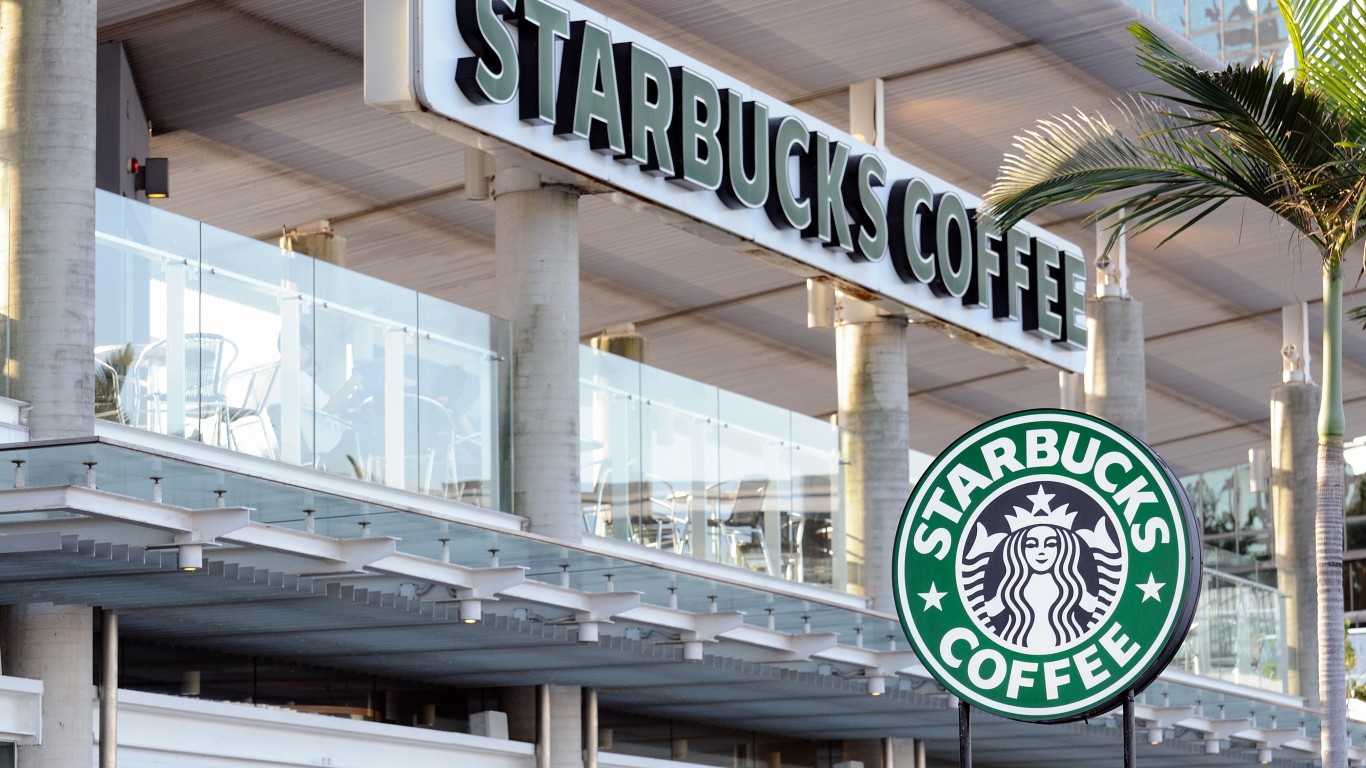
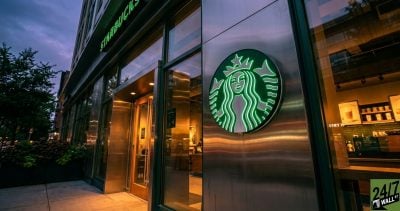
In early 2011, Starbucks (NASDAQ:SBUX | SBUX Price Prediction) marked its 40th birthday by stripping the wordmark from its logo, leaving only the green siren. It was a confident branding bet, and it landed at the start of a decade of aggressive expansion into mobile ordering, loyalty, and China. The stock rode that wave for years, then stalled.
The past five years told a messier story: post-pandemic traffic softness, labor pressure, and CEO turnover. That set the stage for Brian Niccol, the former Chipotle chief, to arrive in FY2025 with his “Back to Starbucks” plan built around baristas, throughput, and in-store experience.
The Turnaround Is Showing Up in the Numbers
In Q3 FY2026, reported July 29, 2026, Starbucks posted non-GAAP EPS of $0.85, beating the $0.66 estimate by 28.79%. Revenue of $9.32 billion dipped slightly due to the China retail divestiture to a Boyu Capital JV, but global comp sales jumped 7.9%, North America comps rose 8.1%, and operating margin expanded 430 bps to 14.4%. Niccol called results “the turn in our turnaround.”

What $10,000 Since the 2011 Rebrand Looks Like
Shares were $12.76 on March 8, 2011, and closed at $104.97 on August 4, 2026. Here is the return arc versus the S&P 500 on a $10,000 Starbucks investment:
| Period | Starbucks | S&P 500 |
|---|---|---|
| Since 40th Anniversary | $82,271 (722.71%) | $58,178 (481.78%) |
| 10-Year | $23,168 (131.68%) | $35,353 (253.53%) |
| 5-Year | $9,912 (−0.88%) | $17,460 (74.60%) |
| 1-Year | $12,004 (20.04%) | $12,221 (22.21%) |
| Year-to-Date | $12,620 (26.20%) | $11,311 (13.11%) |
The arc is exactly what the setup implied: a monster winner off the 2011 rebrand, then a flat half-decade as growth engines sputtered, now re-accelerating as operational fixes land. Dividend income sweetened returns, with the Starbucks quarterly payout climbing from $0.13 in 2011 to $0.62 today (split-adjusted).
Wall Street’s Take and the Verdict

Analyst sentiment on Starbucks is cautious, and the consensus price target is $111.74. Shares trade at a rich 60x trailing P/E and 35x forward P/E, so a lot of turnaround optimism is already baked in.
The bull case rests on Niccol’s fixes sticking and comps holding near the raised FY2026 guidance of $2.55 to $2.65 EPS, ~6% global comps, and 11%+ operating margin. The bear case is that the multiple leaves little cushion for a stumble in China licensing economics or U.S. traffic. Given the traffic inflection, margin expansion, and rewards momentum, the setup skews constructive, with a 12-month view more bullish than Wall Street.

Contact [email protected] for any questions or corrections.
Trey has been an editor and author at 24/7 Wall St. for more than a decade, where he has published thousands of articles analyzing corporate earnings, dividend stocks, short interest, insider buying, private equity, and market trends. His comprehensive coverage spans the full spectrum of financial markets, from blue-chip stalwarts to emerging growth companies.
Beyond 24/7 Wall St., Trey has created and edited financial content for Benzinga and AOL's BloggingStocks, contributing additional hundreds of articles to the investment community.
Trey's editorial expertise extends across multiple publishing environments. He served as production editor at Dearborn Financial Publishing and development editor at Kaplan, where he helped shape financial education materials. Earlier in his career, he worked as a writer-producer at SVE. His freelance editing portfolio includes work for prestigious clients such as Sage Publications, Rand McNally, the Institute for Supply Management, the American Library Association, Eggplant Literary Productions, and Spiegel.
Outside of financial journalism, Trey writes fiction and has been an active member of the writing community for years, moderating workshop sessions at regional conventions.