Is Michael Burry Wrong About Everything?
Michael Burry called the 2008 housing collapse and became a legend, but his string of bearish bets against AI and the current market rally raises a question he keeps dodging: what does his actual track record look like when you…


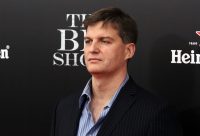
Michael Burry is extremely famous for predicting the housing crisis in 2008. As the economy fell apart, his pessimistic bet made him an oracle in the eyes of the financial industry and many people outside the sector. He is still remembered for that decision today.
Burry has morphed into one of the world’s biggest skeptics about the current market runup and the frenzy over AI that has caused almost all of it. To make his point, he wrote, “It is possible we are near a major top, and possible a 1987-type fall, but the S&P 500 making new highs likely will bring new money into the market.” He worried that as the market surges, it creates more leverage for the people who believe it will never stop rising.
Burry’s concerns about AI are based to some extent on the round-trip financing that has come under fire. Nvidia (NASDAQ: NVDA | NVDA Price Prediction), for instance, invested money into OpenAI. OpenAI uses the money to buy Nvidia chips. This type of deal has proliferated in the last several months.
Make no mistake, Burry has made money on his bets against AI. Or, at least he says so. Recently, he said he profited on short positions in Palantir (NASDAQ: PLTR), Micron, Tesla (NASDAQ: TSLA), Caterpillar (NYSE: CAT), Applied Materials (NASDAQ: AMAT), and the iShares Semiconductor ETF. His bet against Nvidia has not yielded a profit. However, he neglected to mention that people make money on investments based on the date they buy and the date they sell. Burry’s track record is good because he says so. How long can he short without these investment decisions backfiring? AI stocks were out of vogue two months ago. For example, Palantir’s stock collapsed in late June compared to the start of the year. It is up 22% in the last month because they announced blowout earnings.
Burry made money in 2008 because he opened a position and eventually closed it. Today, he needs to do that every time he makes an investment decision so that people can see. Over time, is there any chance he will make money on a bet like Palantir? Is there any guarantee he will make money on his other short decisions?
Burry could be wrong. He hasn’t said.
Contact [email protected] for any questions or corrections.
Douglas A. McIntyre is the co-founder, chief executive officer and editor in chief of 24/7 Wall St. and 24/7 Tempo. He has held these jobs since 2006.
McIntyre has written thousands of articles for 24/7 Wall St. He is an expert on corporate finance, the automotive industry, media companies and international finance. He has edited articles on national demographics, sports, personal income and travel.
His work has been quoted or mentioned in The New York Times, The Wall Street Journal, Los Angeles Times, The Washington Post, NBC News, Time, The New Yorker, HuffPost USA Today, Business Insider, Yahoo, AOL, MarketWatch, The Atlantic, Bloomberg, New York Post, Chicago Tribune, Forbes, The Guardian and many other major publications. McIntyre has been a guest on CNBC, the BBC and television and radio stations across the country.
A magna cum laude graduate of Harvard College, McIntyre also was president of The Harvard Advocate. Founded in 1866, the Advocate is the oldest college publication in the United States.
TheStreet.com, Comps.com and Edgar Online are some of the public companies for which McIntyre served on the board of directors. He was a Vicinity Corporation board member when the company was sold to Microsoft in 2002. He served on the audit committees of some of these companies.
McIntyre has been the CEO of FutureSource, a provider of trading terminals and news to commodities and futures traders. He was president of Switchboard, the online phone directory company. He served as chairman and CEO of On2 Technologies, the video compression company that provided video compression software for Adobe’s Flash. Google bought On2 in 2009.