“A Possible 1987-Type Fall”: Why Michael Burry Refuses to Cover His Bets as Stocks Hit New Highs
While the S&P 500 just hit a record high and the AI trade roars back to life, one famous short seller is keeping his bearish bets intact and warning that the market's own mechanics could turn a celebration into a…


On Tuesday, August 4, 2026, the S&P 500 rose 1.79% to close at 7,737, its first record high in two months, while the Nasdaq surged 2.6% and the Dow crossed 54,000. The same day, Michael Burry told his Substack subscribers he still sees “a possible 1987-type fall” and is refusing to cover his short book. The contrast between the tape and his warning is the story.
Burry’s argument leans on market plumbing more than fundamentals. He contends that rising markets and falling volatility create a feedback loop: lower volatility invites volatility-targeting funds and momentum strategies to add leverage, which pushes prices higher, which suppresses volatility further. The CBOE Volatility Index closed at 15.86 on August 3, sitting in the “low volatility, market complacency” zone. For Burry, new highs breeding new highs are a mechanical byproduct that can overextend before a sharp reversal, a signal of positioning rather than of fundamental health. His verbatim hedge matters: “I continue to believe it is possible we are near a major top, and possible a 1987-type fall, but the S&P 500 making new highs likely will bring new money into the market.”
The Short Book
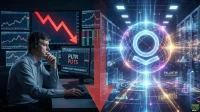
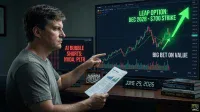
Per his Tuesday post, Burry is bearish on NVIDIA (NASDAQ:NVDA | NVDA Price Prediction), Tesla (NASDAQ:TSLA), Palantir (NASDAQ:PLTR), Micron Technology (NASDAQ:MU), and Caterpillar (NYSE:CAT), along with Applied Materials and the iShares Semiconductor ETF. All of these positions remain profitable except his Nvidia bet, which is underwater, and he’s holding it anyway rather than covering. The pre-deregistration Nvidia trade consisted of put options tied to 1,000,000 shares at a $110 strike expiring 2027. The Palantir wager combined a $100 strike put expiring December 2026 and a $50 strike put expiring mid-2027 with a direct short position in the stock. Burry says he will exit only if trades move “decisively against him.”
Why a Substack Post, Not a 13F
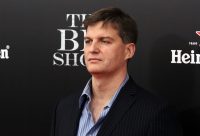
Burry deregistered Scion Asset Management with the SEC effective November 10, 2025, ending his 13F obligations. He launched “Cassandra Unchained” on Substack, and that paid newsletter is now his primary public channel, which is why current position sizes are less publicly verifiable than during his filing era. His 2008 housing call, immortalized in The Big Short, is what keeps investors listening when he warns about crowded trades.
The 1987 Parallel
Black Monday, October 19, 1987, saw the Dow fall 22.6% in a single day, the largest one-day percentage decline in its history, a global selloff fueled by program trading, investor panic, and market illiquidity. The similarities Burry appears to draw are structural: leverage stacked behind momentum, thin liquidity, and mechanical strategies that amplify moves in both directions. His shorts sit almost entirely in the AI-and-cyclicals complex where positioning is most concentrated, with the SOXX up 80.24% year to date through August 4.
What He’s Betting Against
Tuesday’s rally had real drivers. Caterpillar posted its first ever quarter above $20 billion in revenue, with adjusted EPS of $8.17 beating by 31.83% and Power Generation up 29% on data center demand (see the 8-K exhibit). Palantir’s Q2 arrived with revenue of $1.94 billion, up 92.83% year over year, and a Rule of 40 score of 155%. Add falling oil prices on hopes the Strait of Hormuz could reopen, and the same day’s SpaceX debut earnings call and Musk’s exclusive Nvidia compute commitment, which lifted Nvidia specifically. Burry is betting the price of these narratives has run past what the earnings can support.
His closing discipline, quoted from the post, captures the whole stance: “Again, shorting is not for everyone. I must short. Most should not.” Burry is holding an underwater Nvidia put and profitable shorts across six other names because his framework says the market’s mechanics will decide the next move. The word he chose was “possible.” That hedge is doing a lot of work.
Contact [email protected] for any questions or corrections.
AJ spent 10 years writing about financial markets at The Motley Fool. His coverage centers on technology stocks and the broader macroeconomic trends, from interest rates to geopolitics, that shape where markets are headed next. AJ is drawn to the stories where big-picture economics and individual companies collide.