Why Revolution Medicines May Be Big Pharma’s Next Takeover Target
RAS mutations fuel nearly a third of all cancers, and one biotech has quietly built the deepest late-stage pipeline targeting them. Now the biggest names in pharma are circling, and the math on who can actually write the check gets…

Revolution Medicines (NASDAQ:RVMD | RVMD Price Prediction) closed at $205.55 on August 11, 2026, giving the pre-commercial oncology platform a market cap of $44.1 billion. The stock is up 158.1% year to date, 492.4% over one year, and 664.1% over five years. Liquidity stands at $3.94 billion in cash and marketable securities, bolstered by $2.23 billion in spring 2026 capital raises and up to an additional $1.5 billion available under Royalty Pharma arrangements. FY2026 GAAP operating expenses are guided to $2.10 billion to $2.20 billion. There is no product revenue yet, EPS runs at −$8.87 for the trailing 12 months, and no deal talks have been confirmed.
Why a Strategic Buyer Would Want It
RAS mutations drive roughly 30% of cancers, and Revolution has the deepest late-stage RAS(ON) pipeline in biotech. Lead asset daraxonrasib delivered median overall survival of 13.2 months versus 6.7 months for chemo in second-line pancreatic cancer (HR 0.40; p<0.0001). The FDA accepted the NDA and granted Priority Voucher review. CEO Mark Goldsmith called it “a transformational period” tied to “unprecedented Phase 3 results.” Elironrasib (85% ORR in 1L G12C NSCLC), zoldonrasib (82% ORR in G12D NSCLC), and RMC-5127 underscore the scarcity case.
Ranking the Plausible Acquirers
5. Pfizer (NYSE:PFE). CEO Albert Bourla says, “I’m particularly encouraged by what we’re seeing in oncology.” With EBITDA of $25.38 billion and a stretched balance sheet post-Seagen, a more than $50 billion check is a reach.
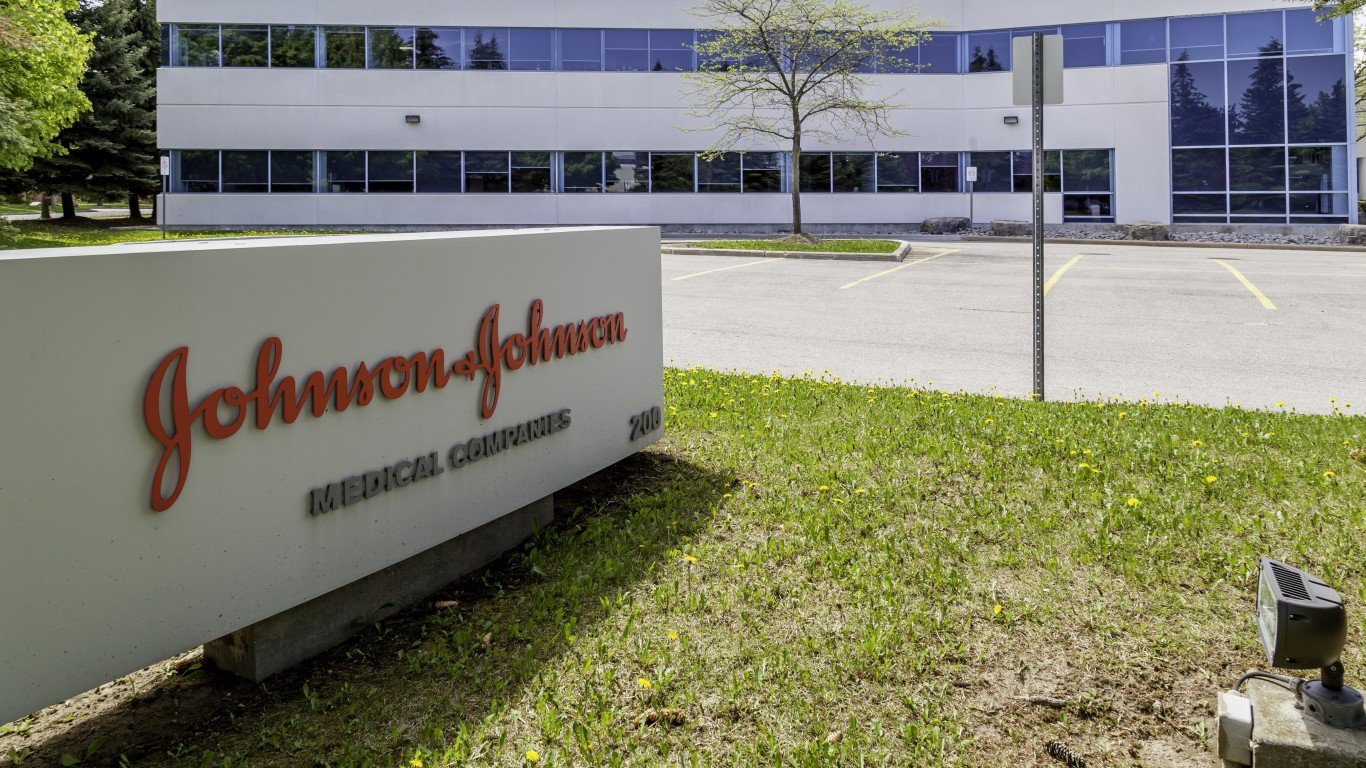
4. Johnson & Johnson (NYSE:JNJ). It has a $626.1 billion market cap, AAA credit, and a stated $50 billion oncology target by 2030. The company already bought Firefly Bio for KRAS degraders. Discipline on price is the offset.
3. Bristol Myers Squibb (NYSE:BMY). Owns Krazati (KRAS G12C) and has an existing clinical collaboration on daraxonrasib plus navlimetostat. The strategic fit is tightest. Net debt near $33.6 billion is the constraint.
2. Roche. The Genentech oncology machine and Swiss balance sheet make Roche a live bidder for scarce RAS platforms, despite trading outside the United States.
1. Merck (NYSE:MRK). Keytruda posted $8.03 billion in Q1 but faces a patent cliff. CEO Robert Davis pledged to “transform our portfolio to one with a diversified set of growth drivers.” Merck deployed $9.0 billion on Cidara and also pursued Verona, Terns, and Halda. Motive plus means makes Merck the most obvious buyer.
What About Private Equity or Alternative Capital?
A traditional take-private leveraged buyout (LBO) is impractical for a $44 billion pre-revenue company. The realistic alternatives: additional structured royalty tranches (extending the Royalty Pharma facility), a large PIPE anchored by crossover funds, or expanded regional partnerships in the style of the recent BeOne Medicines collaboration. This path ranks below a strategic pharma bid.
What to Watch

Analysts are positive and have a mean price target of $214.71. Catalysts include the FDA decision on daraxonrasib, RASolve 307 and colorectal readouts, and any 13D/13G activity. Insiders were net sellers of roughly $48.6 million over 90 days.
Contact [email protected] for any questions or corrections.
Trey has been an editor and author at 24/7 Wall St. for more than a decade, where he has published thousands of articles analyzing corporate earnings, dividend stocks, short interest, insider buying, private equity, and market trends. His comprehensive coverage spans the full spectrum of financial markets, from blue-chip stalwarts to emerging growth companies.
Beyond 24/7 Wall St., Trey has created and edited financial content for Benzinga and AOL's BloggingStocks, contributing additional hundreds of articles to the investment community.
Trey's editorial expertise extends across multiple publishing environments. He served as production editor at Dearborn Financial Publishing and development editor at Kaplan, where he helped shape financial education materials. Earlier in his career, he worked as a writer-producer at SVE. His freelance editing portfolio includes work for prestigious clients such as Sage Publications, Rand McNally, the Institute for Supply Management, the American Library Association, Eggplant Literary Productions, and Spiegel.
Outside of financial journalism, Trey writes fiction and has been an active member of the writing community for years, moderating workshop sessions at regional conventions.