Tim Cook’s Final Act: A $60 Billion Bet On Texas. Here’s What It Means For Apple Investors
Tim Cook chose Houston for his final major act as Apple CEO, standing beside a cabinet secretary while his company quietly evaluated a supplier that same official could move to restrict. The $60 billion headline hides a more complicated story…

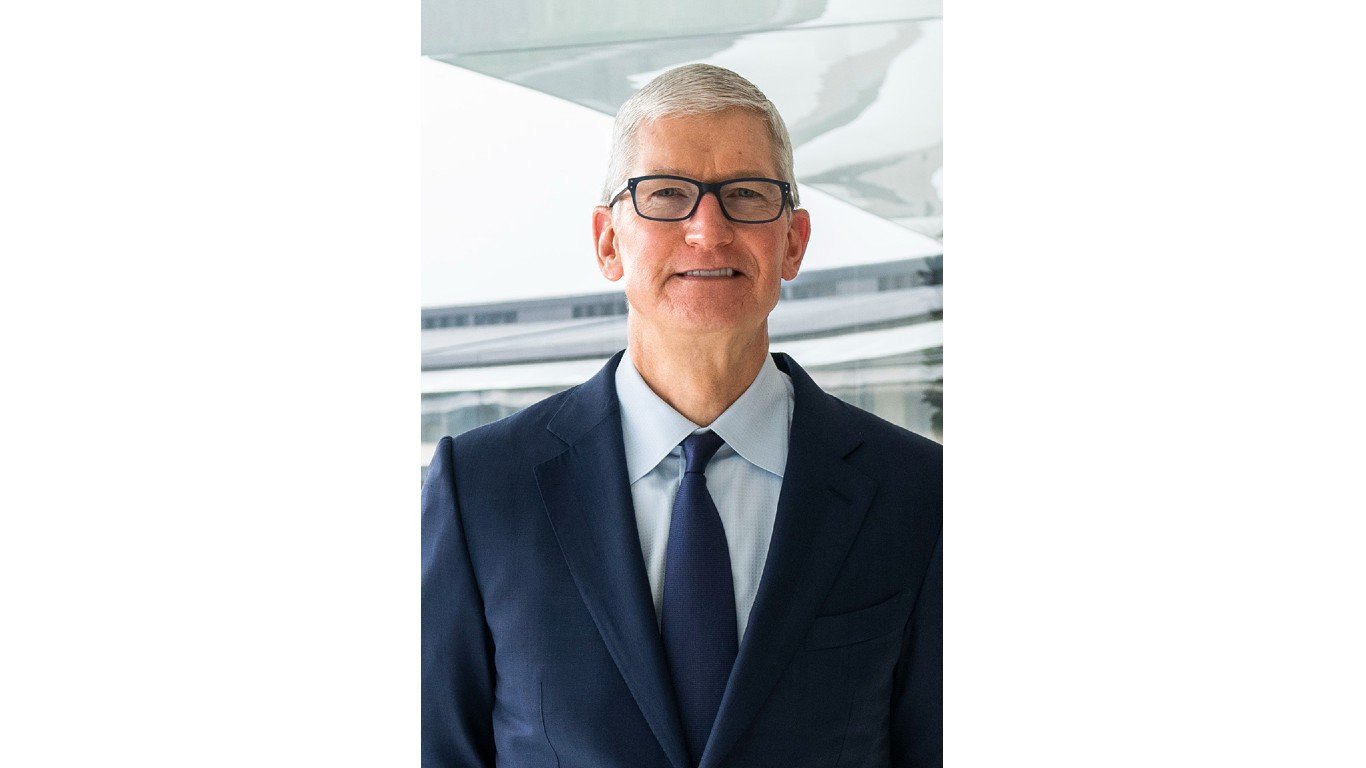
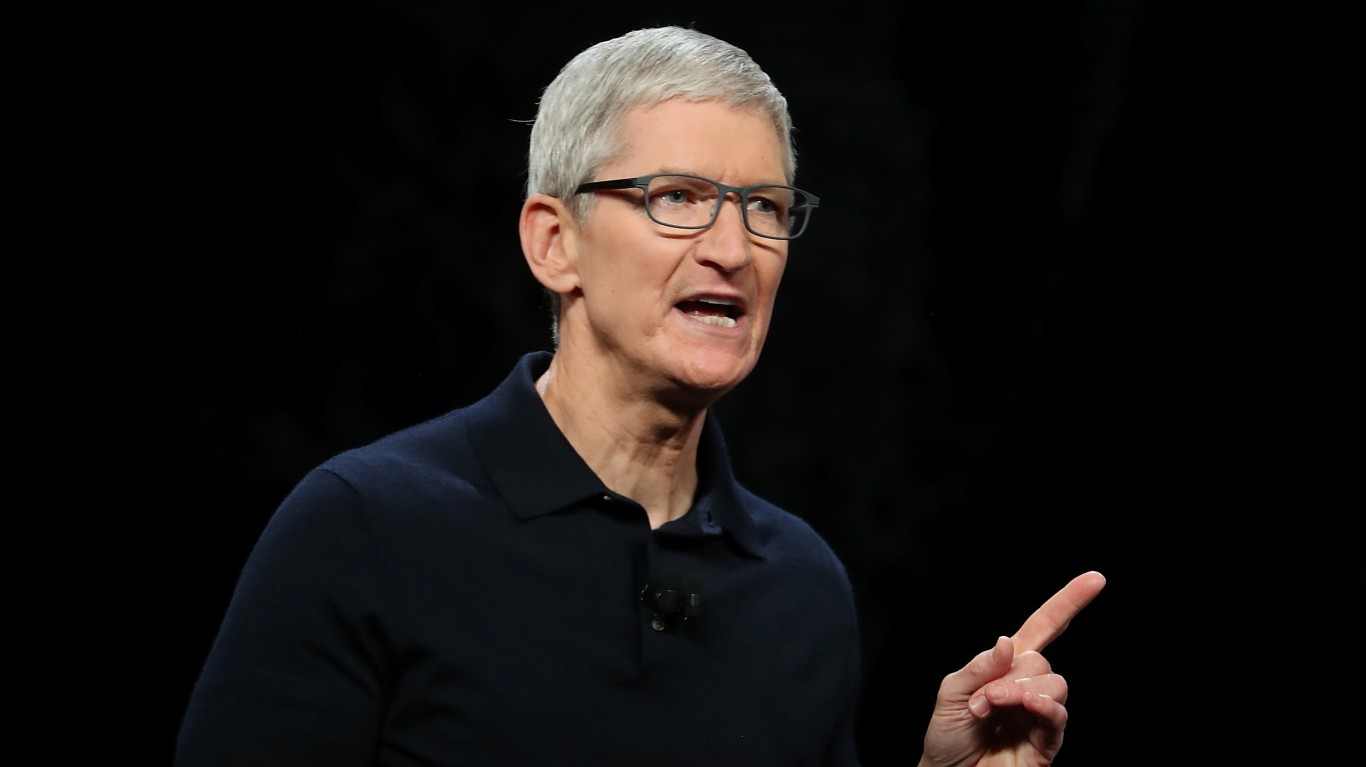
Tim Cook stood in Houston on Wednesday with Commerce Secretary Howard Lutnick beside him, unveiling a new Apple manufacturing facility in one of his final major appearances as CEO: $60 billion, or 10% of Apple’s broader U.S. investment commitment, is being spent in Texas. For Apple (NASDAQ:AAPL | AAPL Price Prediction) investors, the Houston event marks the last major moment before Cook hands the CEO title to John Ternus on Sept. 1 and becomes Executive Chairman.
What Apple Announced in Houston
The new site will host Mac mini production alongside a manufacturing school, echoing CFO commentary and Cook’s own remarks on the July 30 earnings call describing the Apple Advanced Manufacturing Center in Houston, which currently assembles advanced AI servers. Lutnick publicly thanked Apple for its $600 billion U.S. commitment. Cook said: “We’ve been moving at an incredible pace, and that momentum speaks to the urgency of what we hope to accomplish here, because we want to build more than great products. We want to build a future of American manufacturing.” Apple sourced more than 20 billion chips from 24 U.S. factories last year, with more than 100 million coming from TSMC’s Arizona plant this year.
Who Is Actually Paying
The $60 billion figure requires context. As CNBC’s MacKenzie Sigalos framed it: “But a lot of what Apple is counting here is spending with suppliers, not Apple owned factories, nor Apple jobs. Foxconn is making much of the capital investment at this Houston site, while Apple commits to buy what comes off the line.” Apple’s direct capital exposure and payroll obligation at Houston are smaller than the headline implies. The arrangement leans on Foxconn to build and operate while Apple guarantees demand, a standard industrial model that preserves Apple’s balance-sheet flexibility. The company held $147 billion in cash and marketable securities against $84 billion of debt at quarter-end and returned $33 billion to shareholders in the June quarter alone. Purchase commitments do not compete with buybacks the way factory capex would.
The Diplomatic Balance
Standing beside a cabinet secretary while pursuing Asian supply flexibility reflects Cook’s years of balancing act. Per the CNBC segment, “Cook had Commerce Secretary Howard Lutnick beside him as Apple’s reportedly testing Chinese memory maker [YMTC] for its Macs and iPhones, a supplier that Commerce could ultimately restrict.” The YMTC evaluation is reported, not confirmed by Apple. A panelist defended the posture: “Tim Cook’s role is to, well, he’s leaving, but his role as CEO is to benefit Apple shareholders, Apple investors, Apple employees, Apple customers. It’s not to please people who may not like specific political alliances, right?” Cook flagged memory as a live pressure point, calling it “a 100-year flood on the memory pricing with exponential increases in memory prices”.
Cook’s New Role
Apple announced in April 2026 that Cook would become Executive Chairman and Ternus would take the CEO seat on Sept. 1. Cook remains at the company. Per the CNBC segment, “They’ve said that when Tim Cook becomes chairman on September 1st, he’ll remain in touch with a lot of these policy makers almost act as this kind of chief diplomat, because he has been so masterful at navigating the Trump White House, which is a very specific skill set, and also managing Beijing, which is their second biggest market after the U.S.” On his July call, Cook said of Ternus: “I couldn’t be more confident in his leadership.”
Where the Stock Stands
AAPL closed Thursday at $305.26, up 1% on the day. Shares are up 31.31% over the past year, from $232.47 on Aug. 13, 2025, and up 12.59% year to date, from $271.12 at the end of 2025. The CNBC segment claimed Apple stock is up some 2,200% over Cook’s tenure as CEO, a figure attributed to the segment. The most recent quarterly filing (Q3 FY2026) is available via the SEC 8-K, showing revenue of $109.4 billion, up 16% YoY.
The Handoff Question
Cook built a skill set specific and hard to transfer: appearing next to a Commerce Secretary while quietly evaluating suppliers globally. The Foxconn-built Houston line becomes a template for Ternus on Sept. 1, including staged appearances and supplier-heavy capital commitments.
Contact [email protected] for any questions or corrections.
AJ spent 10 years writing about financial markets at The Motley Fool. His coverage centers on technology stocks and the broader macroeconomic trends, from interest rates to geopolitics, that shape where markets are headed next. AJ is drawn to the stories where big-picture economics and individual companies collide.