If You Invested $10,000 in Apple When Tim Cook Took Over, Here’s What It’s Worth Now
Tim Cook inherited Steve Jobs's shadow and a skeptical Wall Street, then quietly engineered one of the most stunning wealth-creation runs in stock market history. With his tenure now officially concluded as of August 31, 2026, here is how a…


From Post-Jobs Uncertainty to a Trillion-Dollar Machine
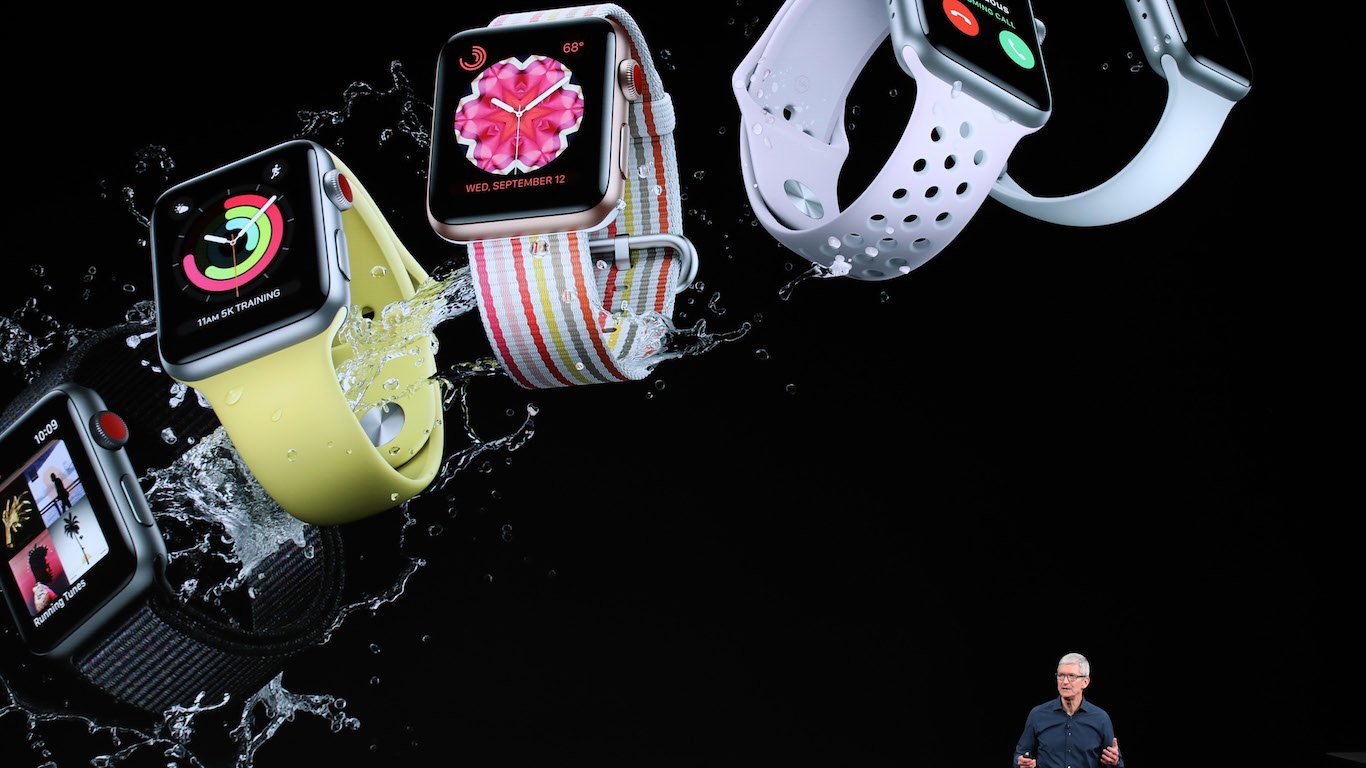
When Tim Cook took the corner office at Apple (NASDAQ:AAPL | AAPL Price Prediction), skeptics wondered whether the company could keep innovating without Steve Jobs. Cook answered by scaling the iPhone into a global juggernaut, building Services into a high-margin recurring revenue engine, and launching franchises like Apple Watch, AirPods, and Apple Vision Pro.
The results speak for themselves. Cook reinstated the dividend, executed the largest share buyback program in corporate history, and guided the company past the $1 trillion, $2 trillion, $3 trillion, and then $4 trillion market cap milestones. As of late September 2026, Apple’s market cap sits at roughly $4.94 trillion, making it the second-largest company in the world by that measure. The most recent fiscal quarter (Q3 2026, reported July 30) delivered $109.4 billion in revenue, up 16% year over year. Services revenue came in at $30.74 billion, a June quarter record despite coming in slightly below analyst expectations of $31.22 billion, while gross margin hit 50.1% and the installed base topped 2.5 billion active devices.
What a $10,000 Cook-Era Stake Looks Like Today
Using split-adjusted prices, here is how the math shakes out across standard horizons versus the S&P 500.
Since Cook Became CEO
- Initial Investment: $10,000 (roughly 868 shares at $11.5197)
- AAPL Total Return: 2,708.16%
- Current value: $280,816
- S&P 500 (same period): 536.61%
| Apple | S&P 500 | |
| 1-Year Return | 50.36% | 50.36% |
| 5-Year Return | 123.54% | 72.60% |
| 10-Year Return | 1,332.39% | 252.25% |
Apple outpaced the benchmark at every horizon. Holders absorbed real pain along the way, including the 2022 correction that cut the stock nearly in half, but the combination of buybacks and Services growth quietly compounded gains through every rough patch.
Grading Cook and the Confirmed Succession
The Cook-era grade: A. He inherited a hit product and built the most profitable consumer technology platform in history, with return on equity at 115.1%.
What began as succession whispers became official news in April 2026. Apple announced on April 20 that Cook would hand the CEO role to hardware engineering chief John Ternus on September 1, 2026, with Cook moving to executive chairman. The board approved the transition unanimously, and Apple described it as the product of a “thoughtful, long-term succession planning process.” Ternus, 50 at the time of the announcement, joined Apple in 2001 and has overseen hardware engineering since 2021, with responsibility spanning every major product line from iPhone and Mac to iPad and AirPods. Art Levinson, Apple’s non-executive chairman for the prior 15 years, became lead independent director on the same date.
The clean institutional handoff removed the succession discount that had weighed on the stock for years. Q3 2026 marked Cook’s final earnings call as CEO, and the company used it to post its strongest June quarter on record. Ternus wasted no time: on September 9 he hosted his first product event, unveiling the foldable iPhone Duo alongside the iPhone 18 Pro and Pro Max. The Duo, Apple’s first-ever foldable device, starts at $1,999 and features a 5.4-inch cover display and a 7.6-inch inner display, with pre-orders opening in October.
The Case for What Comes Next
The bull case for Apple under Ternus rests on several pillars. Apple Intelligence still has room to close the gap with AI peers, and the all-new Siri AI previewed at WWDC26 could strengthen platform lock-in across the installed base. The multiyear agreement with Broadcom (NASDAQ:AVGO), expected to exceed $30 billion and run through 2031, represents Apple’s largest U.S. manufacturing commitment ever. It will produce more than 15 billion U.S.-made radio-frequency and custom silicon chips and includes a $1.5 billion expansion of Broadcom’s Fort Collins, Colorado facility, materially reducing long-term supply concentration risk. Services, now running at more than $30 billion per quarter, continues to grow at double-digit percentage rates with gross margins above 75%.
The bear case carries real weight. Apple’s Services revenue in Q3 2026 missed analyst consensus by roughly $480 million, a reminder that even the highest-margin segment is not immune to expectations creep. The EU Digital Markets Act continues to threaten App Store economics, and an ongoing legal overhang clouds the revenue outlook for that business in Europe. The stock trades at roughly 39x trailing earnings, well above the market average, a premium multiple that leaves limited room for guidance cuts. On balance, the long-term business quality is undeniable, and the iPhone Duo opens an entirely new product category for the company. But the valuation leaves little margin for error as the Ternus era gets underway.


Editor’s note: This pass corrects John Ternus’s age to 50 (per Apple’s SEC filing), updates Apple’s market cap to approximately $4.94 trillion as of late September 2026, revises the trailing P/E to roughly 39x, adds context on the Q3 2026 Services revenue miss versus analyst expectations, and incorporates Ternus’s September 9 debut event featuring the foldable iPhone Duo alongside the iPhone 18 Pro lineup.
Contact [email protected] for any questions or corrections.
Trey has been an editor and author at 24/7 Wall St. for more than a decade, where he has published thousands of articles analyzing corporate earnings, dividend stocks, short interest, insider buying, private equity, and market trends. His comprehensive coverage spans the full spectrum of financial markets, from blue-chip stalwarts to emerging growth companies.
Beyond 24/7 Wall St., Trey has created and edited financial content for Benzinga and AOL's BloggingStocks, contributing additional hundreds of articles to the investment community.
Trey's editorial expertise extends across multiple publishing environments. He served as production editor at Dearborn Financial Publishing and development editor at Kaplan, where he helped shape financial education materials. Earlier in his career, he worked as a writer-producer at SVE. His freelance editing portfolio includes work for prestigious clients such as Sage Publications, Rand McNally, the Institute for Supply Management, the American Library Association, Eggplant Literary Productions, and Spiegel.
Outside of financial journalism, Trey writes fiction and has been an active member of the writing community for years, moderating workshop sessions at regional conventions.