Tim Cook’s Final Move as Apple CEO: The Biggest American Manufacturing Deal in Company History
In his last weeks as Apple CEO, Tim Cook announced the largest domestic manufacturing commitment in company history: a multi-year deal with Broadcom expected to exceed $30 billion, the biggest single commitment ever made under Apple's American Manufacturing Program. It…

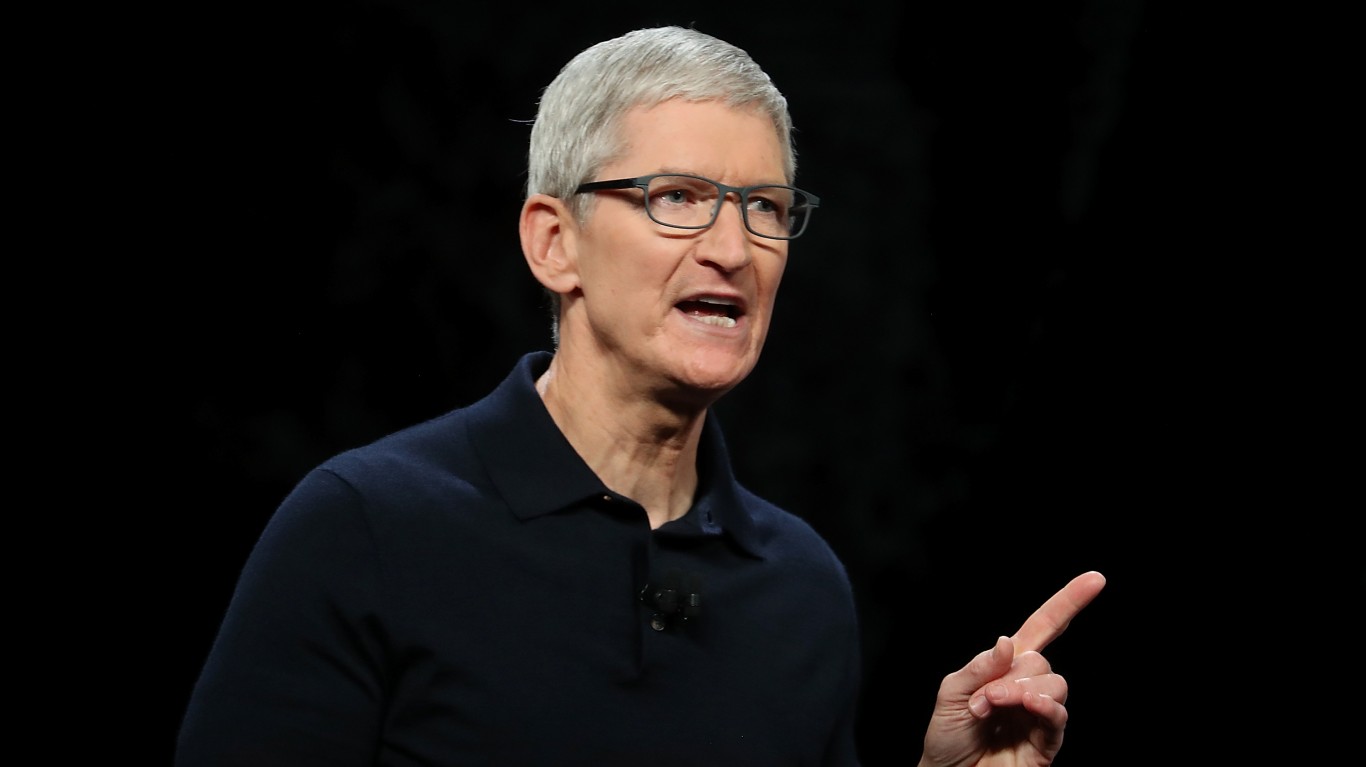
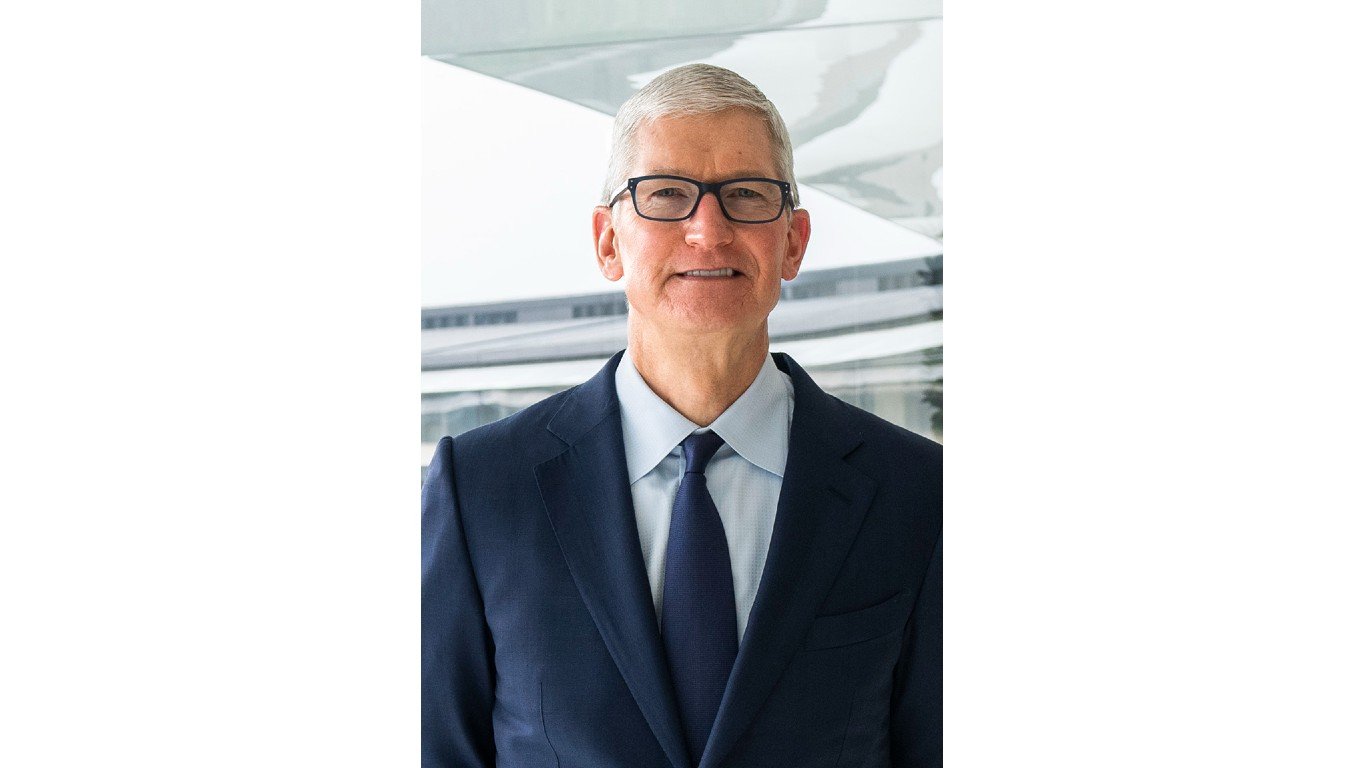
When Tim Cook announced Apple’s expanded partnership with Broadcom on July 8, 2026, he had less than two months remaining as chief executive. The deal, a multi-year commitment expected to exceed $30 billion, became the largest domestic manufacturing announcement in Apple’s history and the biggest single commitment ever made under Apple’s American Manufacturing Program. It was a fitting capstone to a fifteen-year tenure built on supply-chain mastery.
Inside the $30 Billion Broadcom Deal
Apple (NASDAQ:AAPL | AAPL Price Prediction) said the agreement with Broadcom (NASDAQ:AVGO) will produce more than 15 billion US-made chips and includes a $1.5 billion expansion of Broadcom’s facility in Fort Collins, Colorado. According to Broadcom’s SEC filing, the arrangement runs through 2031, extending well beyond Cook’s time as CEO. The Fort Collins plant will build advanced radio-frequency components, including FBAR (Film Bulk Acoustic Resonator) filters, which clean up the radio signals inside an iPhone so calls and data come through clearly. Apple also confirmed the chips cover wireless connectivity technologies for cellular, Wi-Fi, and Bluetooth networks across a wide range of Apple products.
Cook’s statement was direct: “Apple and Broadcom have a long history together, and this new phase of our partnership further accelerates our commitment to American manufacturing and innovation. The cutting-edge components built in Fort Collins are essential to delivering the incredible performance and connectivity our customers expect.” He also thanked President Trump and his administration for supporting the project, while Broadcom CEO Hock Tan credited Apple’s commitment for expanding the company’s Colorado footprint. The deal is part of Apple’s broader pledge to invest $600 billion in the US over four years, a commitment the company announced in 2025 alongside its $100 billion American Manufacturing Program.
Why a Domestic Chip Supply Chain Now Matters
Cook told investors on Apple’s Q2 earnings call that tight capacity at TSMC constrained iPhone supply. Meanwhile, memory chip costs have jumped roughly 500% since August 2025 as AI data centers compete with consumer electronics, pushing Apple to raise MacBook and iPad prices 17-25% while sparing iPhones. Apple’s most recent 10-Q flags reliance on third parties for components, technology, and manufacturing as a top risk. Securing domestic supply of critical wireless silicon converts a vulnerability into strategic infrastructure, and the Fort Collins expansion is a tangible step toward an end-to-end silicon supply chain on US soil.
The Broadcom Investor Angle
Broadcom shares jumped as much as 5% in premarket trading following the July 8 announcement. At the time of the deal, AVGO closed at $370.78 on July 7, 2026, up roughly 36% over the prior twelve months. For context on how rapidly Broadcom’s business has scaled since then: in Q3 FY2026 (ended August 2, 2026), Broadcom reported consolidated revenue of $29.6 billion, up 86% year over year, with AI semiconductor revenue reaching $16.7 billion, up 221% year over year. That followed a strong Q2 FY2026, when revenue came in at $22.19 billion, up 47.9% year over year, and AI semiconductor revenue hit $10.80 billion, up 143% year over year.
Apple accounts for roughly 20% of Broadcom’s annual revenue, and locking that relationship in through 2031 de-risks the base while Hock Tan pursues his stated target of more than $100 billion in AI semiconductor revenue by FY2027, a figure he reiterated on the Q2 earnings call. Beyond Apple, Broadcom is developing next-generation TPUs for Google, expanded its Anthropic deal for 3.5 GW of computing capacity from 2027, and partnered with OpenAI on the Jalapeno Intelligence Processor. The Apple extension functions as a durable revenue anchor beneath the higher-octane AI expansion story.
The Ternus Handoff
Cook announced on April 20, 2026 that he would step down as Apple CEO on September 1, 2026. John Ternus, then SVP of Hardware Engineering, was named his successor, with Cook moving to the role of executive chairman. Ternus formally became CEO on September 1, as planned, with Art Levinson simultaneously transitioning from non-executive chairman to Lead Independent Director. Ternus inherited a domestic supply chain for critical wireless components on day one, and Cook, in his new capacity as executive chairman, continues to engage with policymakers around the world, including stewardship of the Broadcom relationship. The Polymarket prediction market had priced this outcome with high conviction, with the Ternus contract resolving at 0.993 on $800,586.53 in volume.
Cook’s Closing Chapter
The numbers behind Cook’s tenure are striking. He grew Apple from about $300 billion when Steve Jobs died in 2011 to roughly $4 trillion today, a level of value creation unmatched in corporate history by any CEO. His final full quarter as chief executive delivered $111.184 billion in revenue, up 16.6% year over year, with diluted EPS of $2.01 that cleared the consensus estimate and extended Apple’s EPS beat streak to eight consecutive quarters. The installed base stood above 2.5 billion active devices. Fortune called 2026 “one of the most seismic years for CEO transitions,” alongside Greg Abel at Berkshire and John Furner at Walmart.
Cook’s Apple was built on invisible architecture: contracts, capacity, logistics, and supplier trust. The Broadcom agreement threads all of it. His final summer as chief executive was spent securing the wireless silicon that will sit inside every iPhone Ternus ships through 2031. For a CEO whose signature was operational discipline, it was the most fitting exit.
Editor’s note: This article has been updated to reflect that the Apple CEO transition took effect on September 1, 2026, with John Ternus now serving as CEO and Tim Cook as executive chairman. Broadcom’s Q3 FY2026 results (revenue of $29.6 billion, up 86% year over year; AI semiconductor revenue of $16.7 billion, up 221% year over year) have been added as post-publication context, and Apple’s $600 billion, four-year US investment commitment has been included to frame the scale of the Broadcom deal.
Contact [email protected] for any questions or corrections.
I've spent more than 15 years inside enterprise software, working alongside the finance, sales operations, and HR leaders who run the revenue engines at some of the largest tech companies in the country.
My day job is helping enterprise executives make smarter decisions about retention, compensation, and growth. These are the same operational levers that show up in every earnings report investors actually read. That perspective shapes my writing for 24/7 Wall St.
The headline numbers are easy. The interesting stuff is underneath: how companies make money, what executives are worried about, and what any of it means for the person checking their 401(k) on a Sunday afternoon. I write about personal finance and business as someone who has spent her career inside the rooms where these decisions get made.