




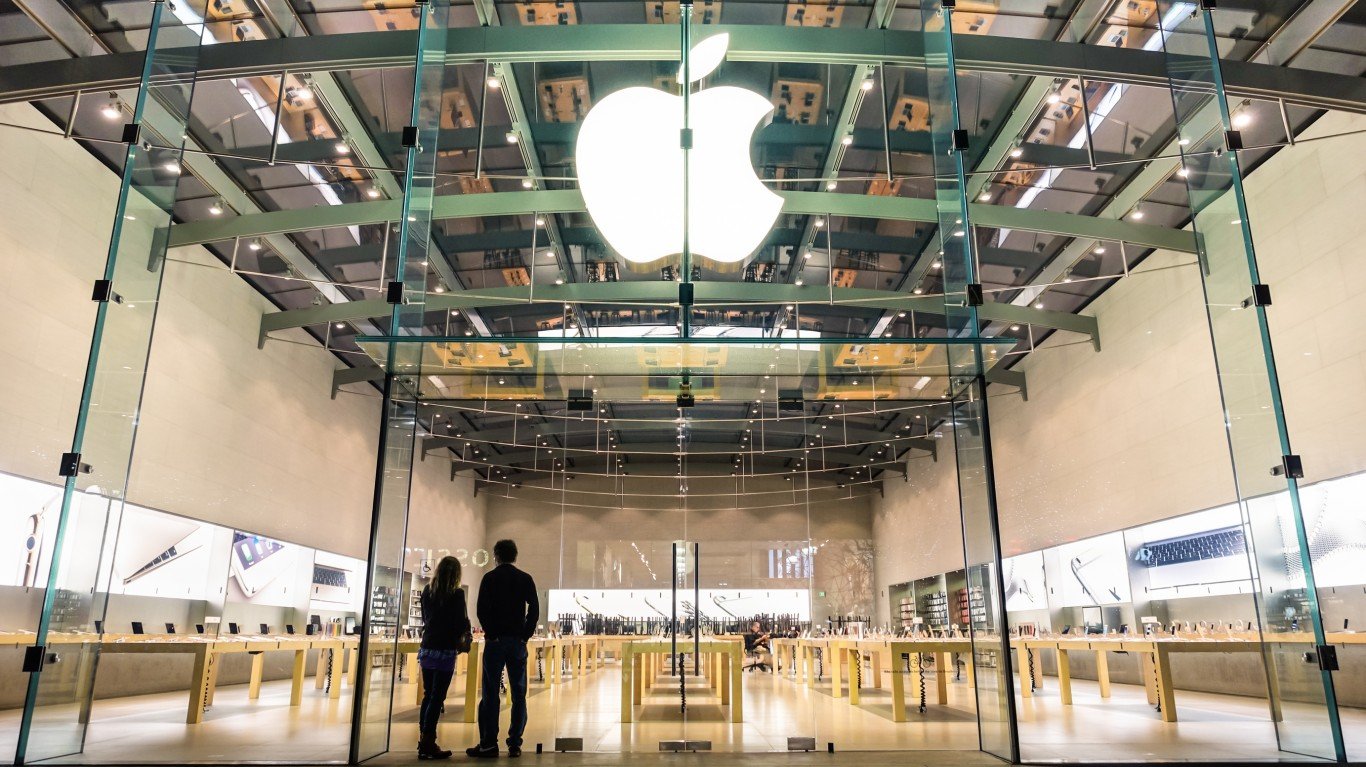
At $305.93, Apple (NASDAQ:AAPL | AAPL Price Prediction) looks overvalued. The stock rallied hard off winter lows, but fundamentals are quietly weakening in ways the multiple cannot absorb.
Apple remains the most profitable consumer electronics business on the planet, with a $4.46 trillion market cap, a 2.5 billion device installed base, and Services revenue that hit $30.7 billion last quarter. iPhone drives roughly half of revenue, and the ecosystem around it funds one of the largest capital return programs in market history.
Shares climbed from $271.12 at the start of the year to a July high above $340 on a strong June quarter, then faded. That beat was partially manufactured by temporary tailwinds, and the setup into the October earnings report looks materially worse.
Why the Bull Case Still Has Teeth
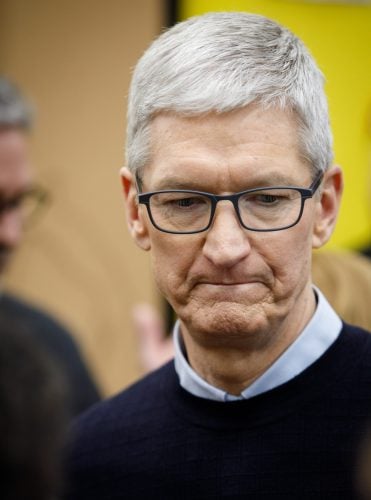
Apple delivered its ninth consecutive EPS beat, posting $2.02 on $109.42 billion in revenue, up 16.4% year over year. iPhone revenue grew 22%, Mac grew 29%, and Tim Cook called it the “strongest June quarter ever, with double-digit revenue growth across iPhone, Mac and Services, and in every geographic segment.”
Capital efficiency is unmatched. ROE sits at 171%, ROIC at 53%, and management authorized a fresh $100 billion buyback. The all-new Siri AI rollout at WWDC26 gives Apple a plausible AI-cycle upgrade catalyst without the 37.5% of revenue capex burden peers are carrying.
Why the Bear Case Is Winning
The June headline was propped up by one-time items. CFO Kevan Parekh disclosed that tariff refunds gave gross margin a two percentage point benefit and EPS an 11 cent lift. Strip those out and Apple merely met the midpoint of its own guide. Cook described memory pricing as a “100-year flood… with exponential increases,” and Apple has already reluctantly raised prices on iPad and Mac.
Guidance confirmed deceleration. September revenue is guided to 9% to 11% growth, Services below 10%, and gross margin is projected at 47% to 48%, down from the tariff-inflated June earnings report. Valuation leaves no room: P/E of 35, forward P/E of 32, PEG of 2.5, and a free cash flow yield of 2.21% against risk-free rates. Insider activity shows net selling, and the Q3 earnings report was met with a 7.35% single-day decline despite the beat.
The Case for Sitting Tight
Apple still gushes cash, and holders sitting on long-term gains have valid tax reasons to defer. If Siri AI drives a genuine upgrade super-cycle, forward estimates move higher and the multiple looks defensible.
The wait-and-see argument hinges on the October earnings report. If Apple offsets memory inflation without gutting product margin, and if Services reaccelerates above 10%, the bear thesis loses its edge. A repeat of the June reaction, where a 6.8% beat triggered a hard selloff, would validate that expectations have outrun the business.
What the Data Actually Says
Apple trades at $305.93, against a consensus analyst target of $322.28, implying modest single-digit upside. Coverage skews positive, with 6 Strong Buy, 22 Buy, 14 Hold, 2 Sell, and 2 Strong Sell ratings across 46 analysts. Shares are up 12.84% year to date, trailing the S&P 500‘s 13.85%, and are down 6.5% over the past month while the index rose 2.85%. Apple is lagging the market it once led.
Prediction markets echo caution. Polymarket traders assign only a 28.5% probability to a new product line before 2027, and 30-day sentiment has fallen 15.7 points.
Why $305 Looks Overextended
At $305.93, Apple looks overvalued.
The path to downside runs through the October 29 earnings report. Consensus is anchored to guidance that bakes in tariff refund tailwinds fading, memory costs escalating, and supply constraints Cook warned would “increase significantly” sequentially. If margin compresses harder than the 47% floor management flagged, a stock priced at 32 times forward earnings has nowhere to hide.
The Q3 reaction, a 7.35% same-day decline on a 6.8% beat, showed that at this multiple, beats alone no longer move the stock higher. Average one-day post-earnings performance across the last ten straight beats is -1.16%. Buyers are paying growth-stock prices for a hardware business decelerating into a margin squeeze.
What invalidates the Sell thesis: a clean October beat with expanding product margins, Services reaccelerating above 12%, and tangible Siri AI monetization. Absent those, capital compounds better elsewhere. When a $4.5 trillion company misses the S&P by a mile and trades at 35 times earnings on decelerating revenue, the risk/reward skews unfavorable at this multiple.
Contact [email protected] for any questions or corrections.









 Top Gaining Stocks
 Top Losing Stocks