Mark Cuban Blasts California Tax Proposal, Says He Won’t Bring New Companies to the State If It Passes
Mark Cuban says startup founders face a cash crisis no public-market billionaire does, and that asymmetry shapes his loudest objection yet to Proposition 40, a California ballot measure with more than $300 million already lined up against it.

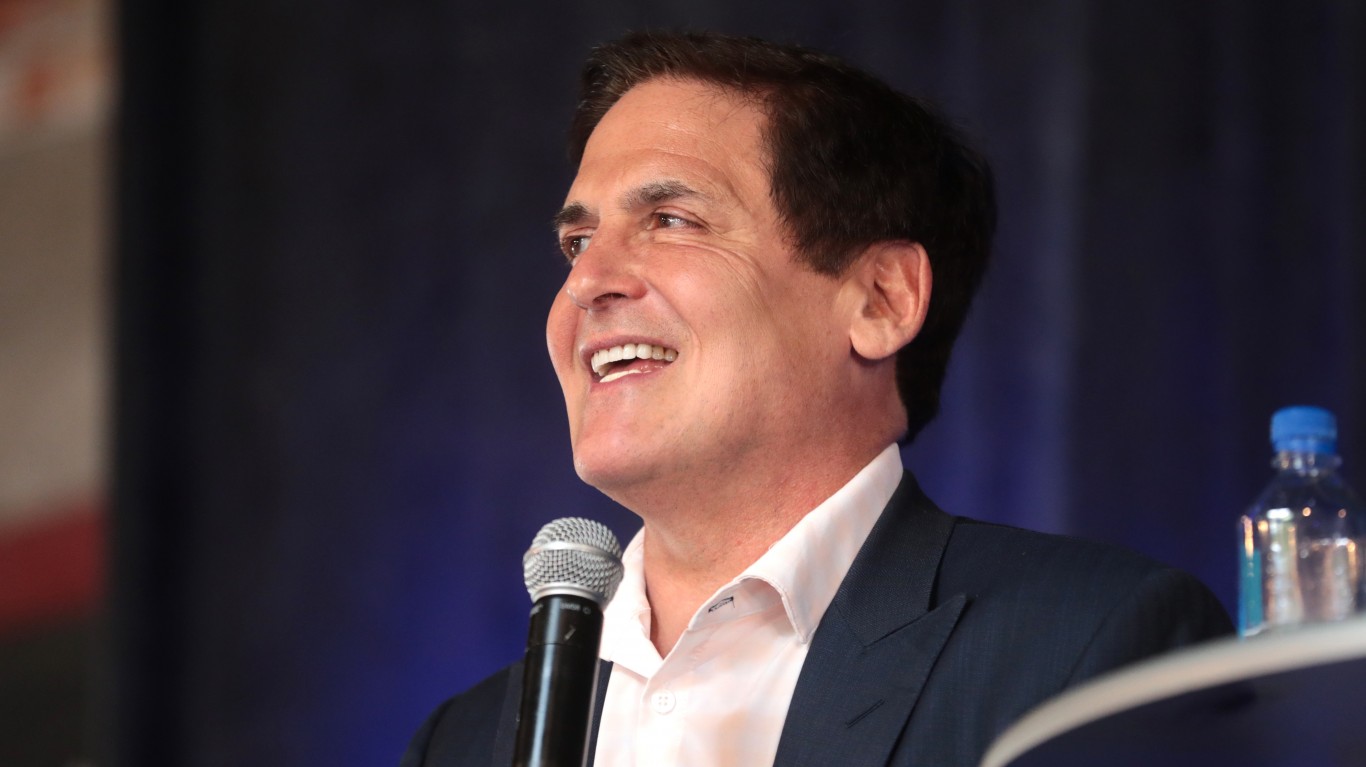
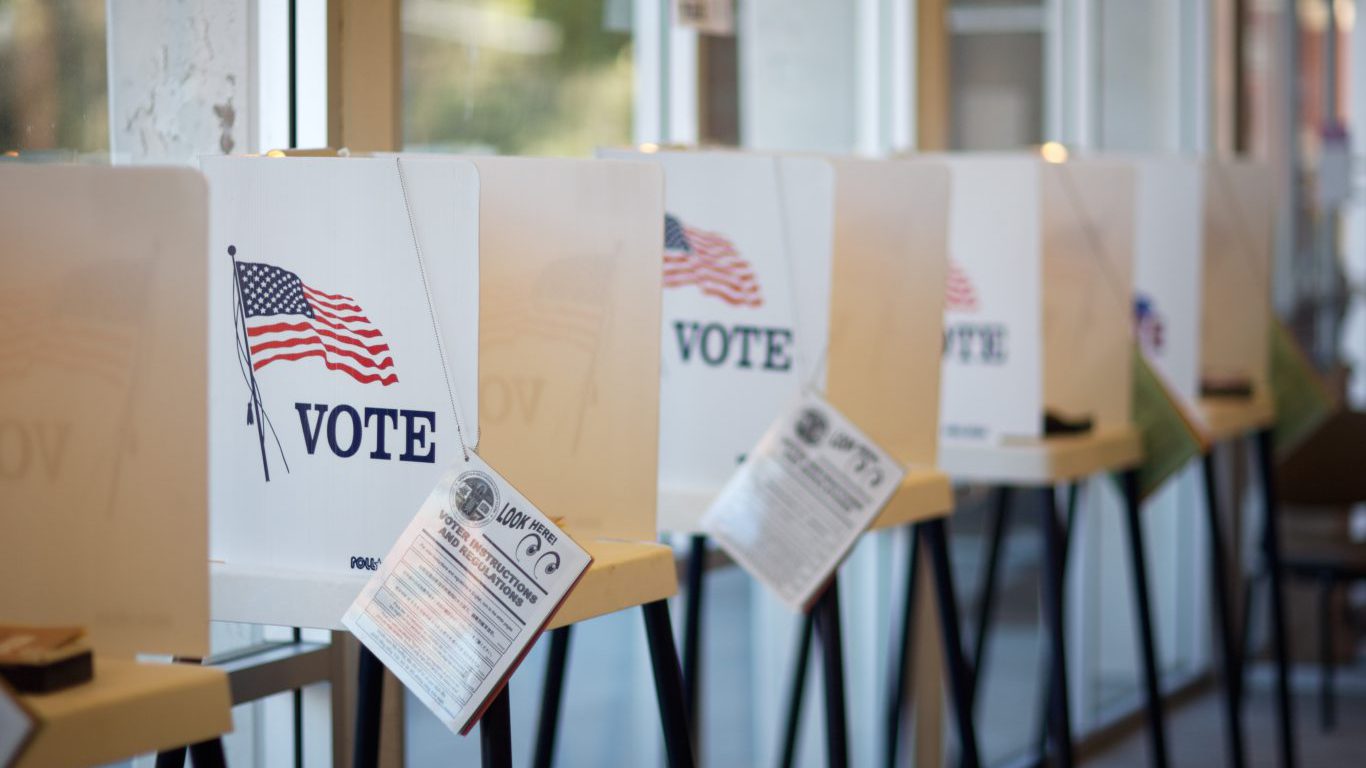
Mark Cuban (NASDAQ:MARK) is warning he will steer new companies away from California if voters approve Proposition 40, a proposed billionaire wealth tax heading to a statewide vote on November 3, 2026. The billionaire investor spent the weekend of August 15 criticizing the plan online, then took the argument to television on Monday, August 17, on CNBC’s segment “California Rep. Ro Khanna debates billionaire tax with Mark Cuban, Bill Ackman,” hosted by Andrew Ross Sorkin. Cuban framed his threatened withdrawal from California as a business decision, not a political stance.
The Illiquidity Argument
Cuban’s core objection is about founders, not billionaires in general. A founder’s net worth is typically locked inside shares of a private or thinly traded company, and a tax assessed on that paper valuation forces the founder to sell equity, borrow against it, or otherwise raise cash they simply do not have on hand. “They are the definition of cash poor, stock rich,” Cuban wrote on X. That problem is fundamentally different from taxing a public-market billionaire with a liquid portfolio, which is why Cuban kept returning to startups throughout the debate.
His weekend social-media commentary was more direct. Benzinga reported on August 16, 2026 that Cuban said “Ideology is not a strategy.” Earlier that week, on August 15, he wrote that “Only idiot startup founders stay in Cali.” By August 17, television coverage had him calling the plan “insane.” He also warned he would make not being in California a prerequisite for any new investment he makes.
Khanna offered a specific structural counter during the online exchange. Under his proposal, California would lend illiquid founders the tax payment, secured against their pledged shares, on a non-recourse basis over roughly ten years. At the end of the term, the founder repays in cash or the state takes the shares. Cuban’s response was pointed: if California ends up holding equity in private startups, the state becomes a venture investor, with all the governance complications that entails.
Two Different Proposals
The public debate has conflated two distinct measures. Proposition 40, the California ballot measure, would impose a one-time 5% tax on the wealth of roughly 200 state residents worth more than $1 billion, with 90% of proceeds directed to healthcare programs such as Medi-Cal and the remainder split between food assistance and education. SEIU-UHW, the healthcare workers union sponsoring the initiative, estimates it would generate around $100 billion, though skeptics put the figure closer to $40 billion. California’s nonpartisan Legislative Analyst’s Office takes a middle path: a temporary gain in the tens of billions across several years, offset by a possible annual drop in income tax collections. The measure was drafted by tax law professors at UC Berkeley, UC Davis, and the University of Missouri, and qualified for the ballot on June 17, 2026, with nearly 980,000 valid signatures.
Separately, Rep. Ro Khanna has joined Vermont Sen. Bernie Sanders in pushing federal legislation that would impose a recurring annual 5% wealth tax on billionaires nationwide. That distinction matters for Cuban’s argument: an annual assessment on illiquid paper wealth compounds the cash-raising problem in a way a single, one-time levy does not.
Khanna’s Pitch and Sorkin’s Political Read
Khanna framed his position around party alignment, saying: “The California Democratic Party and the California labor movement just stood with Bernie Sanders and me in supporting a 5% wealth tax on 250 California billionaires. California voters want a Democratic Party that will stand up for the working class over the billionaire class.”
He also pushed back on Cuban’s illiquidity emphasis, arguing that roughly 72% of California billionaire wealth sits in publicly traded stock and can be sold without difficulty. The founders Cuban was describing, Khanna said, represent a narrower category of “true paper billionaires with illiquid assets.”
Sorkin pressed on the district-level paradox that Khanna represents Silicon Valley. Khanna, Sorkin said, “must believe that there’s enough people in his district who work at tech companies, but are not billionaires themselves, who somehow hold either so much animosity towards their overlords.”
Does the Relocation Threat Hold Up?
The empirical question remains unsettled, but pre-vote behavior is already offering real evidence. At least six high-profile billionaires, among them Google co-founders Sergey Brin and Larry Page along with investor Peter Thiel, publicly left California before the January 1, 2026 residency cutoff that the measure uses to determine liability, according to the Hoover Institution. California can still contest whether those moves hold up legally, but the departures represent concrete action rather than rhetoric.
The University of Missouri School of Law research team that helped draft the measure argues that relocation threats tend to be strategic posturing. SEIU-UHW chief of staff Suzanne Jimenez, one of the measure’s architects, told ABC News the warnings are “kind of the same scare tactic we see time and time again around any kind of campaign that is about investing in public services.”
California’s nonpartisan Legislative Analyst’s Office takes a more cautious view, writing that “It is likely that some billionaires decide to leave California. The reduction in state revenues from these kinds of responses could be hundreds of millions of dollars or more per year.” The tech and professional services sector at stake is substantial: that ecosystem represents 21.7% of state GDP, according to Bureau of Economic Analysis data.
The Money War Around the November Vote
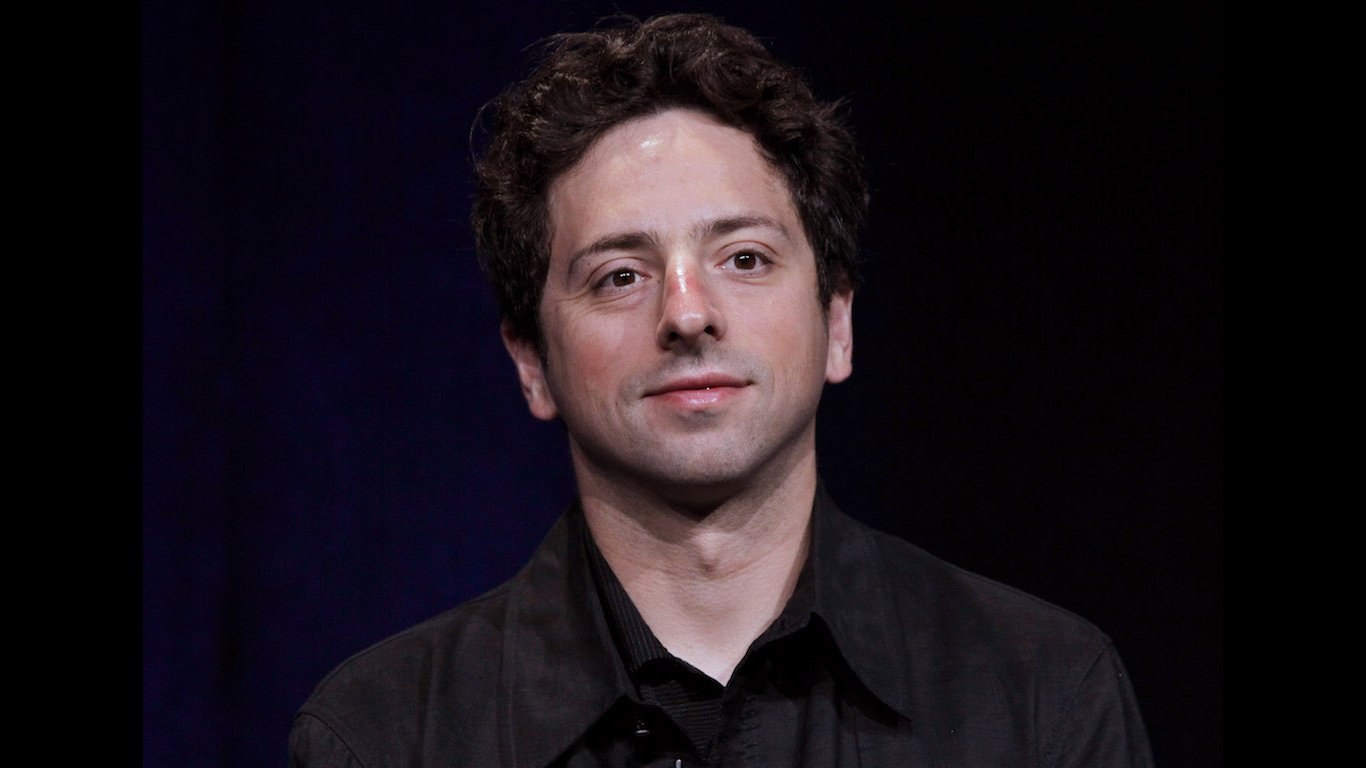
Spending on both sides has scaled into territory that makes this one of the most expensive ballot measure battles in California history. SEIU-UHW and allied political groups have contributed roughly $32.7 million to a committee supporting the initiative, per California Secretary of State filings as of early October. On the other side, Building a Better California has become a nine-figure operation many times over: Google co-founder Sergey Brin has personally contributed $102 million to the group, according to state campaign finance records, making him its dominant financial force. The organization has raised approximately $317 million in total since it launched in February, the vast majority of that directed at defeating or nullifying Proposition 40.
Building a Better California is backing two competing ballot initiatives, Proposition 41 on government transparency and Proposition 42 protecting retirement savings from taxes. Under California’s constitutional rules, if either competing measure receives more votes than Proposition 40, it would negate the wealth tax. Proposition 41 alone has received $58.3 million in support from Building a Better California as of early October. As Syracuse University political scientist Shana Kushner Gadarian told ABC News: “My guess would be that the strategy is to just avoid the whole question of the billionaire tax … to be for something rather than against something.”
Brian Brokaw, a longtime Newsom adviser leading the opposition group Stop the Squeeze, framed the stakes in broader economic terms, telling ABC News: “We’re not just talking about individual billionaires. You’re talking about an entire economy that is the backbone of California’s economic engine.” For her part, Jimenez warned of a “complete collapse” of California’s healthcare system if federal funding shortfalls go unaddressed. The California Budget and Policy Center estimates the state could lose as much as $30 billion in Medicaid funding annually from the H.R. 1 cuts, putting as many as 3.4 million people at risk of losing coverage.
What to Watch
The vote is set for November 3. Gov. Gavin Newsom opposes the tax, per ABC News reporting from June 2, 2026, a noteworthy split from a state party apparatus that has endorsed the measure. In a May 5 gubernatorial debate, every candidate except Tom Steyer voiced opposition to it. Steyer later told Wired the tax “doesn’t go far enough,” while adding he wants California to be “where the companies that are changing the world are begun and grow and stay.” Recent polling from the Public Policy Institute of California shows a slim majority of likely voters supporting Proposition 40, a margin thin enough that the multi-hundred-million-dollar opposition campaign could plausibly erode. Cuban invoked the same vision as Steyer to reach the opposite conclusion, and investors watching California’s tech ecosystem will get their answer at the ballot box.
Editor’s note: This article has been updated to reflect that opposition fundraising against Proposition 40 has grown dramatically, with Building a Better California raising approximately $317 million total as of mid-October 2026, up from the $118 million figure previously cited. Support fundraising has reached $32.7 million, Proposition 41 has received $58.3 million from Building a Better California per California Secretary of State filings, recent PPIC polling shows a slim majority of likely voters back the measure, and a direct quote from Mark Cuban on X has been added to the illiquidity section.
Contact [email protected] for any questions or corrections.
AJ spent 10 years writing about financial markets at The Motley Fool. His coverage centers on technology stocks and the broader macroeconomic trends, from interest rates to geopolitics, that shape where markets are headed next. AJ is drawn to the stories where big-picture economics and individual companies collide.