Applied Materials Rockets 98% in 2026: How Does AMAT Compare to Lam Research and KLA as AI Capex Powers Chip Gear Stocks?
Chip equipment stocks have surged far ahead of the broader tech market in 2026, but a single week of doubts about AI spending just wiped billions in gains across the group. Here is what the gap between Applied Materials, Lam…

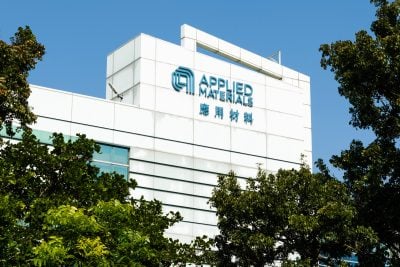
Applied Materials (NASDAQ:AMAT | AMAT Price Prediction) shares are up 98% year to date (YTD) at $509.29 Tuesday afternoon, a rally that captures how central chip equipment makers have become to the 2026 AI infrastructure trade. However, AMAT stock is down 5% Tuesday, part of a group-wide pullback.
Comparison figures across the peer group are settled through Monday’s close, while Applied Materials shares carry Tuesday intraday pricing. Peer stocks also traded lower Tuesday alongside a broader semiconductor selloff.
The tension worth watching sits at the intersection of gains and skepticism. That same AI capital spending cycle powering the group’s year-to-date returns is what investors began questioning this week, driving Tuesday’s decline across chip equipment names.
What’s Powered the Group’s 2026 Rally
Chip equipment makers including Applied Materials, Lam Research (NASDAQ:LRCX), KLA Corporation (NASDAQ:KLAC), and ASML Holding (NASDAQ:ASML) have benefited from a step-up in wafer fab equipment orders as hyperscalers, foundries, and memory makers race to expand advanced logic, high-bandwidth memory, and advanced packaging capacity for AI accelerators. Order visibility for AMAT and its peers has stretched further out than in prior cycles.
Equipment vendors raised capacity plans for 2027 and beyond to meet longer-term customer commitments, and services businesses tied to installed tools accelerated alongside factory utilization. That combination has driven multiple expansion across the group on top of earnings growth (the power, cooling, and networking suppliers riding the same buildout show up in our free AI infrastructure report, here).
Peer Semiconductor Equipment Scoreboard
Lam Research stock is up 89% YTD, with shares down 6% Tuesday to $324.89. The doubling has tracked improved NAND spending, DRAM node transitions, and a stronger etch and deposition mix tied to increasingly 3D device architectures.
Meanwhile, KLA Corporation stock is up 59% YTD, with shares down 6% Tuesday to $193.46. Process control intensity has risen with advanced packaging adoption and the broadening of leading-edge foundry customers.
In addition, ASML Holding stock is up 67% YTD, currently trading at $1,883.12. Lithography remains a bottleneck in advanced logic and DRAM ramps, and ASML raised its 2026 and 2027 capacity plans in response to accelerating customer demand.
VanEck Semiconductor ETF in Context
The VanEck Semiconductor ETF (NASDAQ:SMH) shares are up 56% YTD through Monday’s close, though the fund is down 5% Tuesday to $567.30. SMH is a broad semiconductor fund rather than a pure chip-equipment vehicle.
Its holdings blend chip designers, manufacturers, and equipment suppliers, so the ETF captures the AI trade widely but also concentrates exposure in a single sector during a drawdown. Sizing SMH like a diversified tech fund can understate the cyclicality of the underlying names when the group corrects together.
Meanwhile, for context, the NASDAQ 100 tracking Invesco QQQ Trust (NASDAQ:QQQ) shares are up 17% YTD, with the fund down 1.7% Tuesday. That gap versus SMH shows how much of the year’s tech leadership has come from semiconductors specifically rather than mega-cap tech broadly.
The AI Capex Debate Is What Moved Prices Tuesday
The Wall Street Journal reported Monday that nine top tech companies carry roughly $3 trillion of off-balance-sheet commitments mostly tied to AI, growing faster than the roughly $600 billion of capital expenditures they reported over the past year. That analysis reframed how investors think about the durability of the spending cycle underpinning the equipment names.
Per CNBC, Anthropic told investors its annualized revenue run rate reached $65 billion at the end of July, about a sevenfold increase from a year earlier, while OpenAI’s run rate recently reached $40 billion. Those disclosures landed below some expectations circulating among investors, feeding doubts about the pace of AI infrastructure spending.
On the macro side, the 30-year Treasury yield hit a 19-year high Tuesday, topping 5.3% and trading near 5.3%, though the long end was little changed to slightly lower on the day. Elevated long yields raise the discount rate on growth cash flows, an added headwind for stocks trading at expanded multiples.
What to Watch Next
Traders could look for signs that the AI capex debate settles into a rangebound tape rather than a sustained rotation out of chip equipment names like Applied Materials. Given the scale of this year’s moves in AMAT, moderate position sizing should keep investors in the trade without overexposing portfolios to a group that has already run this hard.
Shareholders may want to keep a lookout for whether coming data center capex updates and October chip earnings reinforce or dent the multi-year build-out narrative that carried these stocks in 2026. Confirmation on either side is likely to set the tone for the next share-price moves.
Contact [email protected] for any questions or corrections.
David Moadel is financial writer specializing in stocks, ETFs, options, precious metals, and Bitcoin. David has written well over 1,000 articles for leading online publications, helping investors understand markets, income strategies, and risk.His work has appeared in The Motley Fool, InvestorPlace, U.S. News & World Report, TipRanks, ValueWalk, Benzinga, Market Realist, TalkMarkets, Finmasters, 24/7 Wall St., and others.With a master’s degree in education, David has taught at the elementary, high school, and college levels. That teaching background shapes his writing style: clear, educational, and practical. David has also built a loyal social-media audience by providing trustworthy financial content on YouTube, X/Twitter, and StockTwits.