Oil Is Up 36% and the Strait of Hormuz Is Still Closed. The QQQI Family Runs a 14.75% Energy Fund
A fund from the same shop that built one of the most popular Nasdaq income ETFs just entered the pipeline space, and it is quietly paying out a yield that makes the category's longtime leader look almost stingy by comparison.


The Alerian MLP ETF (NYSEARCA:AMLP) has been the default choice for pipeline income since 2010. Retirees and yield hunters own AMLP for one reason. It packages the passthrough cash flows of energy infrastructure MLPs into a single 1099 ticker, sparing holders the K-1 tax headache of owning Enterprise Products or Energy Transfer directly. AMLP currently distributes a 7.45% trailing yield, and with WTI crude at $84.77 per barrel after a 17% monthly rally, that check looks sturdy. The problem is that a fund from the same shop that runs QQQI now pays roughly double, on the same asset class, with a lower expense ratio.
Why AMLP Earned Its Following
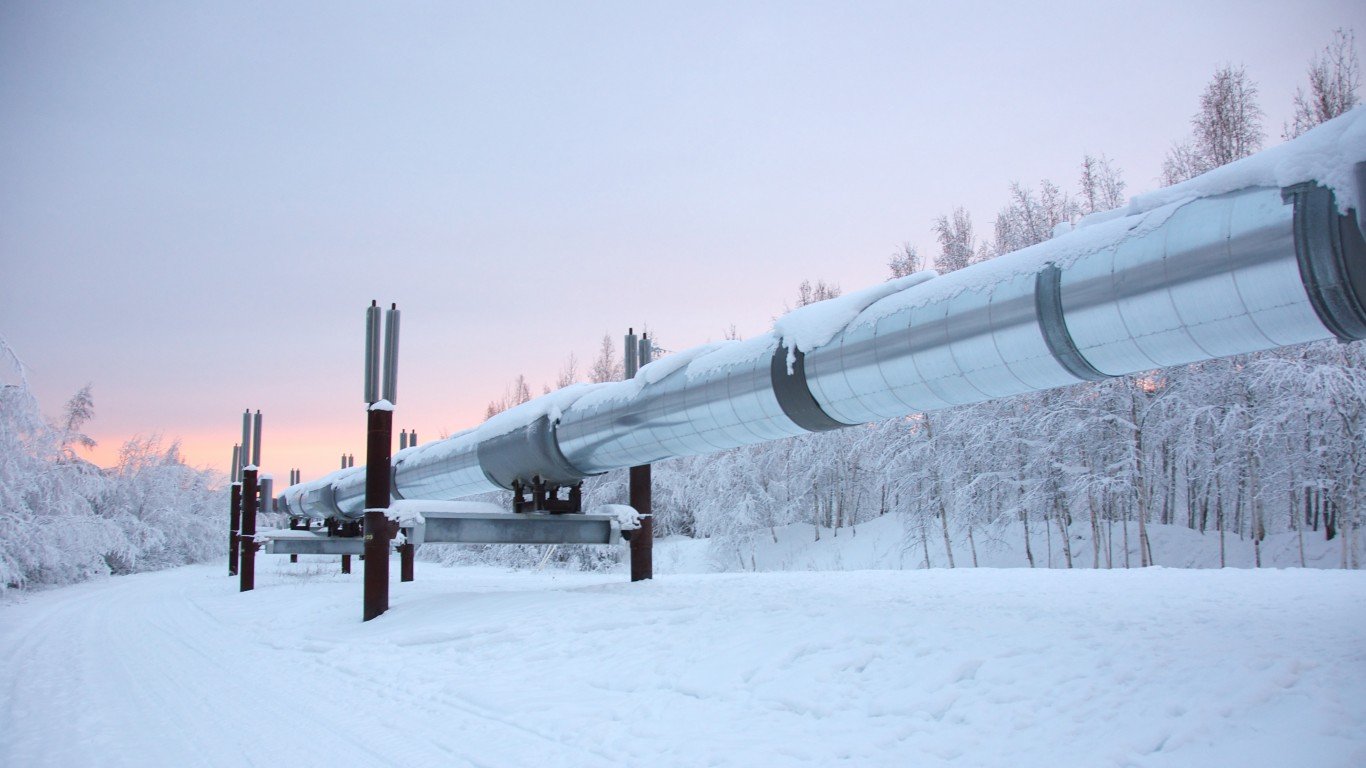
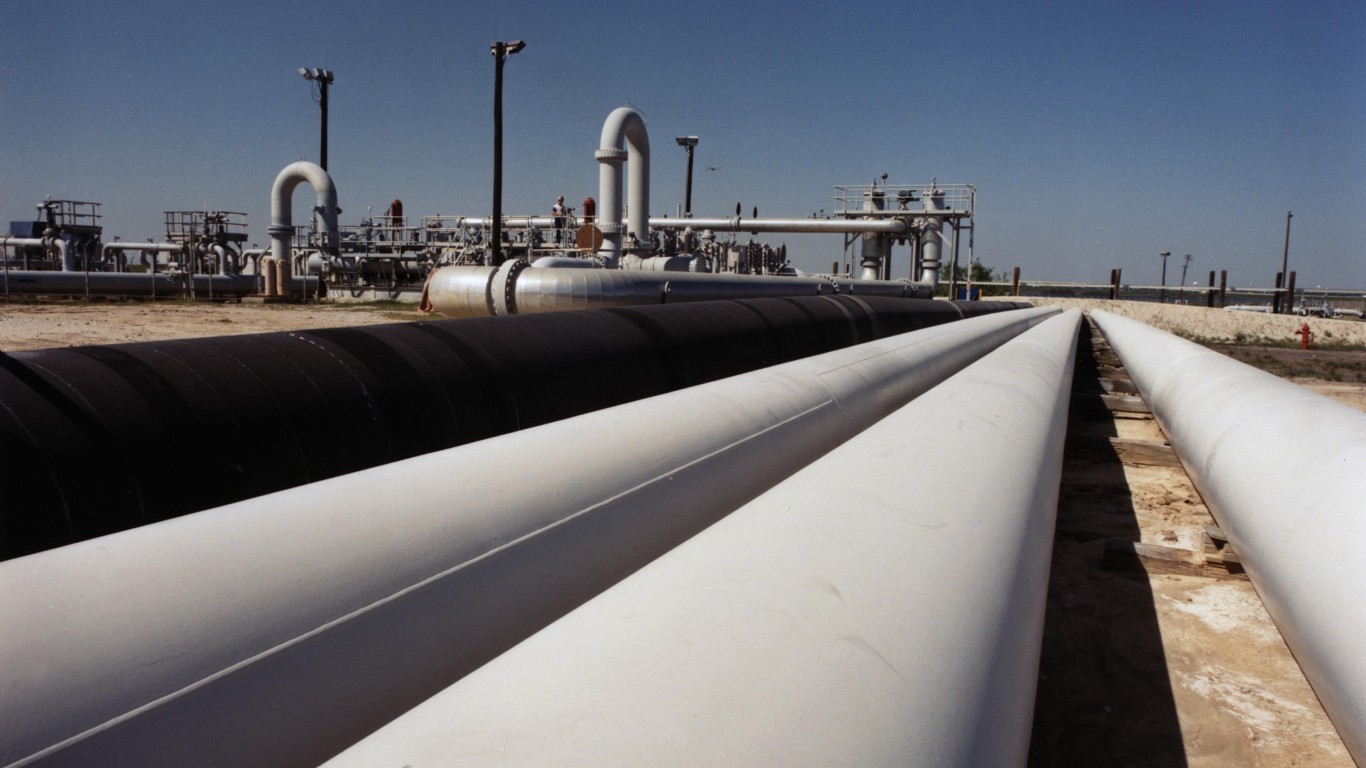
AMLP’s appeal is structural. The fund holds midstream MLPs, the toll collectors of American energy: pipelines, storage terminals, and processing plants that earn fees on volumes rather than commodity spreads. Those fees convert into monthly cash for pipeline operators and quarterly distributions for AMLP holders. Mining sector value added jumped 22.8% in the first quarter of 2026, the largest growth rate in the BEA’s industry dataset, which flows straight into throughput on the pipes AMLP owns. The fund’s C-corp structure absorbs the tax complexity retail investors want to avoid.
The cost of that convenience is 1.01% annually. That fee has not moved in years, and it now sits above every credible alternative in the category.
Where the Incumbent Comes Up Short
The yield gap is the bigger issue. AMLP’s distribution reflects only what its underlying MLPs pay. In an environment where crude peaked at $114.58 on April 7, 2026 during the Strait of Hormuz disruption and Brent averaged $117 per barrel that month, midstream equity volatility rose sharply. AMLP holders absorbed that volatility without any income offset from it. The fund captures pipeline cash flow. It does not monetize the price swings around that cash flow.
The Alternative: MLPI
The NEOS MLP & Energy Infrastructure High Income ETF (NYSEARCA:MLPI) comes from the same NEOS family that runs the QQQI Nasdaq-100 income fund. It launched on December 18, 2025, with an expense ratio of 0.68%, a 33 basis point discount to AMLP.
The mechanism that lifts the yield is a call option overlay written against the fund’s MLP and energy infrastructure holdings, benchmarked to the MerQube North America MLP & Energy Infrastructure Index. Option premiums scale with implied volatility, and pipeline stocks have been trading with elevated volatility all year because of the Hormuz situation. NEOS harvests that premium and passes it through as monthly cash (MLPI is one of several vehicles built to pay every 30 days, a group we rounded up in a free report on monthly dividend stocks). MLPI’s July distribution of $0.6834 annualizes to $8.2008. Against the current share price of $55.65, that is a forward yield of roughly 14.7%, close to the fund’s marketed 14.75%.
The fund has held its price while delivering that yield. MLPI is up 20.81% year to date, tracking the midstream complex through the spring price spike and the summer normalization to $84.77.
What You Actually Give Up
The call overlay caps upside. In a runaway rally, MLPI holders will trail AMLP holders on total return because written calls limit the fund’s participation above the strike. NEOS does not sell calls against 100% of the book, but the drag is real when energy rips.
Track record is the other tradeoff. MLPI has existed for just eight months. AMLP has a decade and a half of distributions and drawdowns to study. If you need to see a fund survive a 2020-style oil collapse before you trust it with retirement income, MLPI has not been tested that way yet.
Tax treatment is similar. Both funds are 1099 vehicles that spare holders K-1s, and both classify a portion of distributions as return of capital, which defers rather than eliminates tax.
Making the Swap
In a taxable account, AMLP has likely accumulated gains after a 22.8% mining-sector expansion and a 36% oil move. Selling triggers those gains, which can wipe out a year of the yield differential. Rotating inside an IRA or Roth is cleaner. A partial swap, moving a third of the AMLP position to MLPI, captures most of the income lift while keeping AMLP’s longer record in place until MLPI’s distribution history matures.
Reading the Setup
MLPI represents a different bet on the same pipes: same cash flows underneath, plus a volatility harvest on top, minus a slice of upside. If the reason you own AMLP is monthly income and you accept that the Hormuz premium in energy volatility persists, the NEOS fund pays you roughly twice as much for 33 basis points less. If you need pure directional exposure to midstream and want no cap on rallies, AMLP still does that job cleaner.
Contact [email protected] for any questions or corrections.
Ryne Mauck is an investment writer covering exchange-traded funds, retirement planning, and portfolio strategy. Through his work at 24/7 Wall St. and other investment platforms, including Seeking Alpha, he aims to provide clear, research-driven insights that help investors make more informed decisions while maintaining a long-term approach to investing.
Ryne holds a B.Sc. in Finance and an M.A. in Political Science. He is a formerly registered Municipal Advisor Representative and has passed the Series 50, Series 63, and Series 65 exams. His articles are not intended to be, nor should they be interpreted as, financial advice.