Target Just Delivered Its Strongest Evidence Yet That the Turnaround Is Working
Target just posted numbers that silenced its skeptics, but the headline figures hide a more complicated story about what the retailer actually earned on its own merit versus a billion-dollar windfall it may never see again.

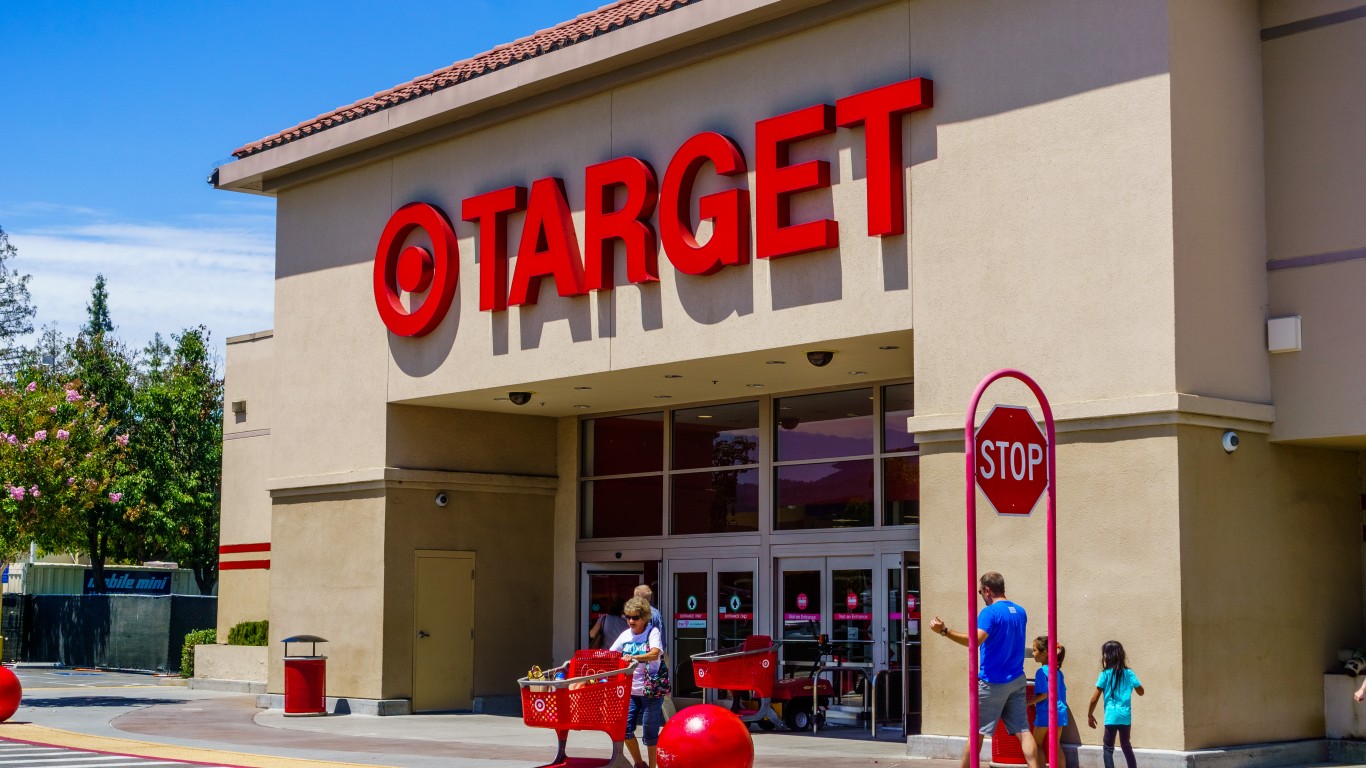
CNBC reported that Target delivered its clearest evidence yet that its turnaround is gaining traction. The retailer beat Wall Street’s second-quarter revenue, comparable-sales, and profit expectations while raising its full-year adjusted earnings forecast from $7.50 to $8.50 per share to a new range of $9.90-$10.90.
Target’s (NYSE:TGT | TGT Price Prediction) $4.11 in adjusted earnings per share included a $1.65 benefit from nearly $1 billion in tariff refunds. Even without that windfall, however, the underlying business exceeded expectations. Comparable sales increased 3.8%, traffic rose 3.6%, digital sales grew 8.7%, and operating margin excluding the refund reached 5.9%. After two quarters of declining comparable sales, Target appears to have produced a genuine operating inflection.
A $994 Million Tariff Refund Supercharged Earnings
Target booked $994 million pretax in refunds, classified as a reduction of cost of sales, translating to a $752 million after-tax benefit and the $1.65 per share lift. Management explicitly excluded any potential future refunds from the raised guidance range.
Strip that windfall out and Q2 results still cleared the bar. “Second quarter comp store sales were up by 3.8%, and that is above the 2.4% increase that the street had been expecting,” Quick said.
And on profitability: “If you strip out the tariff refund benefit, operating margin was 5.9%. That compares to estimates of 5.6%.” Traffic was up 3.6%, digital comps rose 8.7%, and same-day delivery grew more than 25%. All six core merchandising categories grew year over year, with double-digit growth in Hardlines.
Target Growth Signals a Genuine Turnaround

Management framed the print as continued proof that the strategy is working. In prepared remarks, Target’s CEO said, “Second quarter results build on the encouraging momentum we saw in the first quarter, giving us increasing confidence that our strategy is resonating with our guests,” and noted that “over the past year, we’ve reduced prices on more than 10,000 frequently purchased items.“
Just two quarters ago, Q4 FY2026 comparable sales declined 2.5%, and Q3 FY2026 comps fell 2.7%. Returning to a positive 3.8% comp with accelerating traffic is a meaningful inflection. Capital expenditures ran up 27% year over year as the store count climbed to 2,019, and non-merchandise revenue streams like Roundel, Target Circle 360, and Target+ marketplace continue to grow at a fast rate.
Every Major Merchandise Category Returned to Growth

Jefferies analyst Corey Tarlowe had argued two days earlier that Target offered more upside than Walmart (NYSE:WMT), pointing to a cheaper multiple, a margin trough around 4% versus a historical 6% average, and roughly $2 billion of incremental investment behind an assortment refresh.
Today’s 3.8% comps and 5.9% ex-refund operating margin read directly against that thesis. Walmart, for reference, most recently reported Q1 FY27 revenue of $175.684 billion (+6.08% YoY) with Walmart U.S. comp sales up 4.1%, and the shares are up 15.09% over the past year.
Target’s stock has run harder. “Over the last year, that stock is up by almost 40%. So expectations are incredibly high as you walk into any of these numbers,” Becky Quick observed. The shares had gained 10.05% over the prior month and 60.22% year to date heading into the earnings report.
Key Takeaways
The tariff refund made Target’s headline earnings beat look spectacular, but the company also made organic progress within the core business. Comparable sales returned to growth, store traffic accelerated, digital demand remained strong, and operating margin exceeded expectations even after removing the one-time benefit. Those results suggest Target’s price cuts, merchandise refresh, and investments in stores and fulfillment are beginning to work.
Contact [email protected] for any questions or corrections.
Thomas Richmond is a financial writer and content strategist with 5+ years of experience covering stocks and financial markets. He has published over 500 articles focused on individual stock analysis, helping investors better understand business fundamentals, stock valuations, and long-term opportunities.
Thomas previously served as a Content Lead at TIKR, a stock research platform, where he helped scale the company’s blog to hundreds of articles per month and contributed to a weekly newsletter reaching more than 100,000 investors.
Outside of work, Thomas enjoys weight lifting and soccer.