Target Rises 5% on Q2 Beat, Tariff Refund Windfall, and Sharply Raised Full-Year Outlook
Target just posted its strongest quarter in years, but strip out a one-time government windfall and the story gets far more complicated. Here is what the headline numbers are hiding about whether this retailer's turnaround is built to last.

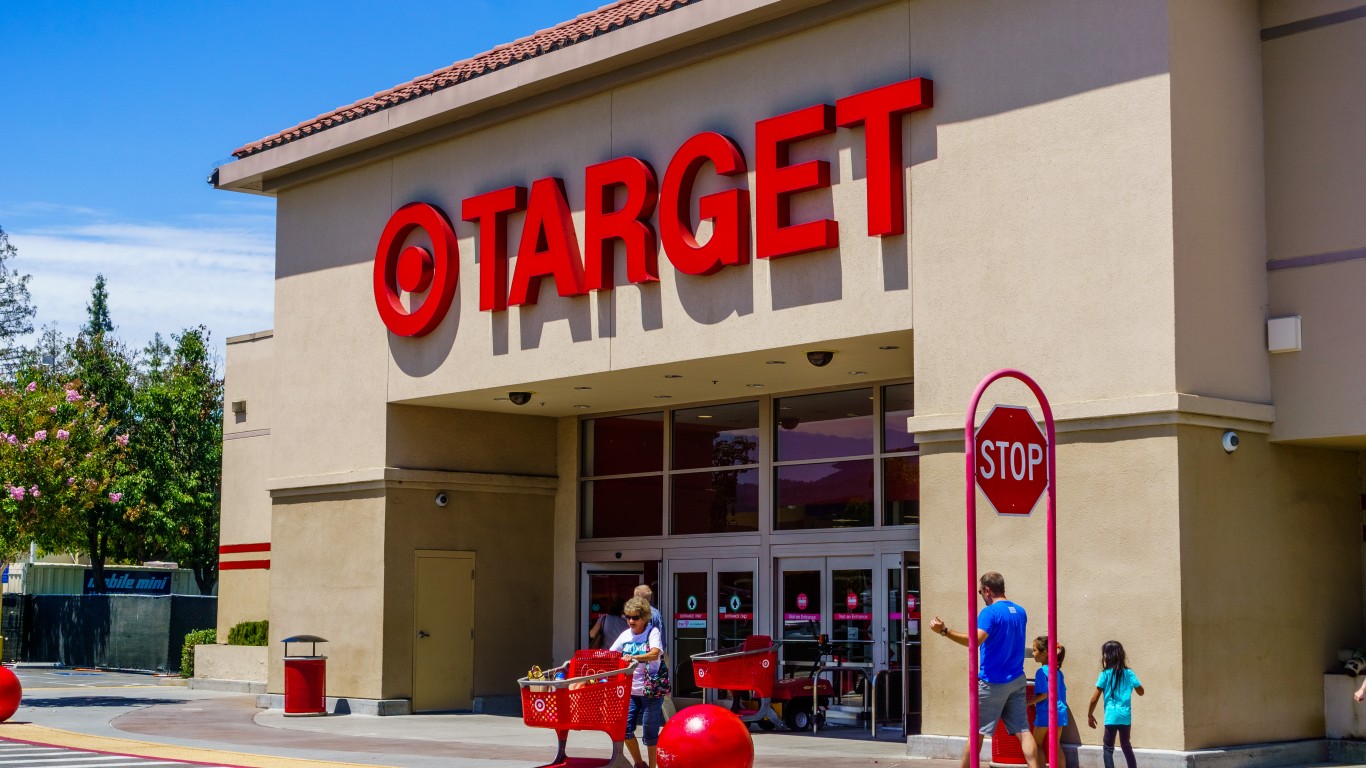
Shares of Target (NYSE:TGT | TGT Price Prediction) are up 5% to $159.91 in early Wednesday trading after the retailer posted a sharp Q2 FY2026 earnings beat, banked a large one-time tariff refund, and sharply raised full-year sales and profit guidance. Target stock closed Tuesday at $152.48 and had gained 60% year to date (YTD) through that close.
The rally caps a remarkable run for a name that spent much of the past two years in the penalty box. Target’s merchandising reset, price investments, and traffic recovery are showing up in the results for a second straight quarter, and management leaned into that momentum by lifting the outlook.
Merchandising Reset and Tariff Refund Power a Big Beat
Target’s net sales rose 5.3% year over year (YoY) to $26.54 billion, topping estimates, and diluted earnings per share doubled to $4.11. That figure included a $1.65 per share benefit from tariff refunds. Comparable sales rose 3.8% against a 1.9% decline a year earlier.
Furthermore, Target’s store comps rose 2.7% and digital comps rose 8.7%, driven by more than 25% growth in same-day delivery. Transactions climbed 3.6% and the average ticket ticked up 0.2%. Sales increased in every merchandise department, led by beauty and food.
Additionally, Target’s gross margin came in at 33.7% versus 29% a year ago, boosted by 370 basis points from tariff refunds. Capital spending hit $1.4 billion in the quarter, up 27% YoY on store remodels and new locations.

Target has cut prices on more than 10,000 items over the past year, mostly food, and CEO Michael Fiddelke signaled more cuts are coming.
Guidance Raise: Real Underneath, but the Headline Is Boosted
The retailer now expects full-year sales growth of 5%, up from 4%, and lifted EPS guidance to a range of $9.90 to $10.90 from $7.50 to $8.50. That compares with fiscal 2025 EPS of $7.57. Stripping out tariff refunds, the guidance midpoint reflects a $0.75 increase versus the prior range.
The distinction matters: Target expects a full-year operating margin 6%, including 90 basis points of benefit from the Q2 tariff refunds. Stripping out those refunds, the rate is projected about 50 basis points higher than last year’s adjusted 4.6%. The underlying improvement is real, just more modest than the headline suggests.
Fiddelke stated that Q2 results “build on the encouraging momentum we saw in the first quarter.” He added, “We’re encouraged,” while cautioning, “There’s a lot of work still in front of us, and the goal isn’t a couple strong quarters. The goal is years of sustained top-line growth.”
Peers Lag as Target Extends Its YTD Lead
For comparison, Walmart (NYSE:WMT) shares are trading at $114.68, up 4% YTD through Tuesday’s close, a fraction of Target’s YTD gain. Costco Wholesale (NASDAQ:COST) stock sits at $959.87, up 12% YTD, still leading the group on membership economics and traffic.
Kroger (NYSE:KR) shares trade at $56.44, down 8% YTD as grocery margin pressure lingers. Lowe’s Companies (NYSE:LOW) stock is at $217, down 9% YTD, weighed by softer DIY discretionary spending.
Jefferies analyst Corey Tarlowe described Target’s overhaul (expanded wellness, 3,000 added beauty products across 60 new brands, a reset of 75% of home decorative accessories, and a back-to-school assortment that is more than 50% new) as one of the broadest assortment refreshes in years, and said the market may be underestimating how durable the traffic benefits will be.
The Retail ETF Tells a Different Story
The SPDR S&P Retail ETF (NYSEARCA:XRT) is trading at $87.81, up 3% YTD. The fund is a broad, equal-weighted basket in which any single retailer is a small weight, which is why Target’s outsized Q2 rally barely moves the ETF’s tape. Its equal-weight design also means smaller specialty names influence performance as much as big-box giants.
Investors leaning on XRT for retail exposure should keep in mind its concentration in one narrow consumer segment. That can amplify swings tied to tariffs, consumer confidence, and holiday demand, in either direction.
What to Watch
Traders could look for signs that Target stock holds its early gains through the close and that follow-on analyst notes lift price targets to reflect the sharply raised outlook. The Q3 FY2026 back-to-school read-through and any signal on additional tariff refunds are the next catalysts on deck.

If comparable sales momentum persists without another tariff windfall, the bull case for Target strengthens materially. Otherwise, expect the market to refocus on the $0.75 underlying midpoint bump rather than the eye-catching headline EPS range.
Contact [email protected] for any questions or corrections.
David Moadel is financial writer specializing in stocks, ETFs, options, precious metals, and Bitcoin. David has written well over 1,000 articles for leading online publications, helping investors understand markets, income strategies, and risk.His work has appeared in The Motley Fool, InvestorPlace, U.S. News & World Report, TipRanks, ValueWalk, Benzinga, Market Realist, TalkMarkets, Finmasters, 24/7 Wall St., and others.With a master’s degree in education, David has taught at the elementary, high school, and college levels. That teaching background shapes his writing style: clear, educational, and practical. David has also built a loyal social-media audience by providing trustworthy financial content on YouTube, X/Twitter, and StockTwits.