XRP Holds Above $1 as Ripple Signs Korea’s First Regional Bank. Will It Move XRP?
Ripple just signed Korea's first regional bank onto its payments platform, yet XRP slipped below a dollar on the news. The reason why reveals a fault line running through every Korean payment deal Ripple has closed.

This post may contain links from our sponsors and affiliates, and Flywheel Publishing may receive compensation for actions taken through them.

Ripple announced an agreement with Jeonbuk Bank in Seoul on August 18, making it the first regional lender in Korea to deploy Ripple Payments.
Jeonbuk’s business customers had been sending money over SWIFT, which is the messaging network banks have used for cross-border transfers since the 1970s, but a payment can take days. Meanwhile, Ripple Payments clears in seconds and runs around the clock.
Despite the news, the XRP (CRYPTO:XRP) price fell on the same day. The token slipped to 98 cents in Asian trading hours, its lowest since November 2024, before recovering to $1.01. Will the Jeonbuk deal do anything for XRP?
What the Jeonbuk Bank Deal Covers
Jeonbuk Bank will use Ripple Payments for cross-border remittances on behalf of its business customers, which Ripple lists as import-export companies, IT startups and online content creators. Those are firms that have been sending money through correspondent banking, where a payment hops between intermediary banks and takes days to arrive.
Founded in 1969 in Jeonju, Jeonbuk is the dominant lender in North Jeolla Province and part of JB Financial Group. Ripple’s other two Korean clients, Kyobo Life Insurance and Kbank, both operate nationwide, so Jeonbuk is its first customer here whose own customers are concentrated in one region.
Fiona Murray, Managing Director for Asia Pacific at Ripple, framed that as the point in Ripple’s announcement. “Regional banks play a vital role in the real economy,” she said. “As the first regional bank in Korea to deploy Ripple Payments, Jeonbuk Bank is extending near real-time cross-border settlement directly to the businesses it serves.”
Jeonbuk is Ripple’s third Korean agreement of 2026. Kyobo signed for tokenised government bond settlement, which puts sovereign debt on a blockchain, and Kbank for institutional wallet infrastructure through Ripple Custody. So, Ripple has sold three different products to three institutions in Korea.
Park Choon-won, President of JB Jeonbuk Bank, said the partnership would let the bank “move beyond its role as a regional bank and emerge as a digital finance leader that meets global standards,” calling it a new growth engine.
Neither company said which asset settles the payments, and nothing reaches the XRP price until they do. Ripple’s release describes the service only as near real-time settlement, and the words XRP and RLUSD appear only in the boilerplate paragraph that closes every Ripple press release.
Ripple also did not disclose which banks, payout providers or messaging rails the service runs on. So, reading the announcement as Jeonbuk dropping SWIFT altogether goes further than anything Ripple said.
Korea Is Building Won Stablecoin Rails Without XRP
KB Financial Group, the country’s largest banking group, completed a won stablecoin pilot on May 17 with KG Inicis—the blockchain platform Kaia and the fintech firm OpenAsset. It covered issuance, offline payments at Hollys coffee kiosks, and a cross-border remittance to Vietnam.
The remittance is the piece to watch, because it is the transaction type Ripple sells and the one that would move the XRP price. KB converted a won stablecoin into a dollar stablecoin using Kaia’s on-chain liquidity, then handed the funds to a Vietnamese payment firm that paid them into an ordinary bank account. The whole transfer took under three minutes against several hours to several days on SWIFT, and cost roughly 87% less.
A bridge asset is a token a payment passes through when two currencies have no direct market, and Ripple built XRP to do exactly that job. Kaia’s liquidity pool handled the conversion instead, on a chain that competes with the XRP Ledger. KB is also working with Circle on converting won into USDC, a plan it announced in April.
Kbank signed an agreement with HashKey and BPMG on July 21 targeting a Korea to Hong Kong corridor, after BPMG ran won stablecoin pilots in Thailand and the United Arab Emirates. BNK Busan Bank tested its own version through K-STAR, an alliance it formed with AhnLab Blockchain, OpenAsset, Kaia and Lambda256. Shinhan Card went a different route again, partnering with the Solana Foundation in April.
The larger lenders are also organising, with eight including KB Kookmin, Shinhan and Woori forming a coalition to issue a won-pegged token while Hana leads a rival alliance. Jeonbuk has run one of these in the past. It completed a won stablecoin proof-of-concept with Danal Fintech covering issuance, consumer payments and merchant settlement, and that was in March 2025 with no public follow-up since.
Then again, the ruling Democratic Party and the Financial Services Commission agreed on July 20 to reintroduce the Framework Act on Digital Assets in September and hold subcommittee meetings twice a month. Although September is a target and not a fixed date, since the bill was proposed in April and earlier goals of a first quarter move stalled. Between them, Korea’s banks have paired with Kaia, Circle and Solana—and none has paired with the XRP Ledger.
What Would Put XRP Inside Korea’s Payment Flows?
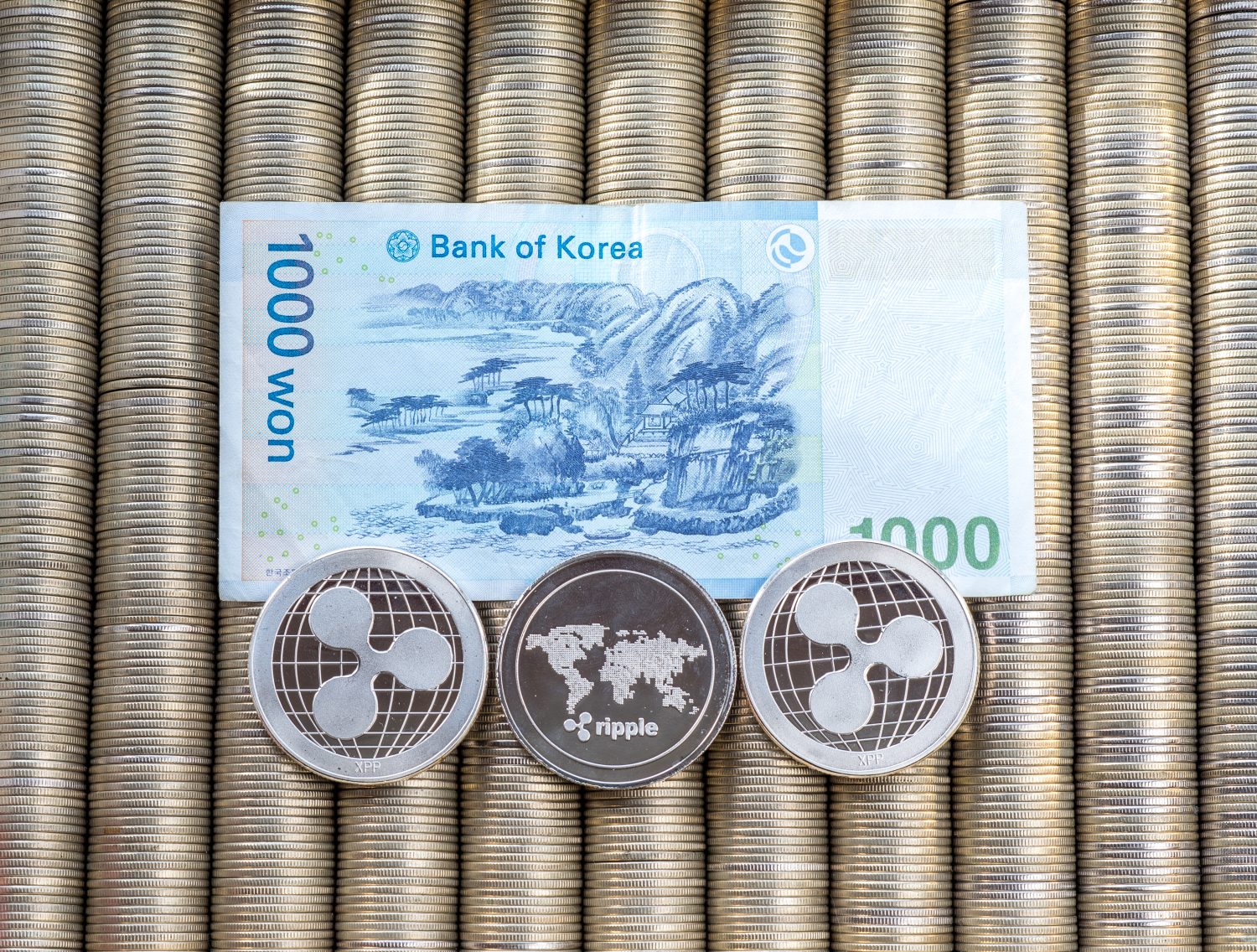
Ripple Payments does not commit to a single settlement asset. A corridor can run on XRP, on RLUSD, or on a fiat and stablecoin arrangement chosen for that route, so an announcement like Jeonbuk’s can be genuine business news and still say nothing about the XRP price.
XRP would earn its place where one side of a corridor has no stablecoin at all. If a Korean exporter needed to pay a supplier in a currency nobody has tokenised, a bridge asset could do work that two stablecoins cannot. The dollar corridor is not that situation, and KB’s Vietnam pilot showed why.
XRP Ledger validators have argued that a won stablecoin could support Ripple Payments through the ledger, pointing at Ripple’s work on the Permissioned DEX, a trading venue on the ledger that only verified institutions can use. Ripple has built something along those lines already, pairing Bitso’s peso stablecoin MXNB with RLUSD on that venue to settle the US and Mexico corridor.
The chain a won stablecoin launches on settles most of this. A token issued on the XRP Ledger would generate activity there and could use XRP to bridge into currencies with no direct pair. But a token issued on Kaia would not.
Even then, XRP’s role in a stablecoin transfer on its own ledger is the network fee, currently 0.00001 XRP per transaction, which is a hundredth of a cent, plus the reserve each account holds. Two developments would change the picture. Ripple could name XRP as the settlement asset for a Korean corridor, or a won stablecoin could launch on the XRP Ledger, but neither has been announced.
Will the Jeonbuk Deal Move XRP?
So far the deal hasn’t helped the XRP price move higher. Ripple sold a payments platform to a bank, the settlement asset has not been named, and the routes Korea keeps testing move one stablecoin into another without a bridge.
As things stand, Ripple is still gaining from the deal. The company now has three Korean institutions across payments, custody and tokenisation, and Korea has dozens more regional banks, so a sale like this one can be repeated.
Moreover, Ripple has never named the settlement asset for a Korean corridor, and a company that wanted to advertise XRP demand would have said so by now. The Framework Act also returns to the National Assembly in September, and whichever chain the first legal won stablecoin launches on will get the transaction volume that follows it. Every Korean pilot so far has picked a chain other than the XRP Ledger.
Contact [email protected] for any questions or corrections.
Sam Daodu is a crypto analyst who's spent nearly a decade making blockchain understandable—no easy task when most whitepapers read like fever dreams. He writes for 24/7 Wall St., covering Bitcoin, altcoins, and crypto market analysis for investors. Before crypto, he was a tech writer (back when explaining "the cloud" was peak innovation). Since 2018, he's written for CoinTelegraph, Yahoo Finance, The Block, Cryptonews, Zypto, Rain, and more—basically anywhere people want crypto news without the headache. Sam runs MacLabs Marketing, a content agency for crypto brands tired of sounding like AI wrote their website. He also publishes free crypto education on his site for Web3 enthusiasts who think "gas fees" is a typo. When he's not writing or staring at charts, Sam's either: - Watching anime (currently convinced One Piece has better tokenomics than most altcoins) - At the gym sculpting himself into a Greek god - Listening to the music your mum warned you only bad boys listen to Connect: LinkedIn | Email | MacLabs Marketing