Four Korean Banks Join Ripple at Seoul Event: Are They Using XRP?
Four major Korean banks shared a stage with Ripple at a high-profile Seoul event, sending XRP holders into a frenzy, but a closer look at what was actually announced raises serious questions about whether any of them have committed to…

This post may contain links from our sponsors and affiliates, and Flywheel Publishing may receive compensation for actions taken through them.
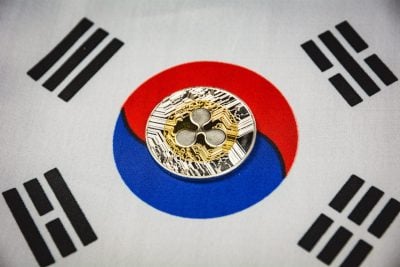
Four Korean financial institutions took the stage with Ripple at the XRP Seoul event, leading many XRP (CRYPTO:XRP) holders to interpret the banks’ presence as a sign that banks use XRP. The banks in attendance included Woori Bank, Kbank, and Kyobo Securities, with either Jeonbuk Bank or Kakao Bank marking the fourth participant.
During the event, Ripple also introduced XRP Asia, signaling a regional initiative to promote the XRP Ledger, the public blockchain that underpins the XRP token. This raises the question: Are these banks actually using the XRP token, or are they simply using Ripple’s technology?
Working With Ripple and Using XRP Are Two Separate Deals
It’s important to differentiate between partnering with Ripple and using XRP. A bank may choose to work with Ripple without ever engaging with XRP itself. Ripple provides payment software that facilitates transactions between banks, telling one bank who to pay, how much, and in what currency. This software can operate entirely with traditional currencies like dollars, won, or yen.
The alternative setup involves converting one currency into XRP, moving through the XRP Ledger, and converting it into the destination currency. Banks find this bridge useful because cross-border payments traditionally require cash set aside with foreign partner banks. Using XRP as a bridge asset lets banks acquire the necessary value when the payment is made.
To summarize, the first scenario is a partnership where a bank uses Ripple’s software, while the second scenario involves a demand for XRP as a financial bridge, requiring someone to purchase the token for each transaction. Many headlines tend to confuse these two distinct arrangements.
The Seoul Banks Use Ripple’s Products Without Naming XRP as the Settlement Asset

Each bank presenting at the event has established a working relationship with Ripple. For example, Kbank launched a remittance pilot program with Ripple targeting the UAE and Thailand in April 2026. Jeonbuk Bank utilizes Ripple Payments to provide near-instant cross-border settlements for its business clients.
Additionally, Kyobo Life, associated with Kyobo Securities, collaborates with Ripple to settle tokenized government bonds, while Woori Bank works with BDACS, a Korean custodian that manages XRP for institutional clients.
However, the details shared during the event do not explicitly mention XRP as the asset used for transactions. Ripple Payments can settle payments using local currencies, Ripple’s RLUSD stablecoin, or XRP. Likewise, a custodian managing XRP for clients is simply holding the token, not using it for payments.
Ripple President Monica Long called this moment the start of the “next big institutional growth phase” for the XRP Ledger. However, this statement is more of a potential future forecast rather than evidence of current XRP usage by these banks.
Three Questions Separate XRP Usage From Ripple Partnerships

When assessing any bank announcement, three key questions should be considered:
- Does the announcement specify XRP as the settlement asset?
- Does the announcement commit to a certain transaction volume through this partnership?
- Is the agreement formalized as a signed contract, or is it merely a non-binding memorandum of understanding?
As it stands, the information disclosed at the Seoul event does not fulfill any of these criteria. The presentations focused on existing collaborations and products, and no new agreement was announced for XRP as a settlement asset. So far, the listed XRP users are mostly payment companies rather than banks, such as Japan’s SBI Remit, which has been using XRP for transfers to the Philippines since 2021.
Do Any Banks Use XRP After the Seoul Showcase?
Publicly, the Seoul banks are leveraging Ripple’s payment solutions, tokenization capabilities, and custody services. However, their announced agreements don’t demonstrate actual use of XRP for payment settlements. Ripple has gained significant exposure, partnered with four regulated institutions, and launched a regional initiative – a win for the company.
This situation leaves XRP holders with headlines about banks but without the anticipated demand for the token. As of October 4, XRP is trading at $1.50.
If Kbank, Jeonbuk Bank, or any other participating bank announces an agreement that names XRP as the settlement asset and commits to a transaction volume, that could change the current perspective. As it stands, if these partnerships continue to rely on Ripple’s software and stablecoins, the demand for XRP may remain stagnant.
Contact [email protected] for any questions or corrections.
Sam Daodu is a crypto analyst and the editor of 24/7 Wall St.'s Crypto Desk, where he covers Bitcoin, XRP, Ethereum, Solana and the altcoins investors search for most. His work focuses on price levels, spot ETF flows, on-chain data and the regulatory decisions that move crypto markets, written so a first-time buyer and a seasoned trader can both use it.
Sam has written about crypto professionally since 2019 and has published more than 2,000 articles. Before joining 24/7 Wall St., he wrote for crypto media outlets and Web3 companies and ghostwrote for crypto founders and token launches. His analysis is syndicated on Yahoo Finance, MSN and AOL and has been cited by other crypto news sites. He also founded MacLabs Marketing, a content and personal branding agency for crypto founders and executives.
When he isn't reading charts, Sam is usually at the gym or watching One Piece, a series he maintains has better tokenomics than most altcoins.