Bessent: “I Don’t Really Understand” Oil Price Spike, As Iran War Nears 6 Month Mark
Treasury Secretary Scott Bessent says he cannot explain Thursday's oil price spike, but lawmakers and commentators think the answer is obvious, and it involves a war now closing in on six months with no end in sight.


Treasury Secretary Scott Bessent told reporters Thursday, Aug. 20, 2026 that “We’ve got a spike in oil prices today that I don’t really understand.” He called the move “noise” and expressed confidence in the administration’s broader fiscal approach, according to Mediaite, Raw Story and Fox News. At the moment of the remark, WTI crude was trading at $88.15 as of 2:30 p.m. ET on Thursday, Aug. 20, 2026, according to CNBC. The war between the United States, Israel and Iran nears its six-month mark on Aug. 28, 2026.
Reporting Thursday tied the intraday jump to Iran’s pledge to keep the Strait of Hormuz closed. Bessent did not connect the two.
Reaction Was Immediate
Fox News co-host Jessica Tarlov said “literally everyone else knows” what is driving the spike. Rep. Ted Lieu tied the move to the conflict, saying the cause “starts with W and ends in R.” Commentators pointed to tension between Bessent’s stated confusion and his own role in the economic pressure campaign against Iran. Critics’ framing, not our own.
That campaign escalated sharply this week. On Wednesday, Aug. 19, 2026, President Trump announced an “Economic D-Day” against Iran, describing a “crushing economic operation” involving “Economic Warfare and Isolation on an unprecedented scale,” targeting Iranian financial institutions, businesses, airports, government entities, oil-smuggling networks, swap lines, cash transfers, exchange houses, ship registries and front companies. Trump warned any country offering Iran “any type of lifeline” would face “TREMENDOUS Economic Consequences.” Bessent previewed the campaign on Thursday, Aug. 13, 2026, describing it as “a combination of economic isolation like the world has never seen before,” alongside continued blockade measures at the Strait of Hormuz. Our prior coverage detailed Bessent’s recent market interventions.
Tehran Responds
Iranian Foreign Minister Abbas Araghchi dismissed the threat, calling it “a diversion from America’s own crisis: unprecedented debt & surging interest costs,” and describing it as “economic terrorism” that “will only bring further defeat and enmity of Iranians.”
Six Months of War, by the Numbers
The conflict began Feb. 28, 2026, when Israel and the United States launched strikes on Iran. It is distinct from the earlier Twelve-Day War of June 13 to 24, 2025. The Strait of Hormuz normally carries about one-fifth of global oil supply. Traffic has effectively collapsed: as of early August, only 8 to 15 vessels were transiting daily, down from roughly 130 before the war.
WTI’s path has been volatile. WTI spot was $66.96 on Feb. 27, 2026, the day before the war began, then peaked at $114.58 on April 7, 2026, fell back to $69.60 on July 6, 2026, and settled at $86.48 on Aug. 18, 2026. Separately, Brent traded near $84 on Aug. 10, 2026, up roughly 16% since the war’s onset, a different benchmark near WTI at that date.
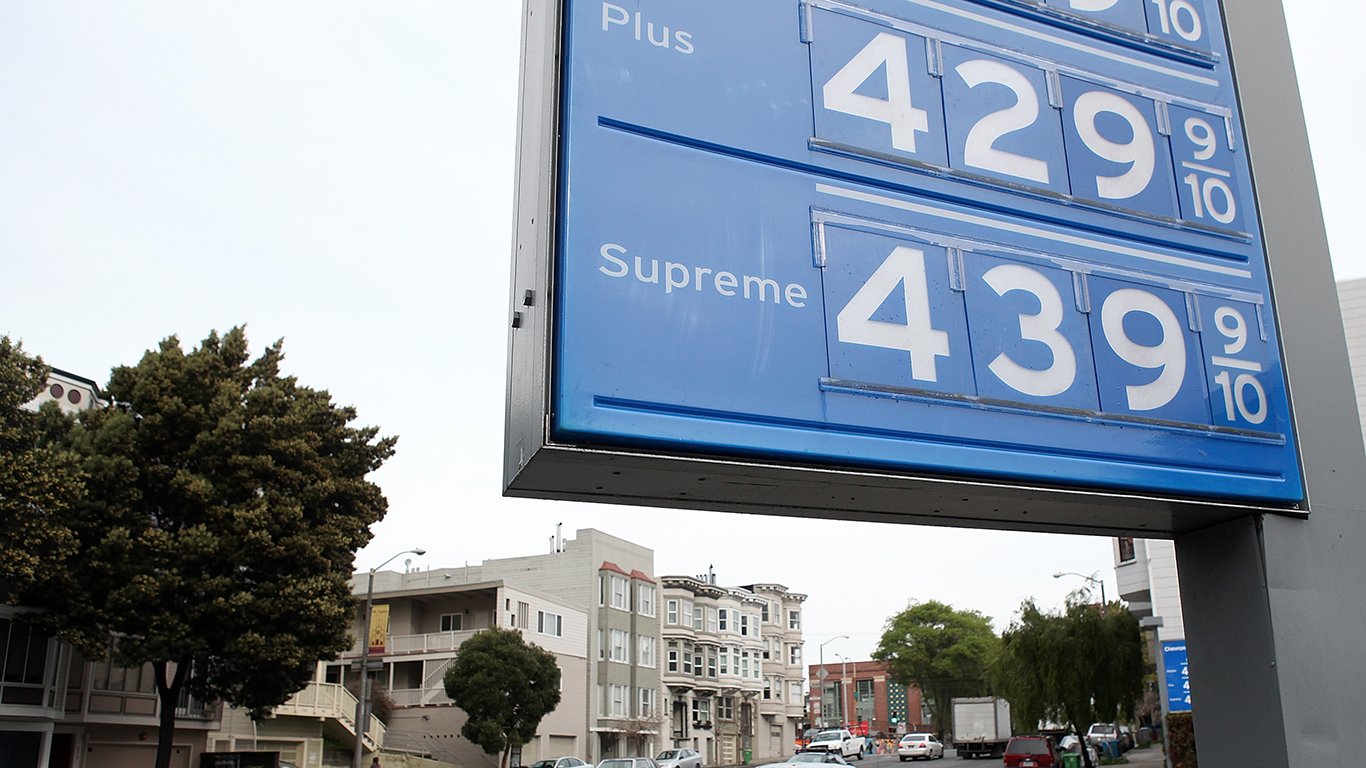
Araghchi said Iran will not reopen the strait without major concessions, specifically sanctions relief and war reparations, and has insisted on a degree of control over shipping routes through it, a position reporting describes as contrary to international maritime law norms. The U.S. naval blockade reportedly cost Iran nearly $5 billion in oil revenue by early May, with potential annual losses estimated as high as $18 billion if it continues. American drivers are feeling it: the U.S. national average gas price was $4.09 a gallon as of Aug. 19, 2026, up two cents from the prior reading.
A war approaching six months with no resolution in sight, a fresh sanctions campaign announced 24 hours earlier, and a Treasury Secretary who says the resulting market move is something he does not understand.
Contact [email protected] for any questions or corrections.
AJ spent 10 years writing about financial markets at The Motley Fool. His coverage centers on technology stocks and the broader macroeconomic trends, from interest rates to geopolitics, that shape where markets are headed next. AJ is drawn to the stories where big-picture economics and individual companies collide.