Former Trump Economic Adviser: Iran’s Oil Exports Have Fallen to Zero. Here’s What It Could Mean for Oil Prices
A U.S. naval blockade has done what years of financial sanctions could not, and oil markets are already reacting. Here is what zero Iranian exports could mean for gas prices at the pump and supply around the world.


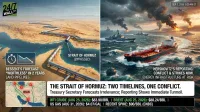
On Fox Business’s Kudlow program that aired on Friday, September 4, former National Security Adviser Robert O’Brien described a Treasury-led sanctions and interdiction effort against Iran, referred to as Operation Economic Outcast.
Iranian crude oil exports have fallen to zero, with host Larry Kudlow stating: “Iran is not selling any oil, they’re down to zero. They’re not transiting anything through the Strait of Hormuz. Their bank accounts are being shut down.”
Treasury Secretary Scott Bessent stated: “Since the U.S. has reinstated the naval blockade, no Iranian crude cargoes have successfully transited the Strait of Hormuz to China.“ Reuters reported similar developments, with one story titled Blockade succeeds where sanctions failed as Iran oil exports stall.
Why a Blockade Can Hurt More Than Sanctions
The segment argued that a blockade directly attacks Iran’s oil revenue at the source: “The Chinese don’t pay if there’s no oil. The Chinese are not lenders, they’re not going to pay on good faith, they pay when they get their merchandise. If there’s no merchandise, there’s no money.”
Traditional financial sanctions police money flows after cargo moves. However, a physical blockade removes revenue at the point of transfer. That means an exporter like Iran, unable to physically deliver cargo, can’t receive payment or borrow against future delivery.
Treasury Is Following Iran’s Money Around the World
The U.S. Treasury, alongside the EU, is tracking and freezing Iranian-linked assets in Dubai, Cyprus, the Caymans, the British Virgin Islands, and Panama.
Turkish banks, including Golden Global Bank, were reportedly sanctioned over Iran dealings. U.S. Treasury Secretary Scott Bessent stated: “We are tracking down the IRGC’s assets, and I’ll say it on worldwide TV just so you know, we know where in the British Virgin Islands your accounts are at these trust companies, we know the $100 million houses you have around the world. We’re going to freeze those.”
The segment described the Iranian rial as having collapsed to 2 million rials per dollar and Iranian inflation as exceeding 100%.
What Zero Iranian Exports Could Mean for Oil Prices
If a producer’s barrels leave the market, supply must be replaced, or the balance tightens. The EIA’s May 2026 Short-Term Energy Outlook flagged that Iran would have to reduce production in part due to the U.S. blockade, and now expects OPEC’s spare capacity to average 2.5 million b/d in 2027, compared with a previous forecast of 3.8 million b/d.
WTI crude settled at $91.48 per barrel on September 1, 2026, up $4.45, or 5.1%, from the prior day, with Reuters reporting oil settling up more than $4 a barrel on renewed US-Iran fighting. The U.S. average retail regular gasoline price was $4.071 per gallon for the week ending August 31, 2026, and Fox Business cited a national average of $4.15 per gallon on September 4, described as a record for that point in the year per AAA.
Key Takeaways
The big question for oil markets is who replaces the missing Iranian barrels? If Iranian exports stay near zero, other producers will need to ramp up production or global oil supplies could tighten further. With WTI already above $90, investors should watch Iranian exports, OPEC production, and shipping through the Strait of Hormuz. If more barrels come offline, oil and gasoline prices could move even higher.
Contact [email protected] for any questions or corrections.
Thomas Richmond is a financial writer and content strategist with 5+ years of experience covering stocks and financial markets. He has published over 500 articles focused on individual stock analysis, helping investors better understand business fundamentals, stock valuations, and long-term opportunities.
Thomas previously served as a Content Lead at TIKR, a stock research platform, where he helped scale the company’s blog to hundreds of articles per month and contributed to a weekly newsletter reaching more than 100,000 investors.
Outside of work, Thomas enjoys weight lifting and soccer.