Fed Signals Conditional Rate Hike Trigger as AI Repricing Risk Takes Center Stage
The Fed just named a specific market risk it had never flagged this openly, and buried inside the July minutes is a precise trigger that would force officials back into hiking mode.

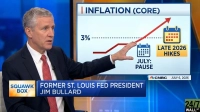
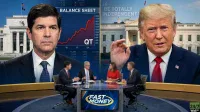
The Fed’s July meeting minutes, released and unpacked by CNBC’s Steve Liesman on August 19, 2026, gave investors an unusually specific answer to a question that has hung over markets all year. What would actually push officials back into hiking mode? The document lays out the conditions and introduces a macro risk that the central bank had not previously featured this prominently.
According to Liesman, the minutes said, “Most supported maintaining the current range. However, many thought a policy tightening would likely be necessary if inflation did not decline.” The upper bound of the federal funds target has been held at 3.75% since December.
Officials also discussed how “an AI disappointment could lead to a significant repricing of stocks with consequent negative effects on consumer spending.” A softer inflation report arrived after the July meeting ended, so the hawkish tone is best read as a description of the Fed’s reaction function.
Conditional Hawkishness Describes a Reaction Function
Minutes are backward-looking by design. They tell you what a committee was thinking three weeks earlier, and the data that shaped the discussion has often been superseded by the time investors see the document.
Liesman relayed that “several saw price increases as broad based over the past year, saying underlying inflation looked to be elevated even after accounting for tariffs and those higher energy prices.” Members also worried about “inflation expectations getting out of control after having been elevated for so long.”
The Fed’s preferred core PCE gauge sat at an index level of 130.266 in June, with a monthly rise of nearly a tenth of a percent. That reading gives the doves ammunition the minutes could not anticipate.
Officials still concluded that “inflation risks were seen as skewed to the upside.” Read the document as a map of triggers.
AI Repricing Risk the Fed Just Named
The more interesting passage in the minutes concerns equities. The Fed acknowledged, in its own words, that AI-driven market concentration is now a channel through which financial conditions reach households.
The Invesco QQQ Trust (NASDAQ:QQQ) is up 25.79% over the past year and 16.57% year to date through August 19. Wealth effects at that scale feed directly into consumer spending, so a sharp reversal would tighten conditions without the Fed lifting a finger.
This cuts both ways. A meaningful AI selloff would cool demand and probably do some of the Fed’s inflation work, which would argue for cuts rather than hikes (riding a mania while planning the exit is the whole exercise in our free bubble survivor’s handbook). A disorderly repricing could also freeze credit and force aggressive easing.
The VIX closed at 15.84 on August 18, inside its normal range and well below the March peak of 31.05. Stress is contained, but the committee is now watching the AI concentration behind that calm.
What Would Actually Change the Picture
A conditional hawkish stance is easier to interpret than it sounds. The Fed will not hike unless inflation reaccelerates, and it will not cut on schedule just because markets want it to.
The data points to watch are narrow. Core PCE moving decisively above the 2.5% threshold the Fed treats as concerning would matter, as would evidence that inflation expectations in surveys are drifting higher. The unemployment rate ticked down to 4.1% in July, so the labor market can still support wage pressure.
Bond markets are pricing something less dramatic. The 10-year Treasury yield closed near 4.71% on August 18, near the year’s high, while the 10-year minus 2-year spread is positive at 0.46%.
For someone holding stocks and bonds, the Fed has told you what it fears and what would move it. A reacceleration in core prices, with equities still elevated, is the one combination that puts a hike back on the table.
Contact [email protected] for any questions or corrections.
Omor Ibne Ehsan is a writer at 24/7 Wall St. He is a self-taught investor with a focus on growth, cyclical, and dividend equities that have strong fundamentals, value, and long-term potential. He also has an interest in high-risk, high-reward investments such as penny stocks.