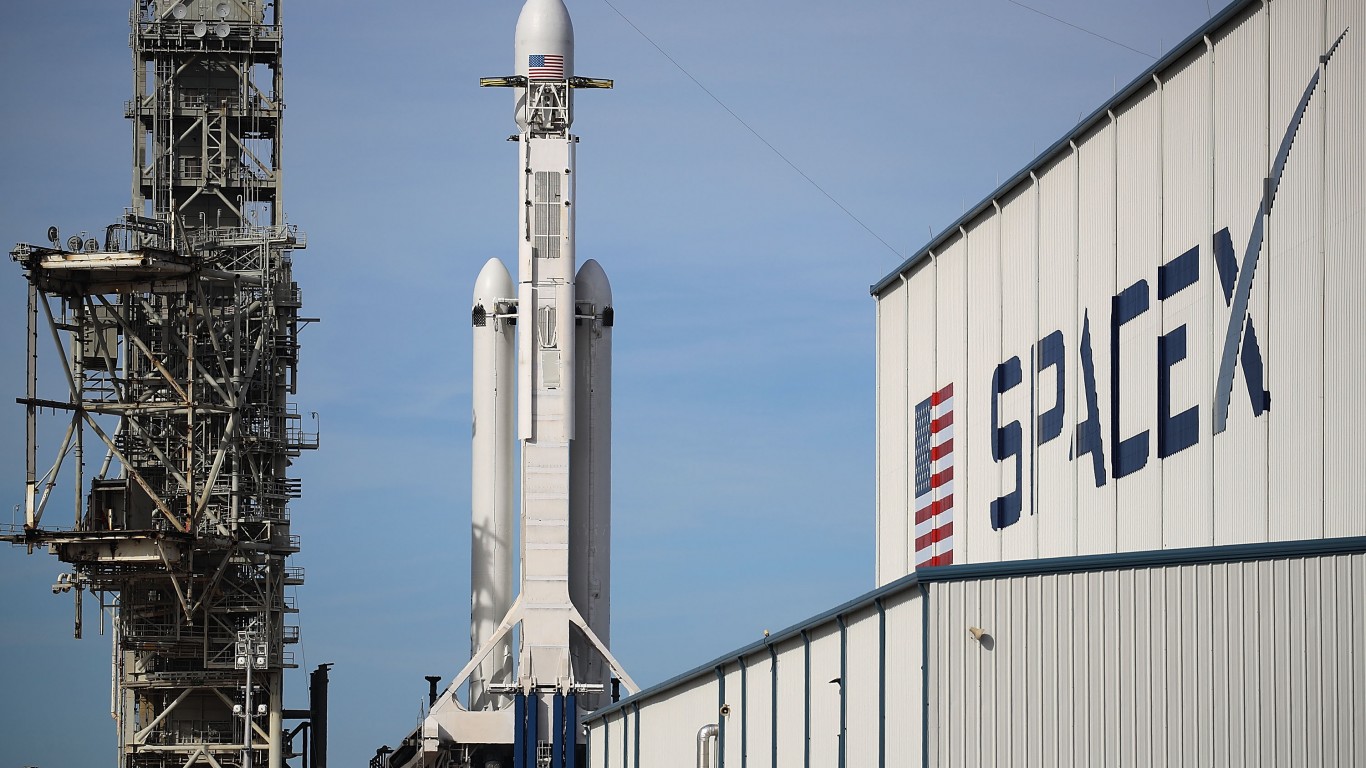
It’s Not Just SpaceX. Firefly Aerospace is Scoring Big Wins for Itself
SpaceX dominates the headlines and eats up investor attention, but a smaller rocket company keeps quietly racking up wins and landing contracts that suggest the space economy has room for more than one winner.


Space Exploration Technologies (NASDAQ:SPCX | SPCX Price Prediction) is the biggest IPO to hit the public market, and it’s paved the way for one of the most active and choppy summers for the markets in a long time.
As SpaceX shares fluctuate wildly in both directions around that IPO price of $135 per share, there’s sure to be a flood of buyers and sellers. With interest among hedge funds as of June, perhaps it’s not a terrible idea to punch a ticket, even if the shares lack the required “seasoning” needed for inclusion in the S&P 500.
Don’t forget about Firefly Aerospace
Like it or not, SpaceX and the rise of the space economy are going to continue taking the public markets by storm. And while it’s pretty much got a wide moat and a virtual monopoly over the economic opportunities to be had in space, there are pure-play (space without the AI) names out there that are also worth keeping tabs on, even if they lack the star power of someone like Elon Musk.
As SpaceX looks to change the world up above and here on Earth with its colossal Colossus data centers, Firefly Aerospace (NASDAQ:FLY) is also posting wins for itself. Of course, shares of Firefly Aerospace have been publicly traded far before Elon Musk’s space giant touched down with its Earth-moving IPO. And it’s not hard to imagine that many former Firefly shareholders have since jumped ship.
When you look at the chart, shares of the up-and-coming $4.2 billion rocket company tanked just weeks before SpaceX went live. Since SpaceX’s IPO day, shares of Firefly have lost another 20% or so, bringing the name down a grand total of 56% from those now-distant all-time highs hit back in late May. It’s easy to forget about fellow rocket firm Firefly now that SpaceX has dominated the headlines. But, in my view, Firefly is more than just a small rocket company that has to stand in the shadows of one of the biggest AI-space hybrid titans on the market.
The Firefly Alpha is worth watching closely
Size and deep pockets matter when it comes to ambitious undertakings such as launching reusable rockets into orbit. Of course, visionary leadership also matters a great deal. And while SpaceX is already moving ahead with its heavy-payload Starship, Firefly looks to progress its medium-lift craft; questions linger as to whether the success of SpaceX’s Starship takes away from the share of the pie to be had by a smaller, niche medium-lift rocket.
Of course, just because Starship drives down costs of sending infrastructure into space doesn’t mean that medium-lift rockets are going to be rendered obsolete. But, for the most part, I do think that it doesn’t make sense to own such a smaller rocket firm if you’re expecting it to make a dent in SpaceX’s massive moat.
So, what’s the reason to pick up Firefly, the vast underdog in the space race? In my view, Firefly is fine posting its own wins and hitting its own milestones. The big question is whether its own craft can keep sticking the landing. If they can, I wouldn’t be surprised if the shares get back on the ascent.
The bottom line
You don’t have to compare every space firm to SpaceX — although I’m sure most investors can’t resist. At the end of the day, there’s a place for Firefly’s Alpha rocket. As the firm moves ahead with its lunar missions and defense contracts, I think the name could rise as a terrific diversifier for firms or the government that care about redundancy. The contract backlog seems to suggest that Firefly can continue to win, even as SpaceX powers ahead.
Perhaps the biggest reason to consider owning Firefly, as well as SpaceX, lies in the very modest 15.0 times price-to-sales (P/S) multiple, far less than the 66 times P/S multiple commanded by SpaceX shares.
Contact [email protected] for any questions or corrections.
Joey is a 24/7 Wall St. contributor and seasoned investment writer whose work can also be found in publications such as The Motley Fool and TipRanks. Holding a B.A.Sc in Computer Engineering from the University of British Columbia (UBC), Joey has leveraged his technical background to provide insightful stock analyses to readers.
Joey's investment philosophy is heavily influenced by Warren Buffett's value investing principles. As a dedicated Buffett disciple, Joey is committed to unearthing value in the tech sector and beyond.