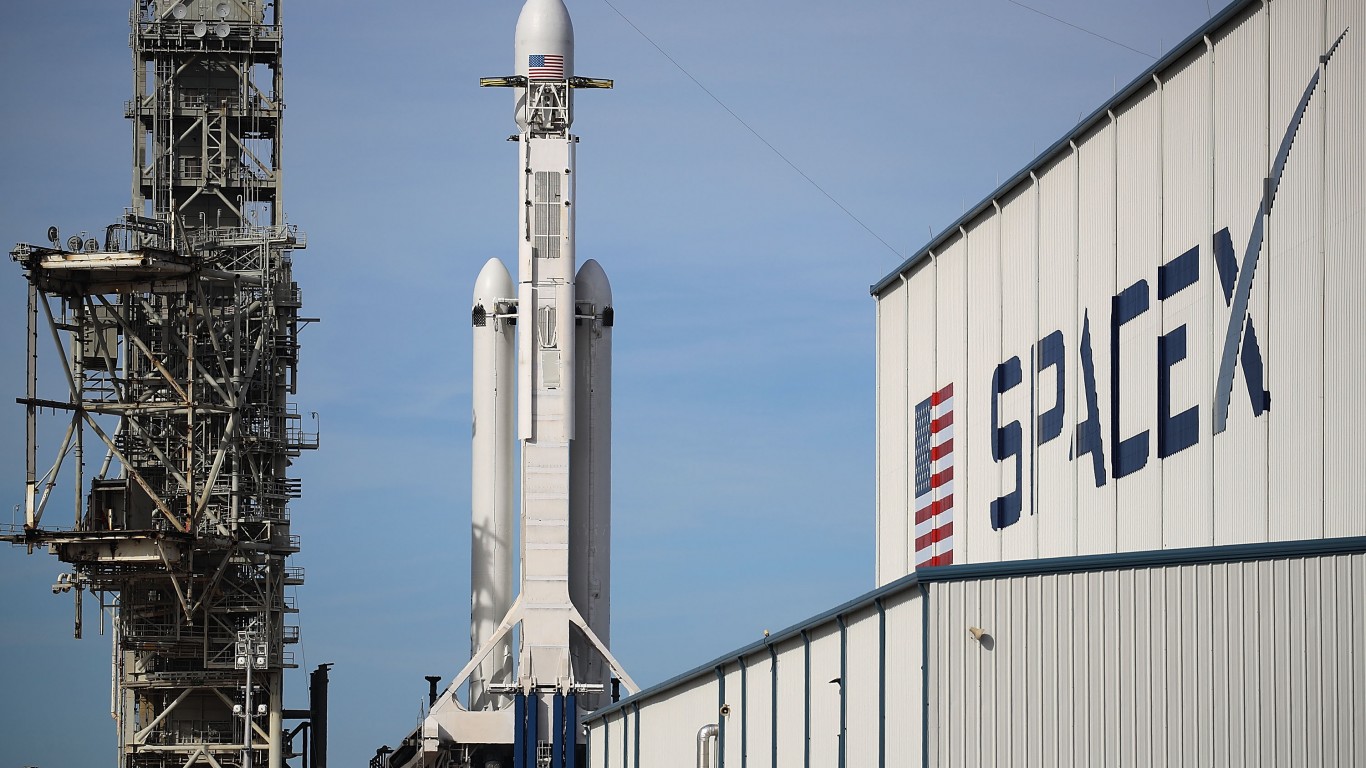
DZ Bank Tells Clients To Sell SpaceX. Sees Stock Falling To $100.
A major German bank just issued a rare public bear call on one of the most hyped stocks of 2026, warning of crash risk in its valuation orbit as a flood of new shares threatens to reshape the entire SpaceX…


DZ Bank initiated coverage of SpaceX with a Sell rating and a $100 price target on August 21, 2026. Against Thursday’s $134 close on a $1.03 trillion company, the target is a rare public bear call on a recently public mega cap, and it deserves a close look from long-term holders.

| Ticker | Company | Firm | Action | Old Rating | New Rating | Old Target | New Target |
|---|---|---|---|---|---|---|---|
| SPCX | SpaceX | DZ Bank | Initiation | N/A | Sell | N/A | $100 |
Analyst’s Case
The DZ Bank Analyst Markus Leistner warned of “crash risk in the valuation orbit.” Capital expenditures reached $18.37 billion in a single quarter, with $15.83 billion directed to AI compute infrastructure, and management guided the next two quarters to a similar CapEx level. That buildout has to be powered, cooled, and networked by somebody, which is exactly why we rounded up seven suppliers behind the AI data-center boom in a free report here. Add the pending $60 billion Cursor acquisition expected to close in Q3 2026 and a $541 million net loss, and the bear case writes itself.
Company Snapshot
SpaceX (NASDAQ:SPCX | SPCX Price Prediction) is a vertically integrated aerospace, telecommunications, and artificial intelligence company operating across Space, Connectivity, and AI segments. In its first public quarter, revenue reached $7.81 billion versus a $6.82 billion consensus, a 14.59% beat, with a loss per share of $0.09 against a $0.29 estimated loss. AI segment revenue grew 247% year over year, Connectivity revenue hit $4.29 billion, and Starlink subscribers doubled to 12.0 million. The company ended the quarter with $93.52 billion in cash and a $47.5 billion backlog.
Why the Move Matters Now
SpaceX stock has been under pressure since its debut. Shares closed at $134 on August 20, 2026, down 16.74% from the June 12 close of $160.95, and opened Friday trading at $131.54. Float mechanics matter. A widely circulated r/stocks post flagged that “up to 911.5M shares held by employees and early investors become eligible to trade,” more than the roughly 639M shares sold in the IPO. “Less than 5% of the company was initially available to trade. That scarcity was a big part of the setup, and now it starts changing,” the author wrote. Against that supply backdrop, DZ Bank’s Sell initiation carries more weight than the isolated rating suggests.

What It Means for Your Portfolio
For retirement-focused investors, the DZ Bank Sell initiation is a useful counterweight to the bullish narrative. The operational story is intact: management is projecting $100 billion of ARR by December 2026 and sees a path to $1 trillion in revenue by 2030. The risk is the price to get there. With CapEx guided to remain elevated, a $60 billion acquisition pending, and post-lockup supply hitting the market, the SpaceX thesis hinges on execution. The revised outlook warrants a closer look, even as near-term volatility remains a real risk.

Contact [email protected] for any questions or corrections.
AJ spent 10 years writing about financial markets at The Motley Fool. His coverage centers on technology stocks and the broader macroeconomic trends, from interest rates to geopolitics, that shape where markets are headed next. AJ is drawn to the stories where big-picture economics and individual companies collide.