TSMC vs. ASML: Which Semi Monopoly Has the Wider Moat?
The AI boom has crowned two near-unassailable monopolies in semiconductors, but when hyperscaler budgets tighten and rivals scramble to break their grip, only one of these giants may prove truly unconquerable.

This post may contain links from our sponsors and affiliates, and Flywheel Publishing may receive compensation for actions taken through them.
The AI revolution has acted as a tide that’s lifted all (or, at the very least, most) ships in the semiconductor waters. But as the waves get rougher and investors anticipate a hurricane moving in, questions linger as to whether the semi trade can still shoot to higher highs, especially amid growing concern about high capital expenditures from the hyperscalers.
Heightened CapEx has not been met with investor applause, and as those spending figures get higher by the year, my guess is that investors are going to start calling for caps or cuts. And if share prices don’t march higher for the hyperscalers, I wouldn’t be at all surprised if spending were to come down. Does that mean the hyperscalers lift their foot off the AI pedal? It doesn’t have to be that way. Indeed, you can opportunistically cut costs while still continuing to move fast in the great AI infrastructure buildout. How?
Whether that’s opting for cheaper, more efficient AI inference chips (preferably custom silicon specialized for certain inference applications), or putting more into R&D to achieve true AI breakthroughs that make inference and training cheaper, I do think we should get ready for the deep-pocketed hyperscalers to get craftier with how they spend their massive budgets.
Indeed, scaling up and throwing money at hardware may have worked well in the earlier stages, but as the AI revolution evolves, I believe that the big gains in semis will be just a bit tougher to come by.
So, for semi investors, maybe it’s more about leaning away from the overheated semi plays building commoditized memory and storage chips and leaning into the monopolies that the rivers run through in semis.
Taiwan Semi and ASML have some of the widest moats out there
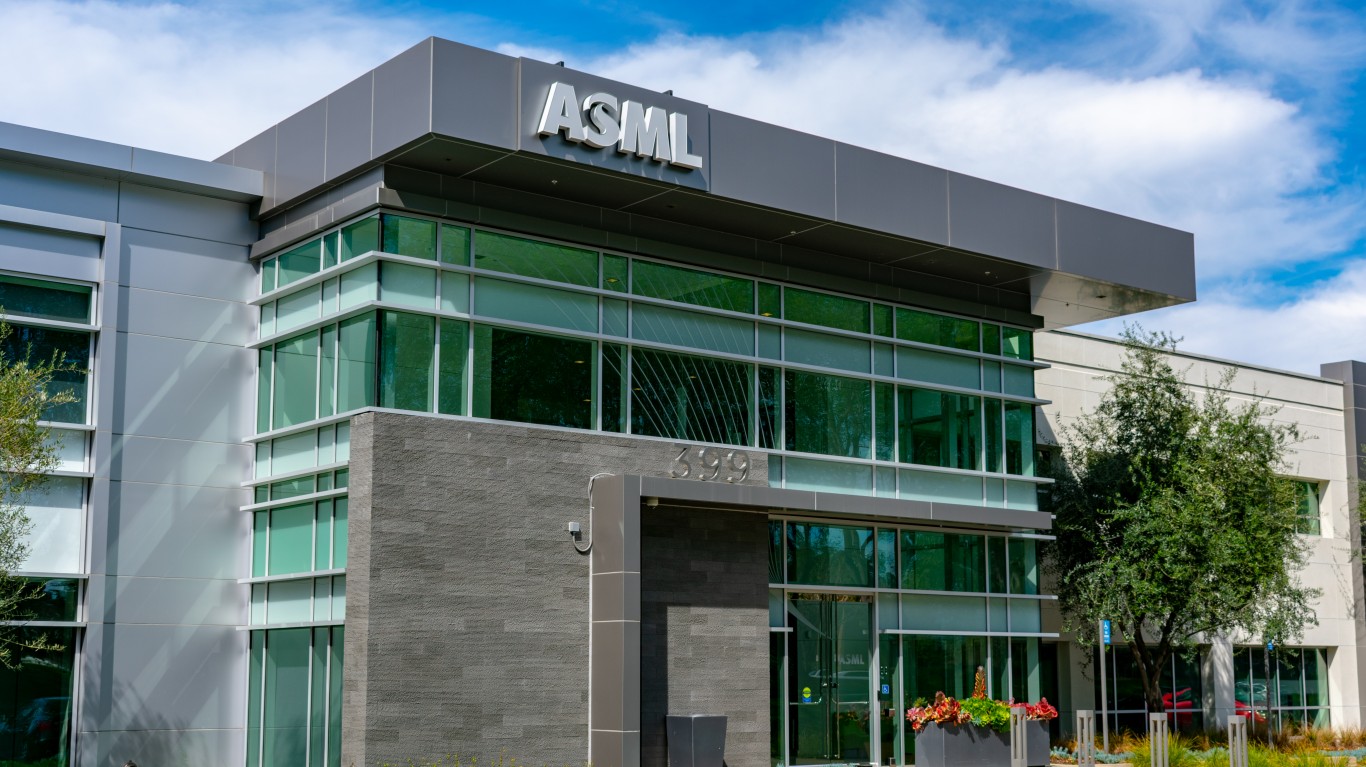
When it comes to the widest economic moats in semis, I view Taiwan Semiconductor Manufacturing (NYSE:TSM | TSM Price Prediction) and ASML (NASDAQ:ASML) as the widest monopolistic plays in the semi space today. The industry needs ASML’s EUV lithography machines, or everything will be at a standstill.
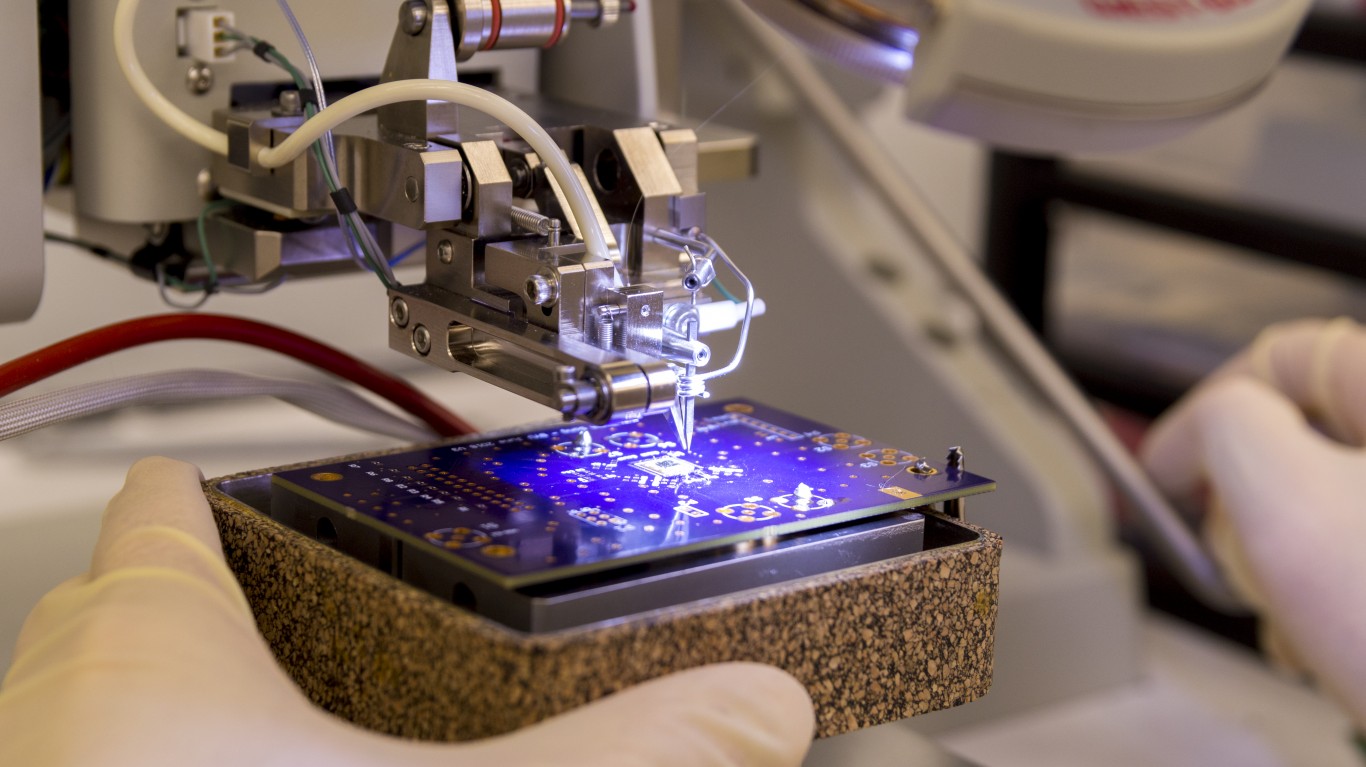
Similarly, the industry needs Taiwan Semiconductor’s manufacturing expertise to make the latest and greatest chips on the bleeding edge. On the high-end of the market, for the most advanced nodes, Taiwan Semiconductor absolutely dominates. As for ASML, Chinese firms have tried to replicate the Dutch firm’s semi equipment, but with limited success.
These two global chokepoints of the AI boom, I think, are probably the best places to put money to work, given that most rivers flow through these firms. Odds are the latest and greatest AI chips have come from a Taiwan Semiconductor manufacturing facility fully equipped with ASML’s lithography machines. As for which firm has the wider moat, it’s a tough call.
Taiwan Semiconductor has the sheer scale and the know-how to build increasingly complex logic chips. As for ASML, it has the most advanced tools that the fabs need to do their job. But with so few fabs to sell to (Taiwan Semi is one of them) and firms in China that are really trying to replicate the firm’s ridiculously complex machines, I do think that Taiwan Semiconductor is the “moatier” of the two.
It has the capital moat, a ton of customers who can’t get enough orders in as lines go out the door (it’s not just AI chips, either), and, perhaps most importantly, the firm is operationally efficient enough to set a high bar for chip yields.
The bottom line
Though ASML is the genuine monopoly, I must say that Taiwan Semiconductor has higher barriers to entry. The foundry business is a risky, prohibitively expensive corner of semis to get into. Economically speaking, it just makes more sense to hire them than to build a fab to compete against them — just ask the cash-rich hyperscalers.
For ASML, it’s all about innovation; for Taiwan Semi, it’s innovation, the operational moat, and the obscenely high capital required to get started. Perhaps there’s a reason that Taiwan Semi was the favorite semi play among most hedge funds last quarter.
Contact [email protected] for any questions or corrections.
Joey is a 24/7 Wall St. contributor and seasoned investment writer whose work can also be found in publications such as The Motley Fool and TipRanks. Holding a B.A.Sc in Computer Engineering from the University of British Columbia (UBC), Joey has leveraged his technical background to provide insightful stock analyses to readers.
Joey's investment philosophy is heavily influenced by Warren Buffett's value investing principles. As a dedicated Buffett disciple, Joey is committed to unearthing value in the tech sector and beyond.