The Two Humanoid-Robot Funds Are 30 Points Apart This Year. The Winner Owns the Parts, Not the Promises
Two humanoid-robot ETFs track the same explosive theme yet delivered wildly different results in 2026, and the gap comes down to one fundamental disagreement about how to bet on the robots actually getting built.

This post may contain links from our sponsors and affiliates, and Flywheel Publishing may receive compensation for actions taken through them.
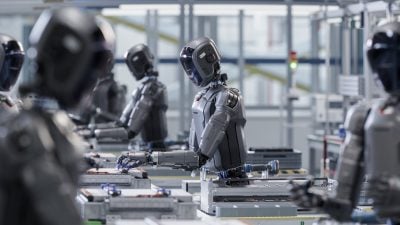
Anyone who bought Roundhill Humanoid Robotics ETF (CBOE:HUMN) sought pure exposure to the humanoid robot buildout without diluting the theme with generic industrial automation names. HUMN concentrates on marquee humanoid brands, headed by an 8.93% weight in Tesla and a 6.42% position in UBTech Robotics. A second humanoid ETF, launched a year ago, has taken a different route through the same theme and pulled roughly 30 points ahead of HUMN in 2026. That fund is KraneShares Global Humanoid Robotics and Physical AI Index ETF (NASDAQ:KOID), and the gap is material.
Why Investors Bought HUMN in the First Place
Where the Concentration Backfired in 2026
The same construction put HUMN behind this year. Its top two positions alone approach 15% of assets, and both moved sharply lower in mid-year. HUMN gave back roughly 26% in July and finished year-to-date up only 11.0%, versus a 41.8% gain for KOID over the same stretch. The Tesla and UBTech weights that define HUMN’s identity dictate its short-term outcome. When the aspirational names are correct, little in the portfolio offsets them, because enabling-technology positions such as NVIDIA at 4.84%, Harmonic Drive Systems at 3.24%, and Teradyne at 3.58% are smaller.
What KOID Does Differently
Costs favor KOID as well. Its most recent prospectus lists a 0.79% gross and 0.69% net expense ratio as of July 31, 2026. HUMN does not report an expense ratio in its most recent filing, so verify cost comparisons against the current prospectus before switching, but the fee gap is unlikely to be the deciding factor. The performance driver is portfolio construction.
Real Tradeoffs to Weigh
How to Think About the Swap
The switch is cleanest in a tax-advantaged account, where selling HUMN creates no taxable event. In a taxable account, holders who bought HUMN near its 52-week low of $29.17 and sit close to the current $30.63 price have modest embedded gains and can move without friction; anyone who bought near the $38.17 high is sitting on a loss that could be harvested. A partial swap, keeping HUMN for the pure humanoid tilt and adding KOID for supplier diversification, is one construction some investors have used.
Reading the Gap Going Forward
The 30-point gap between KOID and HUMN this year reflects equal weighting and component exposure rather than directional views on Tesla or UBTech. If humanoid unit shipments accelerate and marquee names recover, HUMN’s concentration works in reverse, and the gap narrows. For investors whose thesis is the buildout of the physical AI supply chain rather than a specific brand winning, KOID currently expresses that view more directly, and the year-to-date numbers reflect the difference.
Contact [email protected] for any questions or corrections.
David Beren has been a Flywheel Publishing contributor since 2022. Writing for 24/7 Wall St. since 2023, David loves to write about topics of all shapes and sizes. As a technology expert, David focuses heavily on consumer electronics brands, automobiles, and general technology. He has previously written for LifeWire, formerly About.com. As a part-time freelance writer, David’s “day job” has been working on and leading social media for multiple Fortune 100 brands. David loves the flexibility of this field and its ability to reach customers exactly where they like to spend their time. Additionally, David previously published his own blog, TmoNews.com, which reached 3 million readers in its first year. In addition to freelance and social media work, David loves to spend time with his family and children and relive the glory days of video game consoles by playing any retro game console he can get his hands on.