Hyundai’s $26 Billion 4-Year US Investment Will Exceed Its Previous 40 Years Combined
Hyundai's CEO says tariffs are accelerating a localization push that was already underway, and the numbers behind that push reveal just how dramatically the company is betting on America outpacing its own four decades of history here.

Hyundai’s CEO José Muñoz framed the current tariff environment as an accelerant to a strategy already in motion. In a CNBC segment that aired yesterday with auto reporter Michael Wayland, Muñoz laid out Hyundai’s plan to commit an additional $26 billion to U.S. operations over the next four years, on top of the $20.4-$20.5 billion invested over the last 40 years. That means the new 4-year commitment is more than Hyundai invested in its entire 40-year U.S. history.
Muñoz described the current moment as “the two most exciting years of my entire life and career” and said Hyundai is “well ahead of our plan A, which has been supported by taking breakthrough actions over and above the standard original plan.” On trade policy, he believes that: “Tariffs are helping accelerate our localization plan. The good thing is that we had already started before tariffs were announced.”
Hyundai Could Build 800,000 Vehicles a Year in Georgia
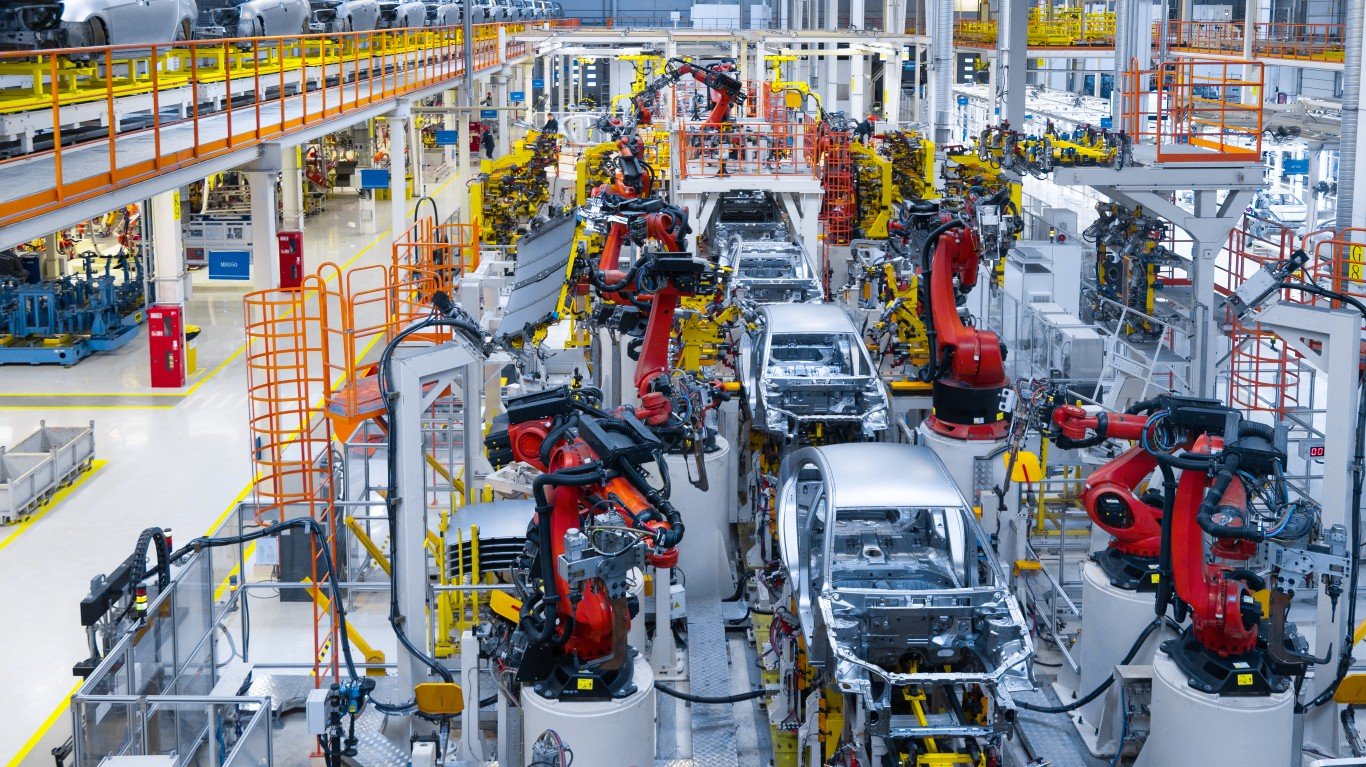
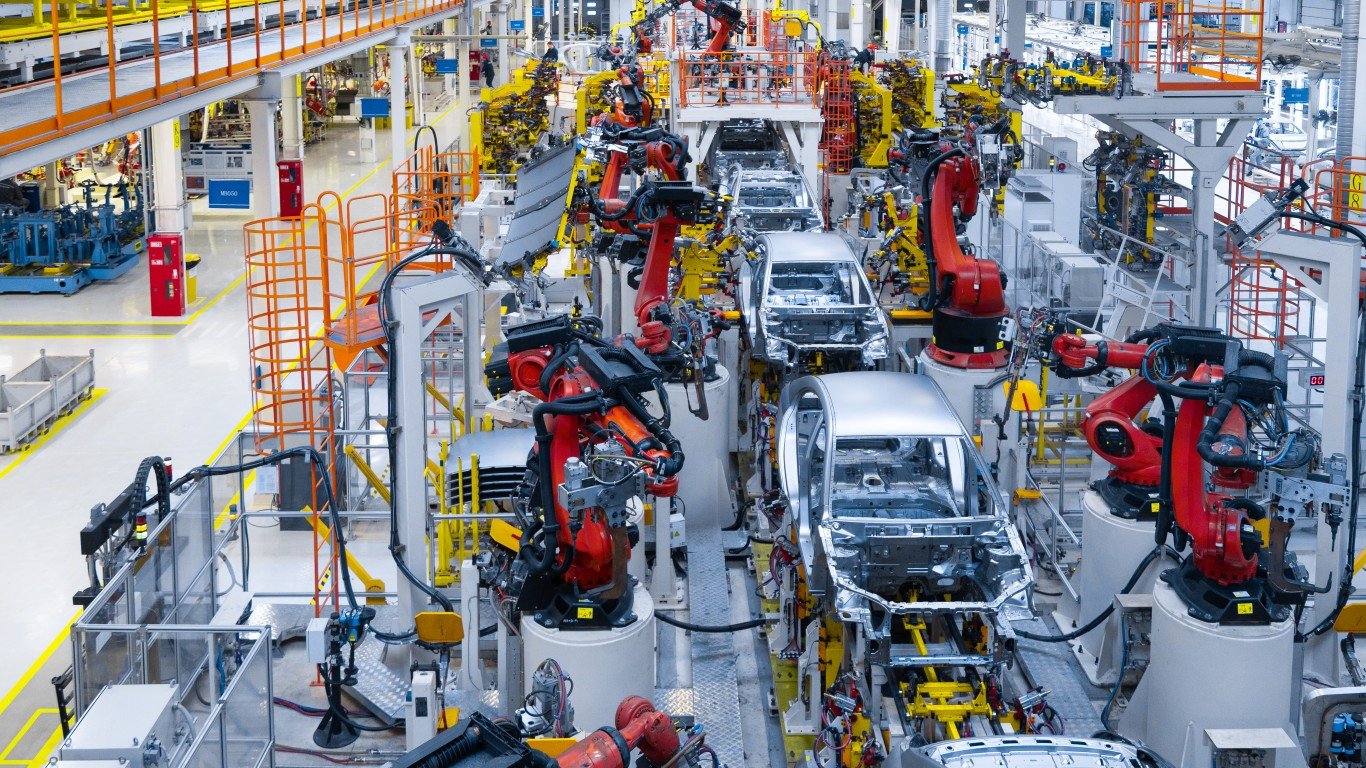
Hyundai’s Georgia facility is now the centerpiece of its localization efforts. Originally scoped for 300,000 vehicles annually, expanded to 500,000, the site is now targeted at 700,000-800,000 by 2028, within an existing 3,000-acre plot.
Muñoz said the plant will produce six to seven models, including hybrids, EVs, and extended-range EVs, adding: “I announced that we would go into extra capacity of 200,000. Well, I can tell you today that we are looking into ways to increase that even further. We could stretch that to probably maybe 7-800,000 if needed. We want to have all this up and running by 2028.“
Hyundai adjusted the Georgia plan to add hybrid lines alongside EVs, and hybrid sales grew more than 70% last quarter in the U.S. The goal is to produce a minimum of 80% of U.S. sales domestically. Hyundai directly and indirectly employs about 570,000 people in America and plans to add 25,000 more.
Hyundai Is Using Localization to Close the Gap With Ford
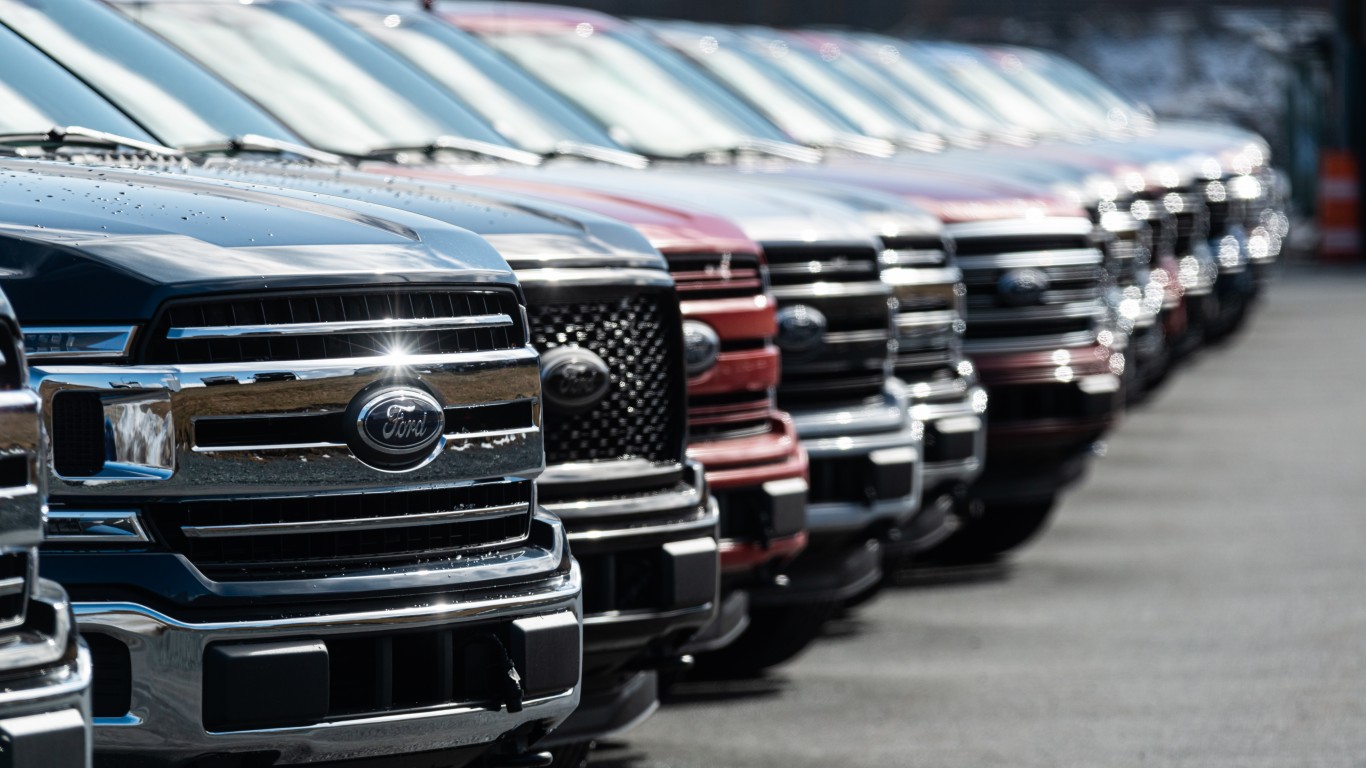
Muñoz said Hyundai has overtaken Honda and Stellantis in the U.S. and is closing the gap on Ford. Today, Ford (NYSE:F | F Price Prediction) trades around $13.82, with a market cap near $54.1 billion, and shares are up 5.72% year to date.
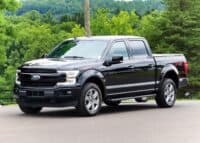
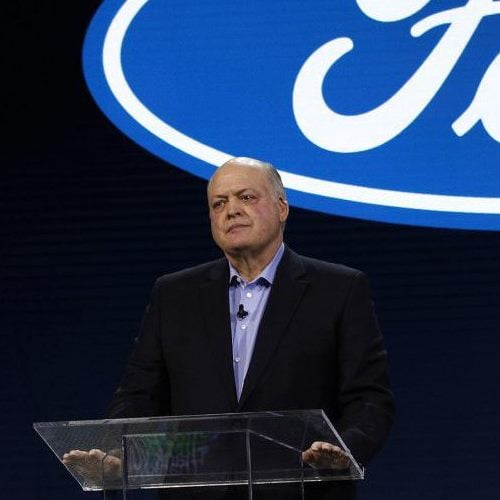
Ford is the most U.S.-localized of the major automakers. CEO Jim Farley told analysts on the Q2 2026 call: “Ford is an unusual company in a way. We build the most in the US. We have the best ratio between imports and our local production. We also export the most.”
Ford’s Q1 2026 8-K disclosed a $1.30 billion one-time IEEPA tariff benefit, and full-year 2026 guidance assumes about $1 billion of tariff impacts excluding that benefit. Farley has argued a revised USMCA should “make it easier for Ford and other U.S. makers to compete with Japan and South Korea,” whose competitors benefit from weaker currencies and a “modest 15% tariff.”

Hyundai’s answer is shifting engineering to the U.S.: “We localize. We have more engineering capabilities, more technical capabilities in this market compared to global. So depend less on Korean management and Korean R&D and Korean resources and focus more and more here.“
Hyundai Is Demand-Constrained While Peers Sit on Excess Capacity
Hyundai’s U.S. sales have grown sharply since 2020, with the CNBC segments citing figures in the range of roughly 45-50%. The company accounts for roughly one-third of total electrified vehicles, and its Genesis luxury brand has reached #7, overtaking Porsche and Jaguar Land Rover, though the two segments characterize the ranking scope differently.
The show’s host, Wayland, captured how Hyundai has the opposite problem of most of the auto industry: “Hyundai is the exact opposite. They are trying to build new plants and build vehicles as fast as they can.“ Muñoz reinforced that unlike competitors dealing with excess capacity, Hyundai’s constraint is demand outpacing supply.
Key Takeaways
Ford wants trade rules that better protect domestic manufacturers. Hyundai is responding to those same pressures by rapidly becoming more American. The big tests will be whether Hyundai’s Georgia plant reaches as many as 800,000 vehicles by 2028 and whether U.S. demand remains strong enough to absorb that enormous expansion.
Contact [email protected] for any questions or corrections.
Thomas Richmond is a financial writer and content strategist with 5+ years of experience covering stocks and financial markets. He has published over 250 articles focused on individual stock analysis, helping investors better understand business fundamentals, stock valuations, and long-term opportunities.
Thomas previously served as a Content Lead at TIKR, a stock research platform, where he helped scale the company’s blog to hundreds of articles per month and contributed to a weekly newsletter reaching more than 100,000 investors.
He specializes in breaking down complex companies into clear, actionable insights for everyday investors, with a focus on fundamentals-driven research.
His work has also been featured on platforms including Seeking Alpha and Sure Dividend.
Outside of work, Thomas enjoys weight lifting and soccer.