American CEOs Were Terrified Of China’s Dark Factories. Now The Race Is On To Build One In The U.S.
Ford's CEO called it the most humbling thing he had ever seen, and what rattled him and other Western executives is now forcing a desperate scramble to catch up before a window closes that may never reopen.

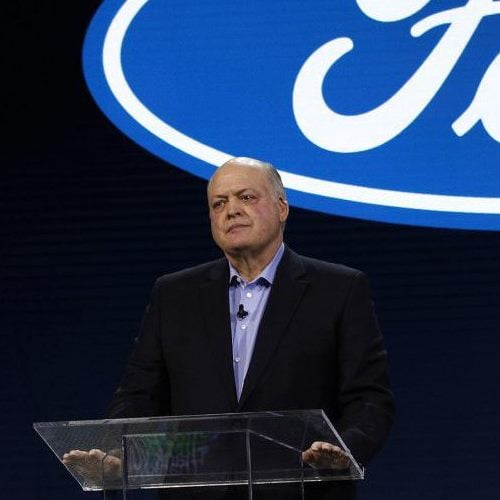
When Ford CEO Jim Farley returned from a factory tour in China, he described what he saw as “the most humbling thing I’ve ever seen”. He told interviewers that Chinese vehicles’ cost and quality are “far superior to what I see in the West” and warned, “We are in a global competition with China, and it’s not just EVs. And if we lose this, we do not have a future at Ford.” China, he added, has “enough capacity in China with existing factories to serve the entire North American market, put us all out of business.”
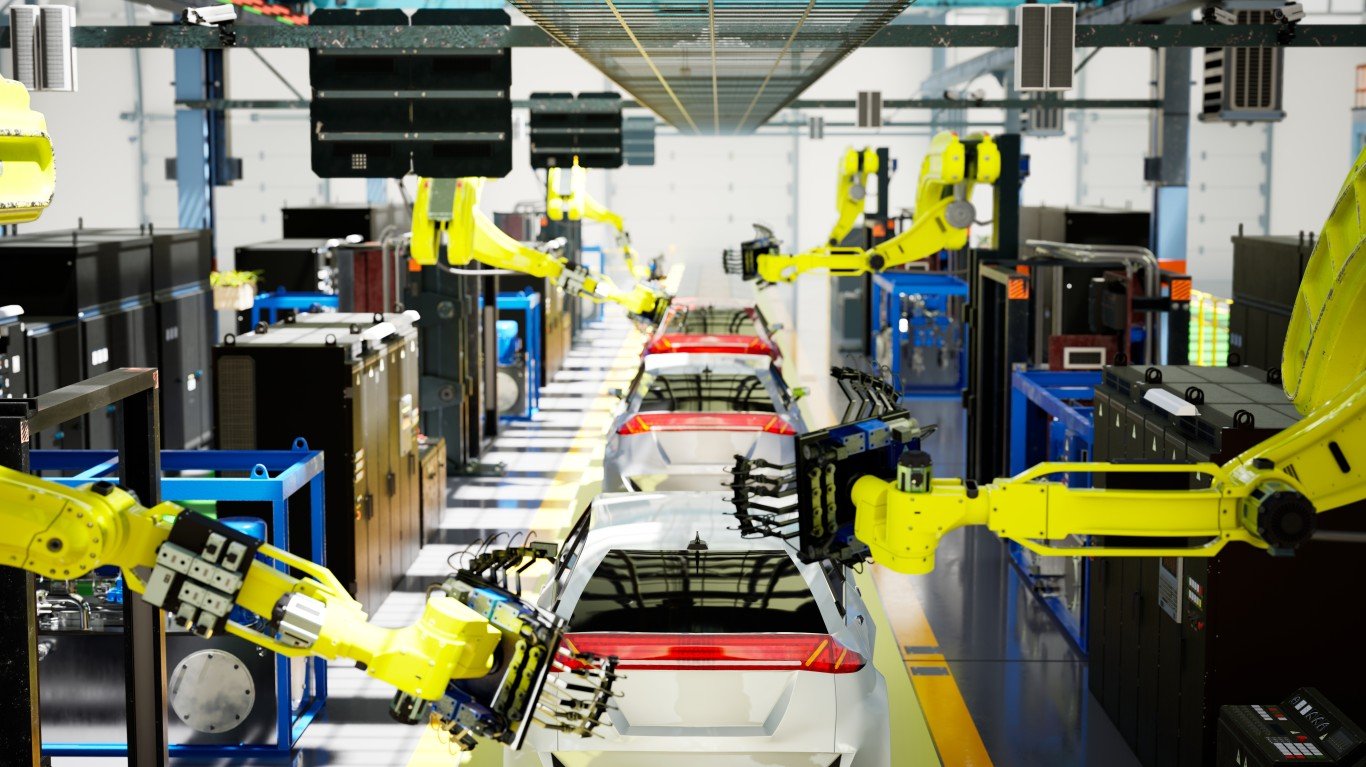
Octopus Energy chief Greg Jackson recounted touring a fully automated Chinese phone factory with virtually no human involvement. Fortescue founder Andrew Forrest said his own China trip led him to abandon plans to build EV powertrains in-house. What rattled all three was the same thing: the “dark factory,” a fully automated plant that needs no lighting because no humans work the floor.
The Scale Of China’s Lead
The numbers explain the C-suite panic. China operated more than 1.75 million industrial robots as of 2023, roughly 51% of global robot demand, with a robot density of 470 per 10,000 manufacturing workers, ahead of Germany and the United States. That is the installed base American manufacturers are working to catch.
The US Race Is Just Beginning
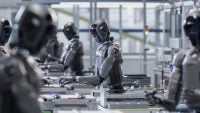
No fully automated dark factory exists yet in the US. Analysts cited by Automotive News predict at least one fully automated automotive assembly line, in the US or China, by 2030. In the meantime, twelve of the world’s top 25 automakers are running advanced robotic pilot programs, including humanoid robots, on production lines.
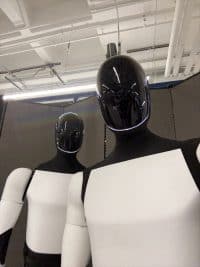
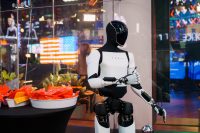
The most concrete US data point sits in Hayward, California, where 1X Technologies, backed by OpenAI, has launched full-scale production at a 58,000-square-foot NEO humanoid robot factory, described as the most vertically integrated humanoid robot facility in the US, targeting 10,000 units in its first year and scaling toward 100,000 units by the end of 2027. That plant builds robots; it is not itself a dark factory. Hyundai has announced plans to build 30,000 Atlas humanoid robots per year by 2028 for its own factories, and Tesla is producing Optimus robots on a limited scale in California.
The Reality Check
Executives at automation consultancies warn against overnight transformation. Daryl Edwards of Agent Impact and Craig Melrose of Htec argue that most US manufacturers are pursuing gradual, hybrid automation rather than building dark factories from scratch, because US plants are being retrofitted rather than built new, unlike China and Japan. Alex Shikany of the Association for Advancing Automation said roughly a quarter of robot units ordered in North America in a recent quarter were collaborative robots, or “cobots,” designed to work alongside humans, not replace them.
Who Sells The Picks And Shovels
Rockwell Automation (NYSE:ROK | ROK Price Prediction) has posted double-digit year-over-year sales growth in its industrial automation segment, driven partly by autonomous mobile robot adoption across automotive, food and beverage, and data center customers. Teradyne (NASDAQ:TER) owns Universal Robots and MiR, and its robotics division reported revenue growth in recent quarters tied to demand for collaborative robots and physical AI applications. NVIDIA (NASDAQ:NVDA) has expanded robotics partnerships in 2026, including with LG and Doosan in South Korea and with Unitree Robotics on the Isaac GR00T platform and Jetson Thor computing hardware. Robotics-segment results shift every earnings cycle and should be confirmed against each company’s own releases.
The more useful frame for investors is the shared supply chain. Both sides need the same controllers, test equipment, and AI compute to get there. The dark factory is a 2028 to 2030 story. The supply chain feeding it is already booking orders.
Contact [email protected] for any questions or corrections.
I've spent more than 15 years inside enterprise software, working alongside the finance, sales operations, and HR leaders who run the revenue engines at some of the largest tech companies in the country.
My day job is helping enterprise executives make smarter decisions about retention, compensation, and growth. These are the same operational levers that show up in every earnings report investors actually read. That perspective shapes my writing for 24/7 Wall St.
The headline numbers are easy. The interesting stuff is underneath: how companies make money, what executives are worried about, and what any of it means for the person checking their 401(k) on a Sunday afternoon. I write about personal finance and business as someone who has spent her career inside the rooms where these decisions get made.