Walmart Just Dropped 10% in a Month. Is It Time to Sell?
Walmart just posted a quarter where management raised its full-year outlook and e-commerce surged, yet shareholders watched the stock crater while a smaller rival celebrated a 13% gain. Something specific is spooking the market, and whether it signals a buying…

This post may contain links from our sponsors and affiliates, and Flywheel Publishing may receive compensation for actions taken through them.
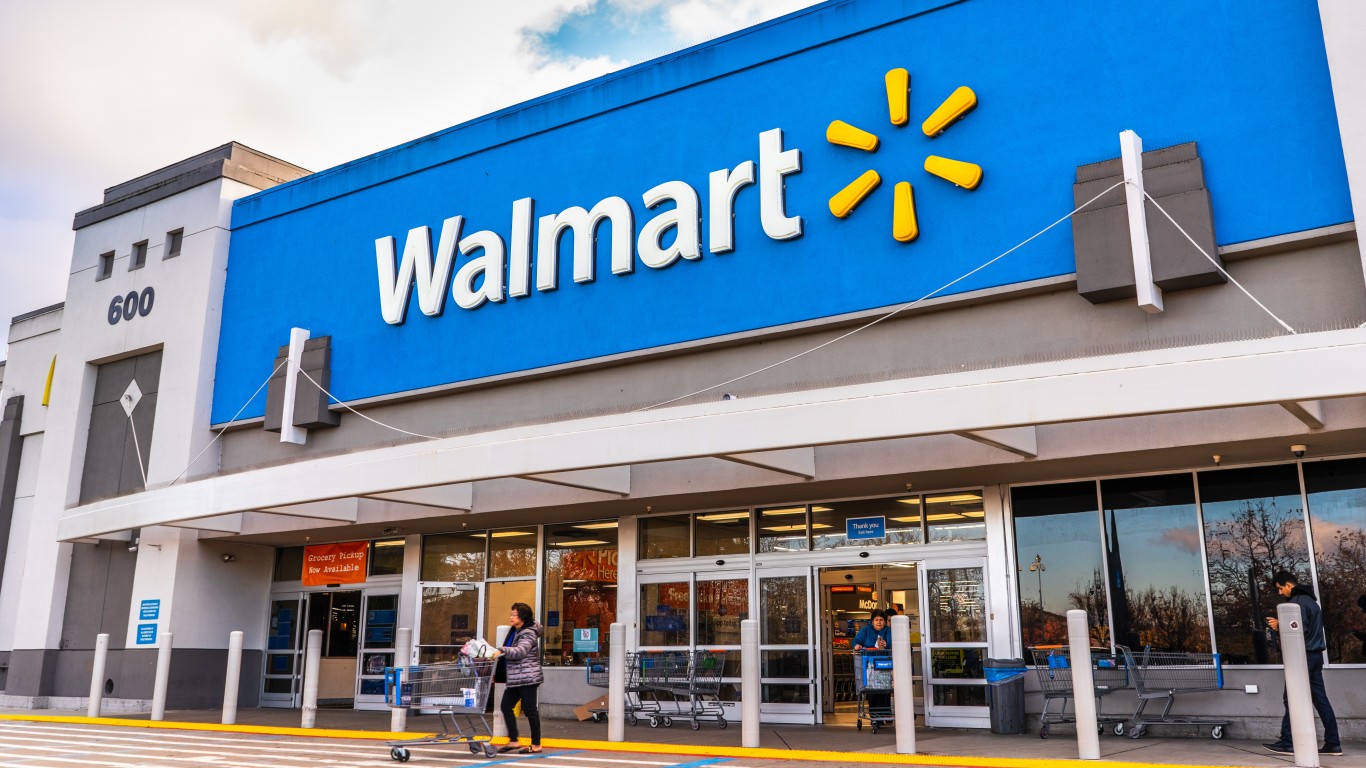
Walmart’s fiscal Q2 2027 report on August 20 reset how the market prices one of the safest names in retail. Walmart (NYSE:WMT | WMT Price Prediction) stock is down 10% over the past month, its worst stretch in more than a year, while the broader retail tape barely budged. The SPDR S&P Retail ETF (NYSEARCA:XRT) slipped just 3% over the same window, a gap that says this selloff is Walmart-specific.
Walmart’s peers sharpen the divergence. Costco Wholesale (NASDAQ:COST) stock is down 4% over the past month, roughly in line with the retail benchmark. Target (NYSE:TGT) stock, meanwhile, is up 13% over the same stretch, a rare reversal of the usual peer ordering in big-box retail.
The move is anchored to a single dated session. Walmart reported its fiscal Q2 2027 results on August 20 and shares closed 9% lower that day, accounting for much of the month’s decline in Walmart stock.

Earnings Beat Meets Cautious Guidance
The headline numbers looked solid. Walmart’s revenue rose 5.9% to $187.94 billion against expectations of $186.77 billion, adjusted earnings came in at $0.81 per share, and global e-commerce sales jumped 23%. Membership fee revenue rose 17% and global advertising revenue climbed 38%.

Walmart also raised its full-year outlook, guiding net sales growth of 4% to 5% versus a prior 3.5% to 4.5%, and adjusted EPS of $2.80 to $2.87 against a prior $2.75 to $2.85.
The friction sat in one line. Walmart’s U.S. comparable sales grew 2.6% against the 3.5% Wall Street expected, partly reflecting an 0.8% headwind in health and wellness as drug price caps took effect. Third-quarter guidance of 3% to 3.8% net sales growth also landed softer than hoped, and that combination, a solid quarter with a light comp number and cautious near-term sales guidance, is what drove the selling.
Chief Financial Officer John David Rainey told CNBC, “Our business is strong. We feel really good about the progress we’re making.” On the subject of shoppers, Rainey stated, “But consumers are still spending, and real wage growth is keeping pace, and so they’ve been very resilient in this environment”.
Target’s Rally Isolates the Story
Target’s month is the tell. Its shares rose 13% over the same stretch Walmart fell 10%, and the XRT decline of only 3% confirms that the sector wasn’t being unloaded. When the largest and best-positioned operator underperforms a smaller competitor by this margin over a single month, the market is repricing one company’s growth rate rather than the outlook for retail.
Costco stock, down 4% over the month, fits neatly alongside the XRT figure and reinforces the point. The evidence points to investors marking down Walmart’s specific U.S. comp trajectory while leaving the rest of the aisle alone.
Is It Time to Sell?
Both sides deserve fair weight. The bull case is that the underlying business is intact: management raised its full-year outlook, e-commerce grew 23%, advertising climbed 38%, membership income rose 17%, and Walmart continues to gain share across income tiers. Those are the compounding levers that drove the multi-year rerating in Walmart stock, and none of them broke this quarter.
The bear case is narrower but real. A decelerating U.S. comparable-sales number is the one metric that has historically driven the stock’s premium multiple, and Walmart shares still carry a P/E ratio of 39x. Third-quarter guidance implies more pressure before the story eases, since management plans to reinvest approximately $2.9 billion in tariff-refund gains into price rather than let them flow to operating income.
What to Watch Next
That framing pushes the answer toward risk management rather than a directional call. Investors who are already sized appropriately for a defensive compounder have a business that just raised its outlook. Those positioned as if Walmart were a growth stock now hold shares whose near-term comp story is genuinely softer, and trimming their exposure to a defensive weight is reasonable.
Shareholders can watch for whether Walmart’s Q3 comps stabilize as tariff-refund reinvestments cycle through pricing. The next Walmart report will confirm whether the recent deceleration was a regulatory air pocket or the start of a broader slowdown.
Walmart’s earnings reaction also sets up the near-term chart. Traders may want to keep an eye on whether Walmart stock reclaims its pre-earnings level of $114, the mark that framed the reaction and now sits as overhead resistance.
Contact [email protected] for any questions or corrections.
David Moadel is financial writer specializing in stocks, ETFs, options, precious metals, and Bitcoin. David has written well over 1,000 articles for leading online publications, helping investors understand markets, income strategies, and risk.His work has appeared in The Motley Fool, InvestorPlace, U.S. News & World Report, TipRanks, ValueWalk, Benzinga, Market Realist, TalkMarkets, Finmasters, 24/7 Wall St., and others.With a master’s degree in education, David has taught at the elementary, high school, and college levels. That teaching background shapes his writing style: clear, educational, and practical. David has also built a loyal social-media audience by providing trustworthy financial content on YouTube, X/Twitter, and StockTwits.