The Treasury Has Now Refunded $100 Billion Of Tariff Revenue, and Scott Bessent Predicts None of It Is Going to You
The Supreme Court forced Washington to return over a hundred billion dollars in tariff money, but Treasury Secretary Scott Bessent made a bold prediction about where that cash would actually land. Since then, the numbers have kept climbing, the Justice…


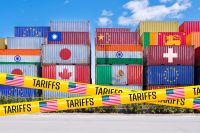
The U.S. government has refunded roughly $100 billion of the tariff revenue it was forced to return after the Supreme Court struck down President Trump’s “Liberation Day” duties, according to customs officials who reported to the U.S. Court of International Trade on Tuesday, August 4, 2026. Customs and Border Protection Director of Trade Programs Brandon Lord confirmed in his declaration that the figure, as of July 31, 2026, represents 60% of the roughly $166 billion collected under the invalidated program. The milestone was first reported by the Financial Times and cited by the Guardian’s Lauren Almeida. Six months earlier, Treasury Secretary Scott Bessent predicted ordinary Americans would never see a dime of it. He was mostly right.
The Ruling That Forced the Refund
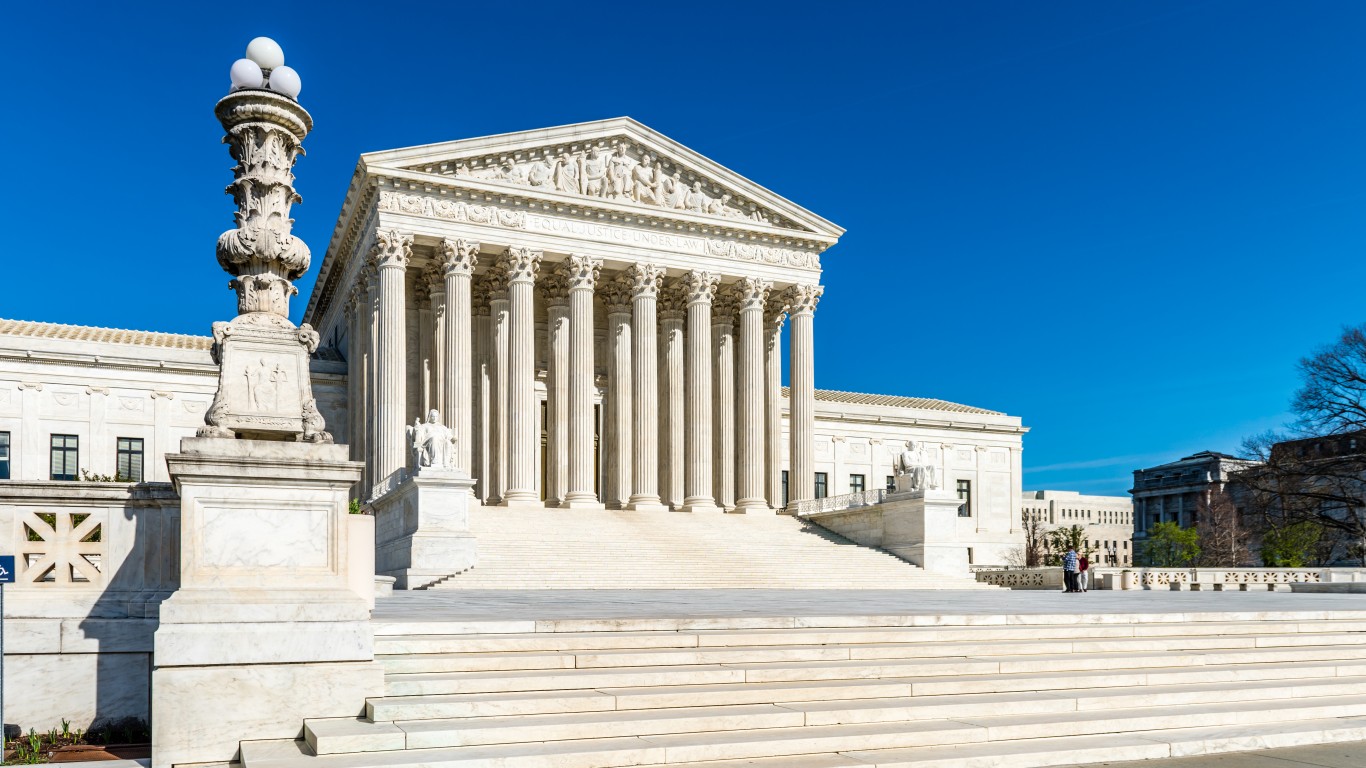
On February 20, 2026, the Supreme Court ruled 6-3 in Learning Resources, Inc. v. Trump that the administration’s use of the International Emergency Economic Powers Act to impose sweeping global tariffs was unconstitutional. The majority held that while the statute lets the executive “regulate” commerce during declared emergencies, it does not authorize “taxing” via duties, a power Article I of the Constitution reserves to Congress. Chief Justice John Roberts, writing for the court, relied on the major questions doctrine, concluding that authority of such vast economic consequence requires explicit congressional authorization that IEEPA simply does not provide.
The ruling forced Treasury and Customs and Border Protection to begin returning money to the businesses that paid it. More than 2,000 companies, including Costco (NASDAQ:COST | COST Price Prediction) and FedEx (NYSE:FDX), filed lawsuits seeking full refunds. The recipients are corporate importers rather than the households that absorbed the duties at the checkout line.
Bessent’s Forecast, Six Months Later
Speaking at the Economic Club of Dallas on February 23, 2026, Bessent was blunt about who would benefit. “I got a feeling the American people won’t see it,” he said, adding that the process “could be dragged out for weeks, months, years, so … we’ll see what happens there.” He labeled the refunds “ultimate corporate welfare” and pegged the true refundable figure closer to $130 to $134 billion, well below the $166 billion the government ultimately acknowledged it owed. His pace prediction proved too pessimistic; refunds cleared the 60% mark in roughly five and a half months. His core argument about who collects has largely held.
Importers, Not Shoppers
The mechanics explain why most consumers are left out. Refunds flow to the Importer of Record, the U.S. business that paid the duty directly to Customs and Border Protection, while the retail buyer who absorbed the cost through a higher shelf price receives nothing automatically. UBS chief economist Paul Donovan warned in February that “Tariff rebates will increase the U.S. fiscal deficit, and act as a fiscal stimulus. Any rebates will be paid to U.S. importers… it seems unlikely anyone will rush to lower prices to their customers.”
A few companies have moved against the grain. Amazon received $600 million in refunds and committed to direct refunds in a limited set of circumstances where it could trace specific import charges to individual customers. FedEx and competitor UPS together flagged nearly $6 billion in expected refunds, with both companies indicating plans to pass money along to logistics customers. Costco pledged to return tariff recoveries to members “in some form,” primarily through lower prices, though it is now facing a class-action lawsuit from customers demanding direct cash refunds. Apple received an estimated $2.2 billion, with no announced consumer pass-through plan. The broader pattern remains: most of the money stays with corporate intermediaries.
The gap between what consumers paid and what businesses are recovering is stark. The Tax Foundation estimated the tariff regime cost U.S. households roughly $1,500 per year on average, making it the largest tax increase as a share of GDP since 1993. The Federal Reserve Bank of New York separately estimated that tariffs had contributed 2.9 percentage points to goods price inflation by February 2026. Those prices do not reverse automatically because a company books a refund check.
The Clock, the Interest Meter, and a New Legal Fight
Judge Richard Eaton, overseeing the unwinding at the Court of International Trade, has pushed CBP hard throughout. CBP built its refund pipeline, called the Consolidated Administration and Processing of Entries (CAPE) system, around four components: a claim portal, mass processing, review and reliquidation, and disbursement, launching the portal on April 20, 2026. Eaton’s March order laid out the cost of delay clearly. “These duties must now be refunded with interest, and the clock is ticking… American taxpayers will bear this financial burden,” he wrote, flagging that roughly $650 million in interest accrues per month on the unpaid balance.
A new legal battle has since emerged. On June 2, 2026, the Department of Justice appealed Eaton’s universal refund injunction to the U.S. Court of Appeals for the Federal Circuit. The government argues that Eaton’s order constitutes an impermissible universal injunction under the Supreme Court’s ruling in Trump v. CASA, Inc., which limited courts from extending relief to parties who did not file their own suits. The dispute centers specifically on “finally liquidated” entries where the standard 90-day administrative refund window has closed, leaving an estimated $11.4 billion frozen pending the appeal’s outcome. Non-litigant importers face the greatest risk: the two-year window to file an independent claim is running, and waiting on the appeal could cost them their refund entirely.
Where Things Stand Now
The $100 billion milestone reported in August was not the final word. By September 11, 2026, CBP had certified and transferred $122 billion to Treasury, representing roughly 73% of the $166 billion obligation. CBP had accepted approximately $134.7 billion for processing through CAPE at that point. The administration has kept the tariff revenue spigot open through alternative statutory authorities: a 15% global rate under Section 122 of the 1974 Trade Act (the administration imposed 10% within hours of the Supreme Court ruling, raising it to 15% the next day), plus continued Section 232 and Section 301 levies. New tariff collections have not meaningfully slowed. What to watch in the months ahead: whether the DOJ appeal at the Federal Circuit narrows who gets a refund for finally liquidated entries, whether the remaining balance clears before year end, and whether any meaningful share of that money reaches a household. On current mechanics, the last question looks unlikely.
Editor’s note: This article has been updated to correct the total IEEPA tariff collection figure from $165 billion to $166 billion, add the case name (Learning Resources, Inc. v. Trump) and the precise February 20, 2026 ruling date, incorporate the September 2026 refund milestone of $122 billion (73% of the obligation), and add context on the DOJ’s June 2026 Federal Circuit appeal, the roughly $11.4 billion frozen behind that litigation, and partial consumer pass-through commitments from Amazon, Costco, FedEx, and UPS.
Contact [email protected] for any questions or corrections.
AJ spent 10 years writing about financial markets at The Motley Fool. His coverage centers on technology stocks and the broader macroeconomic trends, from interest rates to geopolitics, that shape where markets are headed next. AJ is drawn to the stories where big-picture economics and individual companies collide.