Warsh Says Fed Has “Work to Do” If Prices Don’t Fall. They Won’t. Rate Hikes Are Coming
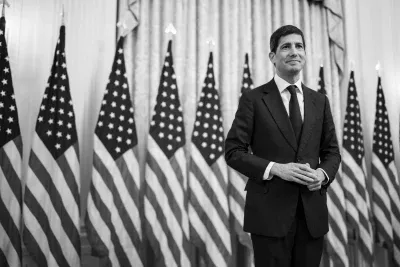
Fed Chair Kevin Warsh just signaled that policymakers may have no choice but to act, and several forces already building in the economy suggest inflation is nowhere near done causing trouble for investors.

The Federal Reserve has a problem that won’t be solved by simply waiting. Inflation remains well above the central bank’s 2% target, while several forces pushing prices higher are still in place. The Bureau of Economic Analysis reported July PCE inflation at 3.7%, with core PCE at 3.3%. Meanwhile, the Bureau of Labor Statistics said consumer prices rose 3.4% over the 12 months through July.
Now, Fed Chair Kevin Warsh says policymakers have “work to do” if inflation isn’t moving toward 2% quickly enough. Investors should listen. The next rate hike may not arrive in September, but the odds of one before year-end are rising.
Inflation Isn’t Cooperating
The July PCE inflation increased 3.7% year-over-year, nearly twice the Fed’s 2% target. Core PCE, which strips out food and energy, rose 3.3%. That makes it difficult to argue that inflation is merely an energy-price problem.
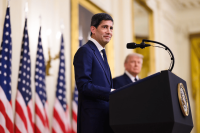
Warsh’s remarks at the annual Jackson Hole Economic Policy Symposium in Wyoming were therefore important. Reuters reported that he warned the Fed may need to raise rates if underlying inflation doesn’t show clear progress toward 2%. He also said current financial conditions don’t appear restrictive enough.
That is a meaningful shift in emphasis. The Fed isn’t looking for prices to merely stop accelerating. It needs inflation to keep falling.
The Fed also has to contend with the Treasury Dept. working in the opposite direction. Secretary Scott Bessent has doubled the size of long-term Treasury buybacks to at least $4 billion per operation and is considering using the Treasury’s roughly $1 trillion cash account for additional purchases, measures designed to push longer-term yields lower.
That puts monetary and fiscal policy at cross-purposes: Warsh may need tighter financial conditions to restrain inflation, while Bessent is trying to ease them by lowering borrowing costs. For the Fed, that’s another obstacle to getting inflation back to 2%.
Tariffs And Energy Could Keep Prices Elevated
The bigger problem is that several inflationary forces are still working their way through the economy.
A Federal Reserve Bank of New York study published in August estimated that about 26% of tariff increases were passed through to consumer prices. More importantly, it found that indirect effects through imported inputs can take nine to 12 months to appear. In other words, tariff inflation has a long tail.
Energy presents another headache. July’s CPI report showed the energy index falling 1.5% during the month, while gasoline prices dropped 2.9%. That offered consumers some breathing room. But the decline looks less durable when viewed against the geopolitical backdrop.
The temporary truce in the Iran conflict provided energy markets with a reprieve. It didn’t eliminate the underlying risk. With President Trump continuing to apply pressure on Iran, investors shouldn’t assume the lower energy prices of early summer will persist indefinitely.
And energy doesn’t stay confined to the gas pump. Higher oil prices feed into transportation, manufacturing, chemicals, utilities, and countless other goods and services.
September Could Be Too Soon — December May Not Be
The Fed’s September 15-16 meeting is unlikely to produce an immediate rate hike if policymakers want more evidence before reversing course. The July FOMC minutes show that three officials already preferred a 25-basis-point increase at that meeting, while the committee as a whole held the federal-funds target range at 3.50% to 3.75%.
But waiting until September doesn’t mean the issue disappears. The Fed has another meeting October 27-28 and a final meeting December 8-9. If inflation remains around 3% or higher while energy and tariff pressures persist, a 25-basis-point hike becomes increasingly difficult to avoid.
Fed Cleveland President Beth Hammack has already said inflation could remain around 3% at year-end and that a rate increase is necessary if price pressures persist.
Key Takeaway
In short, investors shouldn’t build a portfolio around the assumption that inflation will conveniently fade away.
The data don’t support that thesis. PCE inflation is 3.7%, core PCE is 3.3%, tariffs are still filtering through supply chains, and geopolitical risks could push energy prices higher again.
That doesn’t guarantee a September hike. It does make a rate increase before year-end increasingly likely.
For investors, the message is simple: prepare for higher-for-longer rates rather than betting on an imminent return to cheap money. Warsh isn’t promising a hike. He’s warning that the Fed may have no choice.
Contact [email protected] for any questions or corrections.
After two decades of patrolling the dark corners of suburbia as a police officer, Rich Duprey hung up his badge and gun to begin writing full time about stocks and investing. For the past 20 years, he’s been cruising the markets looking for companies to lock up as long-term holdings in a portfolio while writing extensively on the broad sectors of consumer goods, technology, and industrials. Because his experience isn’t from the typical financial analyst track, Rich is able to break down complex topics into understandable and useful action points for the average investor. His writings have appeared on The Motley Fool, InvestorPlace, Yahoo! Finance, Money Morning, and, of course, 24/7 Wall St. He has been featured in both U.S. and international publications, including MarketWatch, Financial Times, Forbes, Fast Company, and USA Today.