This Popular Healthcare ETF Is Diluting Your Dividend Income
XLV bundles the entire healthcare sector into one tidy package, but its cap-weighted structure quietly siphons off the income that dividend investors came for. Three stocks already inside the fund tell a very different yield story.


If you own the Health Care Select Sector SPDR Fund (NYSEARCA:XLV), you likely bought it for one-ticker exposure to the S&P 500’s healthcare complex at a rock-bottom expense ratio. XLV holds the biggest drug makers, insurers, medtech names, and life-science tools companies in a single wrapper. But if you own XLV for income, the fund is quietly working against you. A cap-weighted index prioritizes market cap, not yield. Three of XLV’s own top holdings pay substantially more, and owning them directly captures the yield the ETF dilutes away.
Why XLV Underdelivers on Income
XLV’s structure is the problem. The fund’s largest position, Eli Lilly, yields well under 1% because its price has run far ahead of its payout. That single stock swallows more of the portfolio than AbbVie (7.74%) and Bristol-Myers Squibb (2.05%) combined. Add lower-yielding medtech and life-science names like Thermo Fisher (3.24%), Intuitive Surgical (2.45%), and Danaher (2.09%), and the blended distribution lands near 1.5%. For a retiree or income-focused holder, that is a lot of healthcare exposure for very little cash in the mailbox.
The three names below are all already inside XLV. Owning them directly concentrates the yield and captures the full dividend-growth trajectory of each.
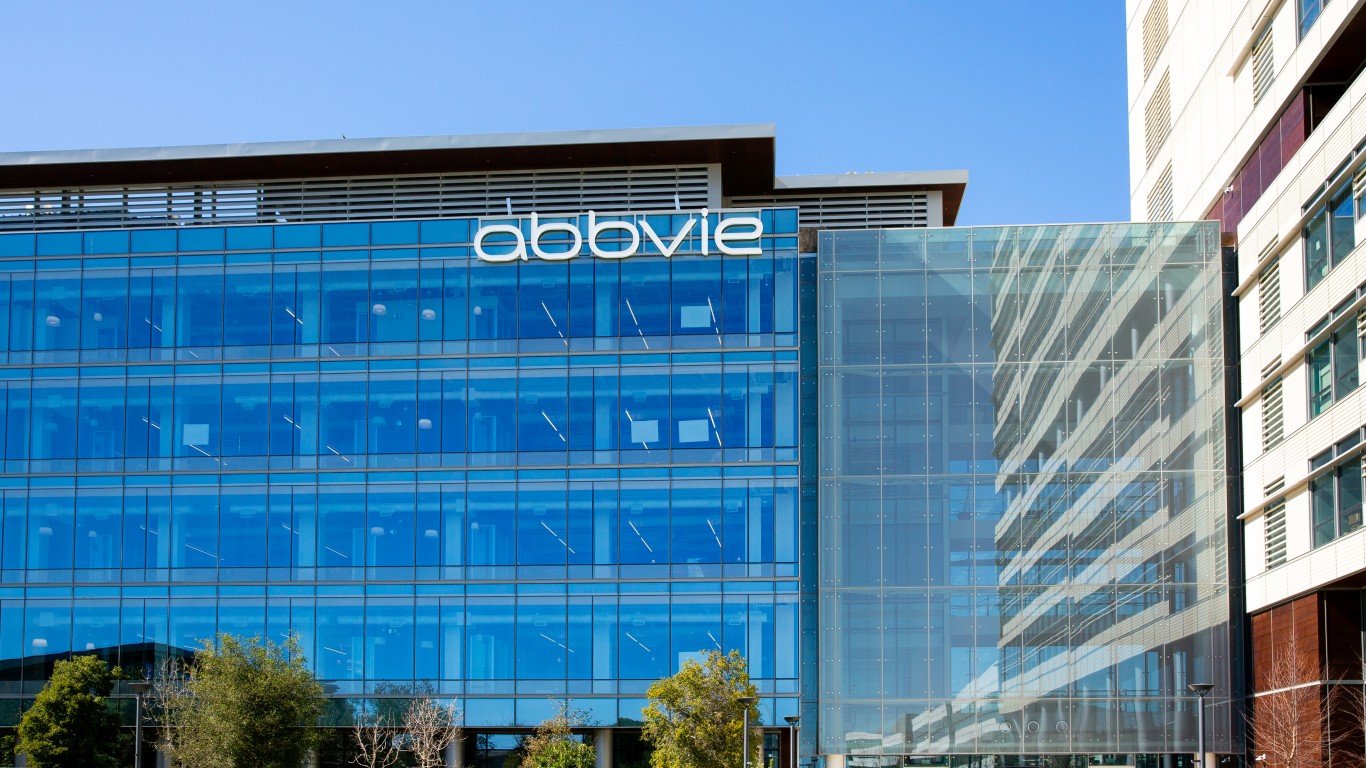
AbbVie: Growth Plus a Rising Payout
AbbVie (NYSE:ABBV | ABBV Price Prediction) pays a quarterly dividend of $1.73, an annualized $6.92, for a yield of roughly 2.65%. That is nearly double XLV’s payout, and the quarterly amount has stepped up every year, from $1.30 in 2021 to $1.73 in 2026. Q2 2026 revenue was nearly $17 billion, up 10.2%, with Skyrizi at $5.5 billion (+24%) and Rinvoq above $2.5 billion (+23.7%) more than offsetting Humira’s biosimilar erosion. Management raised full-year adjusted EPS guidance to $13.87 to $14.07. The trailing PE of 73 looks steep, but a forward PE of 18 reflects how quickly earnings are recovering post-Humira.
Johnson & Johnson: Dividend King Anchor
Johnson & Johnson (NYSE:JNJ) is the second-largest XLV holding at 10.64% of the fund, and owning it directly gets you a $1.34 quarterly payout, $5.36 annualized, for a yield near 2%. That is meaningfully above XLV’s blended distribution, and JNJ carries a history of quarterly increases from $0.90 in 2018 to $1.34 in 2026, one of the longest streaks in the market (we ranked ten of these 50-year-plus payers by valuation in a free Dividend Kings report). Innovative Medicine continues to lead growth on DARZALEX, TREMFYA, and CARVYKTI. The stock carries a beta of 0.23, providing the defensive ballast income investors expect from healthcare.
Bristol Myers Squibb: Highest-Yield Slot in the Basket
Bristol Myers Squibb (NYSE:BMY) delivers the biggest income lift. The $0.63 quarterly payout, $2.52 annualized, translates to a yield of 3.75%, more than double XLV. The dividend has risen every year since 2009, and BMY trades at just 14 times trailing earnings and 10 times forward. The growth portfolio, now nearly 60% of total revenue, expanded 14% last quarter, led by Eliquis at roughly $4.5 billion (+21%) and Camzyos up 59%. CFO David Elkins reiterated “returning cash to shareholders through our commitment to the dividend”, backed by $3.4 billion in quarterly operating cash flow.
Tradeoffs You Are Accepting With This Swap
This swap concentrates you in big pharma and drops exposure to medtech, insurers, and tools names that make up roughly a third of XLV. It also introduces single-stock risk. Each company faces a patent cliff: Humira has already eroded to $756 million, down 36.1%, JNJ’s Stelara is dropping on biosimilars, and Eliquis loses U.S. exclusivity in April 2028. The three-stock basket also lacks the automatic rebalancing an index provides.
Making the Move Without a Tax Hit
In a taxable account, selling appreciated XLV shares triggers capital gains. A cleaner path is to direct new contributions and reinvested dividends into the three stocks while leaving the existing XLV position alone, or execute the swap inside an IRA where the trade is tax-free. A partial rotation, keeping XLV for medtech and insurer exposure while layering in ABBV, JNJ, and BMY for income, preserves diversification and raises the yield on the healthcare sleeve.
Your Move From Here
If income is why you own XLV, the fund is not doing the job. Rotating some or all of that exposure into these three names lifts the healthcare-sleeve yield from roughly 1.5% into the 2.5% to 3.5% zone, with three separate dividend-growth streaks reinforcing it. If you want one-click diversification across the entire sector, XLV still earns its place. The right answer depends on which of those two jobs you actually hired the fund to do.
Contact [email protected] for any questions or corrections.
Chris Lange is a financial and geopolitical writer with more than a decade of experience covering a myriad of topics. He has published thousands of articles for 24/7 Wall St., with past coverage focused heavily on stocks, IPOs, healthcare, defense, global affairs, and technology.
His work has been quoted, or referenced by a number of outlets including Business Insider, USA Today, Yahoo Finance, MSN, The Motley Fool, and many other publications. A graduate of Southwestern University, he studied business with a focus on investments and has previous experience in banking and startups.
When not reading or writing the news, he is following his passion for Lacrosse, playing chess, or building solar projects with his dad.