AMD is Quietly Eating Intel’s Lunch
AMD and Intel both posted blockbuster data center quarters, but one company is bleeding billions from its own factories while the other signs gigawatt GPU deals with Anthropic and Microsoft. The gap between their margin stories reveals which x86 giant…

Advanced Micro Devices (NASDAQ: AMD | AMD Price Prediction) and Intel (NASDAQ: INTC) both reported second-quarter results that show a widening gap in the data center. AMD posted 107% year-over-year Data Center growth, while Intel notched its strongest revenue growth in more than fifteen years. The story underneath the numbers is a real x86 share shift.
EPYC Keeps Winning Sockets. Xeon Keeps Playing Catch-Up.
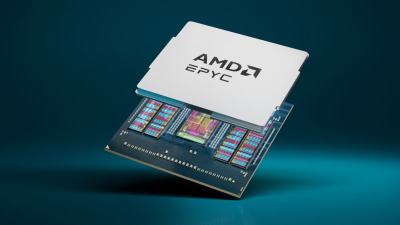
AMD’s quarter was carried by servers and accelerators. Data Center revenue hit $6.72 billion, or 58% of total revenue, up from 42% a year ago. Lisa Su told investors AMD delivered its fifth consecutive quarter of record server CPU revenue and “gained x86 server revenue share year-over-year.” Cloud and enterprise EPYC sales each grew more than 70% year-over-year, with more than 230 5th Gen EPYC platforms now shipping from HPE, Dell, Lenovo, and Supermicro.
Intel’s DCAI segment was healthy too, at $6.26 billion, up 59%. But CEO Lip-Bu Tan admitted “some area we are still behind,” pointing to future parts like Coral Rapid to close the gap. Capacity, rather than demand, is Intel’s ceiling right now.
Fabless Flexibility vs. a $2.1 Billion Foundry Bill
The margin picture tells you why AMD trades where it does. Non-GAAP gross margin came in at 56%, versus Intel’s 41.8%. Intel Foundry generated $5.77 billion in revenue but lost $2.1 billion in the quarter. A $12.53 billion non-cash CHIPS Act escrow charge pushed Intel to a GAAP loss of $11.03 billion.
| Lens | AMD | Intel |
| Core Bet | Instinct GPUs + EPYC servers | Xeon 6 + Intel 18A foundry |
| Q2 Revenue | $11.54B | $16.13B |
| Key Vulnerability | Gaming -31% | Foundry losses, capex |
AMD Locks In the #2 AI Accelerator Slot With Marquee Wins
AMD is clearly the second name in AI silicon, and the customer list is getting harder to ignore. Anthropic committed to up to two gigawatts of MI450 series GPUs in Helios, with the first gigawatt starting in the first half of 2027. Microsoft will deploy Helios “at scale on Azure”. Su claims Helios delivers “up to 30% more tokens per dollar than the competition.” Every gigawatt of accelerators also needs power, cooling, and networking behind it, which is why we pulled seven non-chipmaker suppliers into a free AI infrastructure report. AMD guided Q3 revenue to roughly $13 billion, or about 41% growth.
What I Am Watching Into 2027
Intel’s ramp on 18A and 14A matters. Tan says 14A risk production for internal products in the second half of 2027. If that slips, AMD’s runway widens. I will keep an eye on whether AMD’s server revenue grows “more than 80% year-over-year in the second half of 2026” as guided.
Why I Lean AMD With Eyes Open to Intel’s Upside
Personally, AMD is the cleaner story for me right now. The share gain in x86 servers is real, the Instinct roadmap has anchor customers writing gigawatt checks, and margins do not carry a foundry albatross. That said, AMD is up 181.58% over the past year, and Intel is up 271.95% as the turnaround narrative takes hold. If you believe Tan can fix the foundry, Intel has more asymmetric upside. If you want the operator executing today, AMD is quietly walking off with Intel’s lunch tray.
Contact [email protected] for any questions or corrections.
Alex Sirois is a financial writer with experience spanning both retail and institutional investing. He has written for InvestorPlace and held roles at BNY Mellon and Bernstein, giving him a perspective that bridges Main Street portfolios and Wall Street analysis.
Alex holds an MBA from George Washington University and has built his career across multiple industries, including e-commerce, education, and translation — a breadth of experience that informs how he breaks down complex financial topics for everyday investors. His writing is conversational, actionable, and grounded in long-term, buy-and-hold investing principles.
At 247 Wall St., Alex focuses on delivering analysis that is both accessible and useful, with a clear emphasis on helping readers make more informed decisions with their money.