Margaritaville Residents Who Bought in the First Phase Will Say the Second Phase Changed the Math
Buyers who got into Latitude Margaritaville Watersound early locked in a home price, but the developer's own fee disclosure hints that what comes next could quietly shift the cost of staying there for good.

This post may contain links from our sponsors and affiliates, and Flywheel Publishing may receive compensation for actions taken through them.
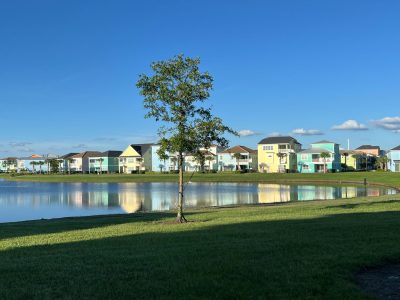
Latitude Margaritaville is a 55+ community built around a lifestyle brand. Early buyers at Watersound in Panama City Beach purchased into a community with a finished Town Square and a defined build-out. On September 21, 2026, Minto Communities and Margaritaville said the community will add 3,500 homes in a second phase on a 3,565-acre parcel, along with a second amenity center as large as the first.
Construction is expected to begin in mid-2027. Buyers have signed 2,637 home contracts since sales started in 2021. As a community expands, the cost of retiring there changes for those already living there and for those still deciding.
What a Watersound Retirement Costs Each Year
Take a couple at 67 who pays roughly $450,000 cash for a single-family home, with prices starting from the $300,000s. Island Collection HOA dues are $352.89 a month and cover amenities, lot landscaping, entry gates, and common-area insurance. One plus is that the community charges no CDD fees.
Bay County’s median effective property tax rate is 1.03%, so the tax bill comes to about $4,100 once the homestead exemption is applied. Insurance in Panama City Beach averages about $3,260 a year for a typical home, and the budget below sets aside more than that for wind and flood exposure. Florida has no state income tax. Even so, its everyday-expense index is 103.414, above the national baseline of 100.
| Annual Line Item | Amount |
|---|---|
| HOA dues | $4,200 |
| Property tax | $4,100 |
| Homeowners, wind and flood insurance | $4,000 |
| Medicare Part B for two ($202.90 monthly each) | $4,900 |
| Part D and Medigap for two | $7,000 |
| Dental, vision, out-of-pocket care | $3,000 |
| Groceries and dining at the amenity center | $14,000 |
| Phone, internet, and utilities | $5,000 |
| Golf cart, vehicle replacement fund | $6,000 |
| Travel, activities, gifts | $8,000 |
| Home maintenance and emergency reserve | $5,000 |
| Income tax on withdrawals | $3,000 |
| Total | $68,200 |
How Social Security Shrinks the Portfolio Target
Retired couples typically collect about $3,208 a month, or $38,496 a year. That leaves a $29,704 gap for the portfolio to fill. At 4% annually, it takes $742,600 to cover it. At 3.5%, a more conservative rate for a 30-year horizon, it takes about $849,000. Add the house, and the all-in figure falls between roughly $1.19 million and $1.3 million.
Taking age also changes the target, since under Social Security Administration rules, delaying from full retirement age to 70 adds 24% to a benefit. If the couple’s benefits were calculated using their full retirement age, delaying raises Social Security to about $47,700 a year. The gap then drops to about $20,500, and the 4% portfolio target falls to around $512,000. Paying for those three years of delay usually means setting aside a short treasury ladder.
Why Phase Two Changes the Math for Early Buyers
The developer’s own fee schedule warns that the amenity association fee “may incrementally rise when amenities are completed and/or additional services become available”, and that posted fees “do not factor in inflation.” A second amenity center would fall under that provision. Over the past year, prices rose 3.7%, so dues indexed to operating costs would likely rise as well. Every $100 added to dues per month raises annual spending by $1,200. That funding would require another $30,000 of portfolio at 4%, or about $34,000 at 3.5%.
Resale is the second pressure. An early owner who sells during construction is competing with builder inventory that comes with new floor plans and incentives. Nationally, the Case-Shiller index rose just 1.9% year over year, which trails inflation. Home equity has lost purchasing power even as prices rose.
Property tax runs the other way. Save Our Homes limits how fast a homestead’s assessed value can rise, so first-phase owners carry assessments below market while new buyers start at full price. Amendment 3 on the November ballot would raise the non-school homestead exemption to $150,000 in 2027 and $250,000 in 2028. If voters approve it, the $4,100 tax line would drop for both groups, partly offsetting higher dues.
What It Takes to Make the Margaritaville Math Work
Retiring at 67, a couple needs a paid-off home and about $750,000 to $850,000 invested to support a $68,000 budget, drawing 3.5% to 4% from a mix of index funds, dividend ETFs, and a treasury ladder. Pushing Social Security to age 70 brings the invested target closer to $512,000. Budgeting the HOA as a variable cost means roughly $35,000 more in savings to cover dues increases when phase two’s amenities open. Early buyers locked in a home price, and the developer’s own disclosure states that dues may rise as amenities are completed.
Contact [email protected] for any questions or corrections.
David Beren has been a Flywheel Publishing contributor since 2022. Writing for 24/7 Wall St. since 2023, David loves to write about topics of all shapes and sizes. As a technology expert, David focuses heavily on consumer electronics brands, automobiles, and general technology. He has previously written for LifeWire, formerly About.com. As a part-time freelance writer, David’s “day job” has been working on and leading social media for multiple Fortune 100 brands. David loves the flexibility of this field and its ability to reach customers exactly where they like to spend their time. Additionally, David previously published his own blog, TmoNews.com, which reached 3 million readers in its first year. In addition to freelance and social media work, David loves to spend time with his family and children and relive the glory days of video game consoles by playing any retro game console he can get his hands on.