CEO Who Just Sold His Data Center Firm to SoftBank for $4 Billion Is Warning of a Late 1990s Moment
Marc Ganzi just cashed out a $4 billion deal, and now he is drawing a pointed comparison between today's AI infrastructure frenzy and the late 1990s fiber overbuild. His warning about who gets left holding the debt when the cycle…


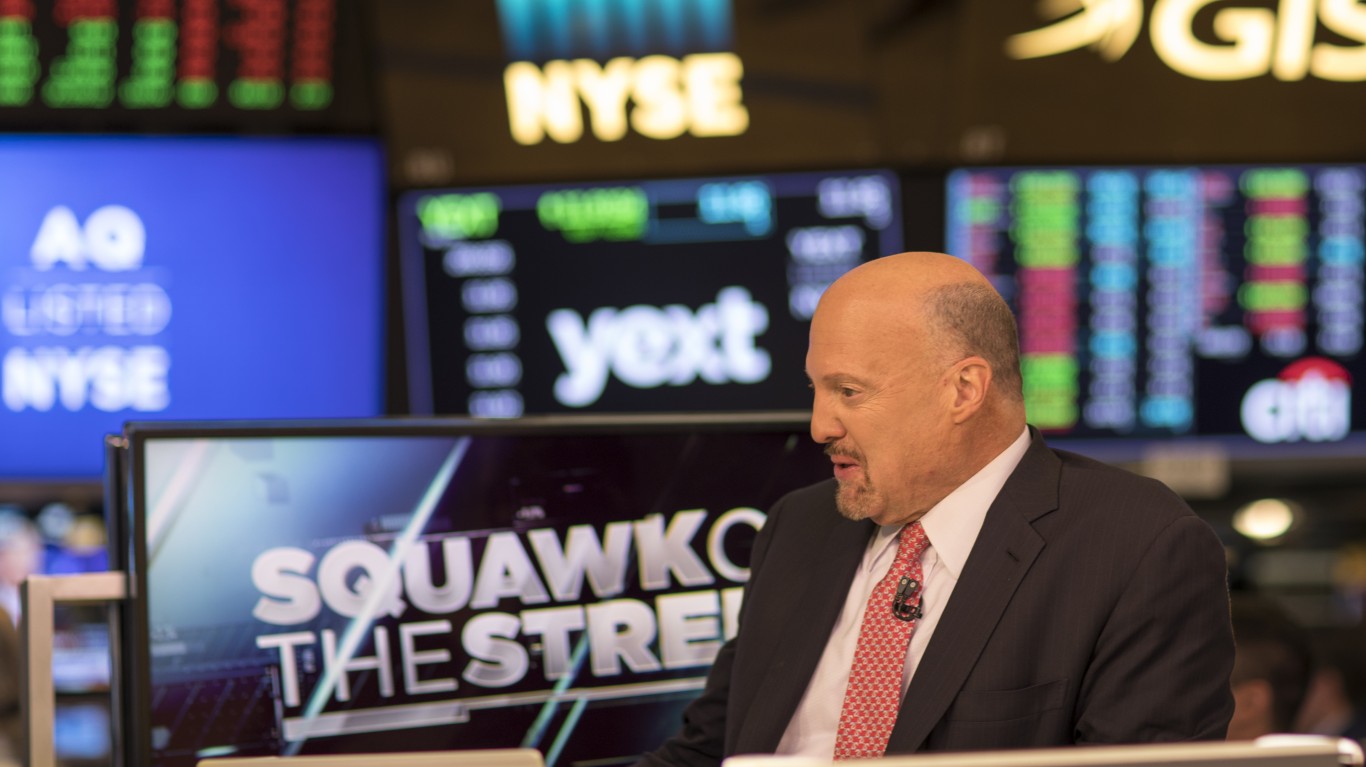
Marc Ganzi has spent three decades building digital infrastructure into an institutional asset class. This week, with SoftBank’s acquisition of DigitalBridge approaching completion, he told CNBC that the AI infrastructure market was in a “toppy-esque moment” that felt “very similar to the late 1990s.” Back then, companies borrowed heavily to build fiber networks before demand had caught up. Today, Ganzi sees similar signs around AI infrastructure, even though he views the buildout itself as “another iteration in the evolution of technology.”
The CEO of DigitalBridge Group (NYSE:DBRG | DBRG Price Prediction) agreed on December 29, 2025 to sell the company to SoftBank Group Corp for $16.00 per share in an all-cash, $4 billion transaction, a deal shareholders later approved in April 2026. DBRG last traded at $15.96, hugging the deal price and up 42.48% over the past year. Ganzi has already locked in his exit. The warning he issued this week is aimed at everyone else still climbing.
Ganzi Flags a Widening Leverage Divide
On CNBC, Ganzi described a two-tier data center market. DigitalBridge, he said, typically keeps its portfolio near a 45% loan-to-value (LTV) ratio, while newer competitors are pushing into 70% to 80% LTV territory, a condition he compared to altitude sickness. He drew a hard line between investment-grade tenants signed to long-term leases, which he called “islands of safety,” and unrated operators leaning on aggressive private credit structures.
This was not his first warning. Ganzi told analysts on DigitalBridge’s Q3 2025 earnings call the coming cycle would be “marked by a lot of amateurs and a lot of tourists in the next 24 to 36 months.” He also observed that “these gigawatt projects are really tough,” adding that customers can tell the difference between a first-time developer and a firm with “over 400 data centers and 11 different companies.”
DigitalBridge’s own scale supports the point. The company reported $40.80 billion in fee-earning equity under management as of Q1 2026 and, in Q3 2025, leased a record 2.6 gigawatts across its portfolio, roughly a third of U.S. hyperscale leasing that period. DigitalBridge-backed Vantage Data Centers is also building Frontier, a $25 billion, 1.4 GW Texas campus contracted to Oracle and OpenAI’s Stargate program. No wonder SoftBank noticed.
Ganzi’s “Priced to Perfection” Shot at NVIDIA
Ganzi reserved his sharpest edge for the financing architecture forming around NVIDIA (NASDAQ:NVDA). He described the capital backing NVIDIA’s chip-financing initiative as “priced to perfection,” meaning every assumption in the stack has to hold for the structure to hold up.
NVIDIA disclosed the scale of that program on its most recent earnings call. Management announced high-profile partnerships with Apollo, BlackRock, Blackstone, Brookfield, Goldman Sachs, and KKR to raise over $500 billion of third-party capital. Under the model, NVIDIA provides “a take or pay commitment on a portion of the facility’s capacity, a minimum revenue guarantee that gives lenders the confidence to underwrite the project.” CFO Colette Kress commentary acknowledged that “some will call this circular financing,” adding that the company sees things differently.
The numbers around NVIDIA are the reason the structure is being built at all. In its Q2 FY2027 report, NVIDIA posted revenue of $96.22 billion, up 105.8% year over year, with data center revenue of $89.02 billion, up 117%. Supply obligations swelled to $279.00 billion. The stock trades at roughly 45x earnings and is up 896.2% over five years, valuations that put some wind behind the late-1990s analogy.

What Retail Investors Should Take Away
Ganzi’s message maps where the risk in AI infrastructure actually lives. A campus leased for years to an investment-grade company and financed with moderate debt already has a customer and a stream of rent. A first-time developer borrowing 70% to 80% of a project’s value on behalf of an unrated operator needs far more pieces to go right. The power, cooling, and networking suppliers behind these campuses are a separate trade entirely, and we profiled seven of them in a free report on AI infrastructure beyond the chipmakers.
Ganzi is not warning that every data center is a bubble. He is warning that leverage decides which projects can still breathe when the altitude changes.
Contact [email protected] for any questions or corrections.
Gerelyn Terzo is the author of dividend investing handbook "Dividend Investing Strategies: How to Have Your Cake & Eat It Too." A veteran financial journalist, she covers agri-finance for outlets like Global AgInvesting and the broader stock market and personal finance for 24/7 Wall Street. She began at CNBC and later helped launch Fox Business in New York. Gerelyn currently resides in Woodland Park, Colorado and dabbles in nature photography as a hobby.