Trump Issues Ultimatum to Fed: Cut Rates or Face Trade War With the World
Trump just threatened to halt trade with every country where the U.S. runs a deficit unless the Fed bends to his will, but the Fed's own chair appears to be moving in the opposite direction, and September 16 is fast…

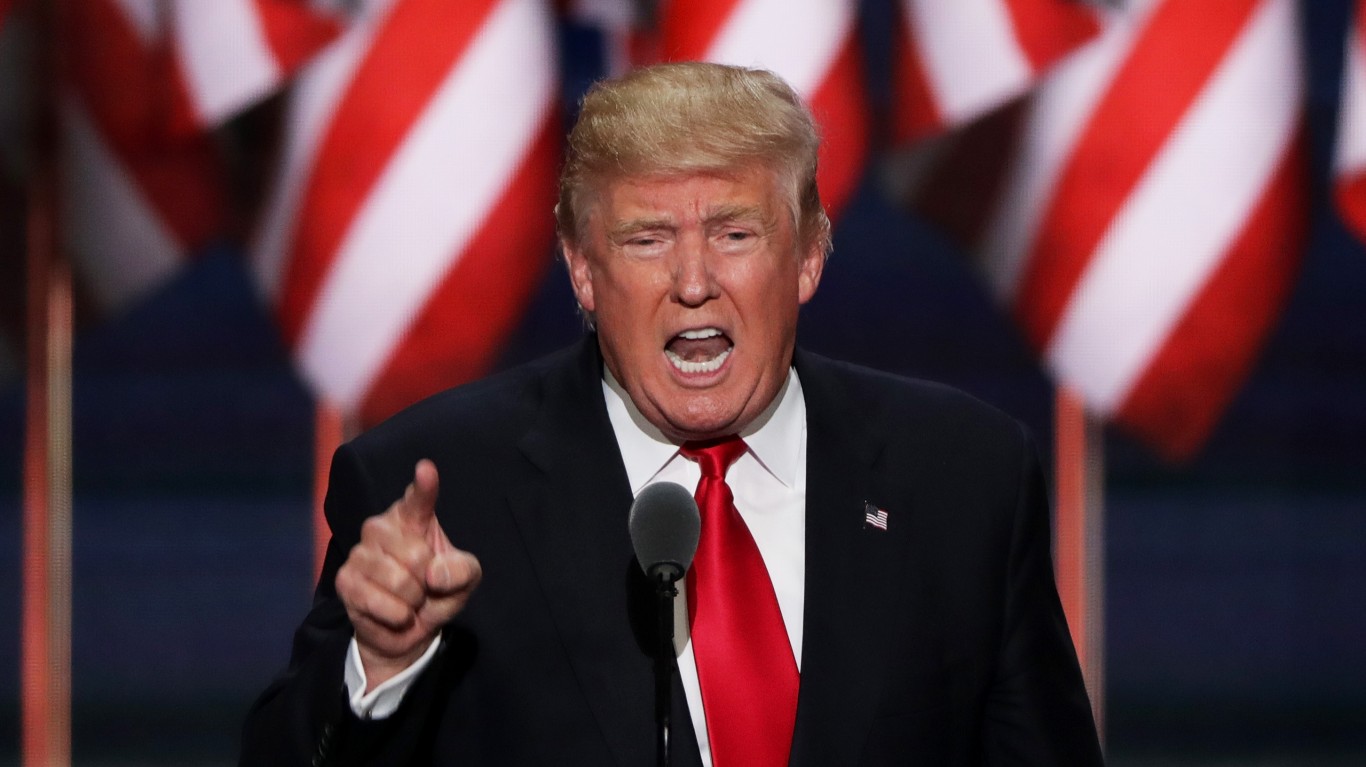
The U.S. economy just delivered an awkward message to Washington: Growth remains strong enough that financial markets are pricing in higher interest rates, even as President Donald Trump demands the opposite. Employers added 162,000 jobs in August, nearly triple the roughly 55,000 economists expected, while unemployment held at 4.1%, according to the Bureau of Labor Statistics. The stronger report has traders believing a rate hike at the Federal Reserve’s Sept. 16 meeting is likely.
But Trump returned a response that significantly raised the stakes. He threatened to stop trading with countries where the U.S. runs a trade deficit unless the Fed cuts rates. For investors, that turns an already complicated interest-rate debate into something much bigger and more dangerous: a potential disruption to global supply chains, corporate revenues, and consumer prices.
A Trade Threat Measured In Hundreds Of Billions
Trump’s Sept. 4 Truth Social post declared, “LOWER THE RATE OR I’LL STOP TRADING WITH COUNTRIES WITH WHICH WE HAVE A DEFICIT.” He cited the Supreme Court’s tariff ruling as support for presidential authority.
But the court didn’t establish an “absolute right” for the president to halt trade with deficit countries. In Learning Resources, Inc. v. Trump, decided back in February, the Supreme Court only addressed whether the International Emergency Economic Powers Act authorized the tariffs at issue. The Court narrowed presidential power over trade under that particular statute, not expanding or affirming an “absolute right” to unilaterally halt trade with any country.
The economic exposure is easier to quantify. Census Bureau data show that the U.S. ran goods deficits with major partners including Mexico, China, Taiwan, Germany, Japan, South Korea, Canada, and India. In 2025 alone, the goods deficit reached $1.24 trillion.
That means the threat is not aimed at a marginal slice of commerce. It potentially reaches many of America’s largest trading relationships.
The Fed Is Moving In The Opposite Direction
Trump appointed Kevin Warsh as Fed chair, and in February he said Warsh understood his preference for lower rates. Trump added that if Warsh had wanted to raise rates, “he would not have gotten the job.”
Warsh has since emphasized inflation control rather than promising cuts. At Jackson Hole, he indicated that financial conditions were not restrictive and that inflation remained a problem, helping push expectations toward a possible rate increase. Fed governors are leaning more heavily in that direction too.
The August jobs report only strengthened that case. CME FedWatch-based market pricing put the probability of a September 25-basis-point hike around 60.4% today. Yesterday, it stood at 49.4%.
Ironically, the president’s handpicked Fed chair could face his first major policy decision with markets expecting precisely the outcome Trump has been demanding he avoid.
What It Means For Investors
A rate cut could lower borrowing costs and potentially support interest-rate-sensitive stocks. But a trade cutoff would introduce a very different risk: reduced access to imported goods and components, disrupted supply chains, and potentially higher prices.
The Census Bureau’s April data shows just how concentrated the trade situation is. Mexico accounted for 16.4% of U.S. goods trade year-to-date, Canada 12.4%, China 6.1%, Taiwan 5.8%, Germany 4.0%, and South Korea 3.9%.
That makes this more than a dispute over the federal-funds rate. For companies dependent on international manufacturing, electronics, machinery, automobiles, pharmaceuticals, or consumer goods, the trade consequences could matter more than a quarter-point Fed move.
Key Takeaway
In short, investors should treat Sept. 16 FOMC meeting as a major macroeconomic risk date. The market is increasingly pricing a possible rate hike while the White House is demanding a cut and threatening broader trade restrictions if it doesn’t get one. Regardless of what the Fed ultimately does, the widening gap between monetary policy expectations and trade policy creates another source of volatility.
Smart investors should favor companies with strong balance sheets, pricing power, and less dependence on vulnerable international supply chains until the policy picture becomes clearer.
Contact [email protected] for any questions or corrections.
After two decades of patrolling the dark corners of suburbia as a police officer, Rich Duprey hung up his badge and gun to begin writing full time about stocks and investing. For the past 20 years, he’s been cruising the markets looking for companies to lock up as long-term holdings in a portfolio while writing extensively on the broad sectors of consumer goods, technology, and industrials. Because his experience isn’t from the typical financial analyst track, Rich is able to break down complex topics into understandable and useful action points for the average investor. His writings have appeared on The Motley Fool, InvestorPlace, Yahoo! Finance, Money Morning, and, of course, 24/7 Wall St. He has been featured in both U.S. and international publications, including MarketWatch, Financial Times, Forbes, Fast Company, and USA Today.