Tesla Says This Time Is Different. Wall Street Is Split on Whether to Believe It
Tesla posted record deliveries and 25% revenue growth in the same quarter it missed earnings by nearly 40% and burned over a billion in free cash flow. Wall Street cannot agree on which number tells the real story.

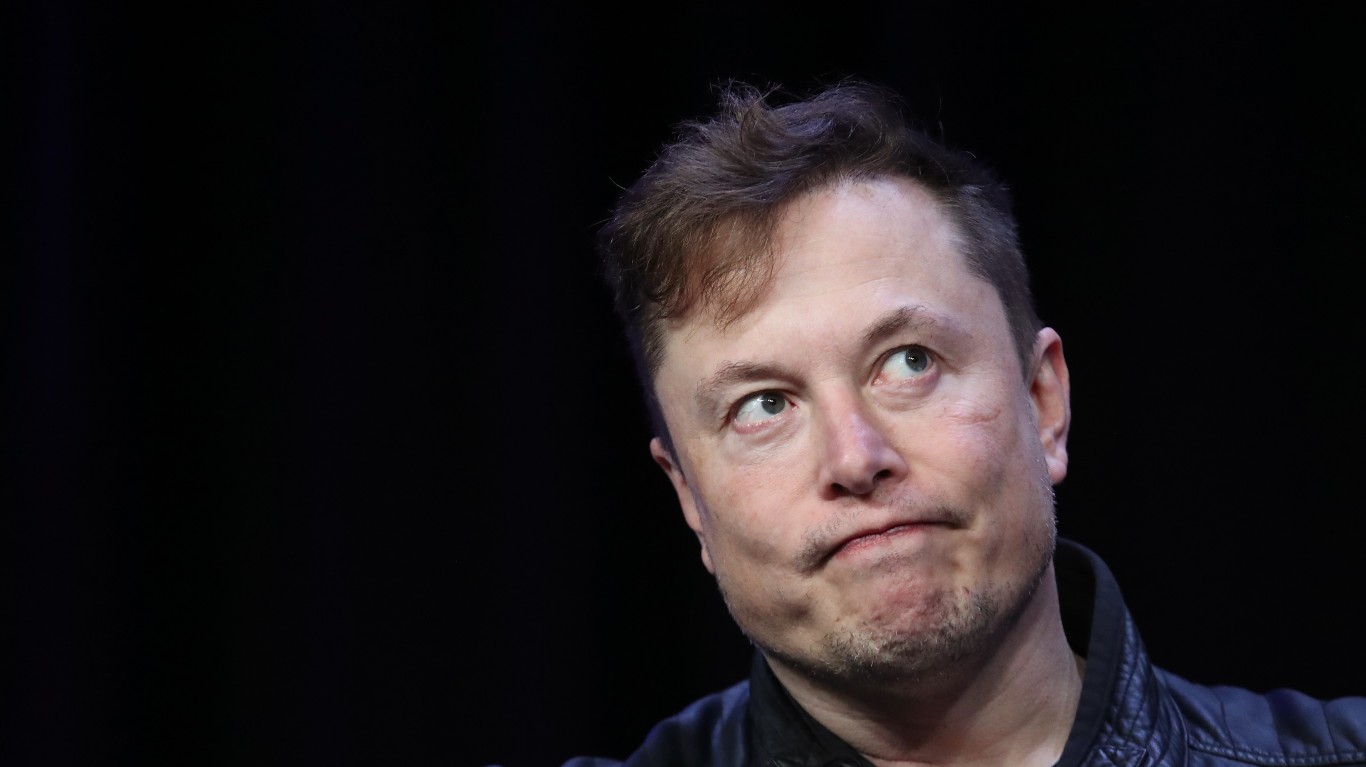
At $354.08, Tesla (NASDAQ:TSLA | TSLA Price Prediction) sits at a crossroads, because the market is still deciding whether to price it like an automaker with slipping margins or an AI platform with a robotics option attached. The stock rallied 10.12% over the past month on renewed promises around AI monetization, then gave back 5.92% in a single session after a Cybercab update that Wall Street called underwhelming.
Tesla still sells the world’s most popular electric vehicle, but the investment case now runs through Robotaxi, Full Self-Driving software, Optimus humanoid robots, and an in-house AI compute stack. Management is spending accordingly. Elon Musk called this “a massive CapEx year,” with the full-year capital budget set at more than $25 billion and debt facilities of up to $30 billion lined up to fund it.
Why the AI Reset Could Reprice the Stock
The bull case starts with growth reaccelerating. Q2 2026 revenue hit $28.24 billion, up 25.52% year over year, beating consensus by 7.1%, with a record 480,126 vehicles delivered. Energy storage deployments grew 41% to 13.5 GWh, and services revenue jumped 50% at a record 14% gross margin.
The software flywheel is real. Active FSD subscriptions reached 1.48 million, up 56% year over year, and attach rates exceeded 55% of new North American deliveries. Robotaxi now operates in seven U.S. metros, and Tesla’s VP of AI said the fleet has driven more than 380,000 miles of unsupervised Robotaxi with “zero notable incidents.” A $43.5 billion cash pile funds the roadmap without dilution.
Why the Margin Math Looks Broken
The bear case is the income statement. Non-GAAP EPS of $0.33 missed the $0.54 estimate by 38.51%. Operating income collapsed 56.88% to $398 million, and operating margin dropped to 1.4%. Free cash flow flipped to negative $1.09 billion as capex surged 141.81%.
Valuation leaves no cushion. Tesla trades at a P/E of roughly 369 and a price-to-free-cash-flow of 225. Regulatory credits, once pure profit, fell to $146 million. Prediction markets assign just 0.23 odds to a California Robotaxi launch by year end and 0.031 to an Optimus release by December 31, 2026.
Why Patience Beats Conviction Right Now
Both sides are directionally right, which is precisely the problem. The auto business is producing record volume while its margins compress, and the AI business is real but unproven at scale. Cybercab volume production, Optimus lines at Fremont, Megapack 3, and the Austin semiconductor fab are all expected to hit milestones through 2026. Investors can wait for evidence without missing the story.
The Cybercab reveal was the tell. A stock priced for flawless execution cannot absorb a product update that leaves analysts cold. Until Robotaxi economics, Optimus manufacturing yields, or a real margin recovery show up in the numbers, the debate stays unresolved.
What the Numbers Say About the Split
Tesla currently trades at $354.08 against a mean analyst target of $390.09, implying roughly 10% upside if the consensus is right, though price targets are only one input among many. Coverage tilts constructive but not unanimous: 22 Buys, 19 Holds, and 5 Sells.
Performance tells the split story cleanly. TSLA is down 21.27% year to date while the S&P 500 is up 12.94%. Over the past year, Tesla returned 4.59% versus 18.65% for the index. Reddit’s stocks community reads a bearish 22, while wallstreetbets stayed bullish, another mirror of the professional debate.
What Could Settle the Debate Next Quarter
At $354.08, Tesla sits in an unresolved zone. Here is why. The bull case requires Robotaxi miles, FSD subscription growth, and Optimus milestones to convert into reported operating leverage. The bear case requires margins to keep collapsing while capex compounds. Neither is confirmed yet, and the current price sits above the AI composite model target of $319.11 but below the analyst mean.
Watch three things over the next two quarters. First, whether Q3 automotive gross margin excluding credits stabilizes above the 16.3% exit rate. Second, whether Robotaxi miles keep compounding at Musk’s cited 10% weekly pace as new metros open. Third, whether Optimus lines at Fremont produce a meaningful unit count before year end.
A bullish signal to monitor would be a Robotaxi expansion into California paired with a return to positive free cash flow. A bearish signal would be another EPS miss of similar magnitude with capex still climbing into 2027. Until one of those shows up, the cost of waiting is small and the cost of being wrong on either extreme is large.
Tesla’s next earnings report will tell investors which company they actually own, and that is worth waiting for.
Contact [email protected] for any questions or corrections.
Alex Sirois is a financial writer with experience spanning both retail and institutional investing. He has written for InvestorPlace and held roles at BNY Mellon and Bernstein, giving him a perspective that bridges Main Street portfolios and Wall Street analysis.
Alex holds an MBA from George Washington University and has built his career across multiple industries, including e-commerce, education, and translation — a breadth of experience that informs how he breaks down complex financial topics for everyday investors. His writing is conversational, actionable, and grounded in long-term, buy-and-hold investing principles.
At 247 Wall St., Alex focuses on delivering analysis that is both accessible and useful, with a clear emphasis on helping readers make more informed decisions with their money.