The Memory Shortage Isn’t Close to Ending — Samsung Just Locked Up 70% of HBM Capacity Through 2031
Microsoft, Nvidia, and Google are quietly signing deals that stretch nearly a decade into the future, and the reason why tells you everything about where the AI memory market is actually headed.

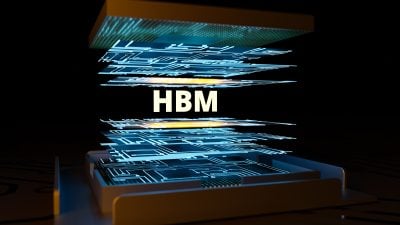
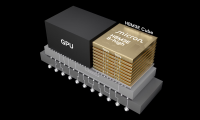
The AI boom is turning memory from a cyclical semiconductor component into critical infrastructure. Manufacturers can add factories, but advanced high-bandwidth memory (HBM) takes years to qualify, ramp, and produce at scale. Meanwhile, AI developers are securing supply years in advance.
The latest evidence comes from South Korea, where Samsung Electronics reportedly has already committed roughly 70% of its memory production capacity through 2031 under long-term agreements. That is less a sign that the shortage is ending than a warning that buyers expect it to last.
AI Customers Are Buying Memory Years Ahead
According to Seoul Economic Daily, Samsung has locked up about 70% of its memory capacity through long-term agreements (LTAs) with major customers including Microsoft (NASDAQ:MSFT | MSFT Price Prediction), Nvidia (NASDAQ:NVDA), and Google. The agreements can extend through 2031.
Customers are locking themselves into multiyear contracts at prices far below today’s spot market because they’re getting the best of both worlds: a steep discount and guaranteed access to HBM.
A 36GB HBM3E module reportedly sells for about 2.87 million won (around $2,100) on the spot market, compared with just 500,000 to 700,000 won ($300 to $400) under long-term agreements. Customers are willing to commit to purchases years in advance because the contracts give them access to memory at a fraction of today’s spot price while protecting them from being shut out of the market as AI demand continues to expand.
For Samsung, the agreements provide predictable demand. For its customers, they provide cheaper memory and certainty of supply. The message is clear: in an AI boom where a shortage of memory can constrain the entire data center, having the chips matters more than having the option to buy them later.
TrendForce reported that 2027 HBM supply negotiations remained stalled as manufacturers pushed for higher prices, with AI-driven demand continuing to crowd out conventional DRAM.
More Capacity Doesn’t Automatically Mean More Supply
Granted, Samsung and its rivals are spending to expand production. Samsung is even considering converting its S5 foundry line at its Pyeongtaek campus into memory production.
SK hynix (NASDAQ:SKHY) is making an even larger commitment. The company recently broke ground on a $4 billion HBM packaging facility in Indiana, with production targeted for 2029, while its board has approved 54.3 trillion won, or about $38.3 billion, of investment through 2031. SK hynix’s CEO also said the memory shortage could persist through 2030.
Micron Technology (NASDAQ:MU) stands to benefit from the same dynamic. All three major suppliers are competing to expand HBM output, but customers are simultaneously reserving future production.
New factories increase supply, but locked-up capacity prevents all of that supply from immediately becoming available to everyone else.
Cheaper AI Could Make Memory Demand Bigger
There is an interesting wrinkle for investors. Those LTA prices are dramatically below today’s spot prices, which could eventually lower the amount customers spend on HBM for each unit of AI computing. But cheaper computing doesn’t necessarily mean less total demand.
It’s called Jevon’s paradox and says that when technology becomes more efficient and affordable, businesses often deploy more of it. Named after British economist William Stanley Jevons in 1865, he noticed that as the improved steam engine used coal more efficiently, it didn’t actually save coal. Instead, the cheaper power made factories buy more engines, which caused total coal consumption to surge.
In AI, cheaper inference could encourage companies to run more models, serve more users, and automate more tasks. In other words, efficiency expands the market it serves. That’s why investors shouldn’t assume today’s memory intensity will simply disappear as AI chips improve.
Key Takeaway
The numbers point toward a memory shortage that will last well beyond the next few quarters. Samsung reportedly having 70% of its capacity committed through 2031 is particularly revealing because customers are effectively paying for certainty years before new factories come online.
That should benefit Samsung, SK hynix, and Micron as HBM demand remains structurally elevated. The risk is that AI spending eventually slows or customers over-order memory. But for now, the evidence points the other way.
For investors, the smarter thesis isn’t that memory will remain scarce forever. It’s that the industry may have entered a multiyear period where supply growth struggles to keep pace with the amount of AI computing that falling costs make economically viable.
Contact [email protected] for any questions or corrections.
After two decades of patrolling the dark corners of suburbia as a police officer, Rich Duprey hung up his badge and gun to begin writing full time about stocks and investing. For the past 20 years, he’s been cruising the markets looking for companies to lock up as long-term holdings in a portfolio while writing extensively on the broad sectors of consumer goods, technology, and industrials. Because his experience isn’t from the typical financial analyst track, Rich is able to break down complex topics into understandable and useful action points for the average investor. His writings have appeared on The Motley Fool, InvestorPlace, Yahoo! Finance, Money Morning, and, of course, 24/7 Wall St. He has been featured in both U.S. and international publications, including MarketWatch, Financial Times, Forbes, Fast Company, and USA Today.