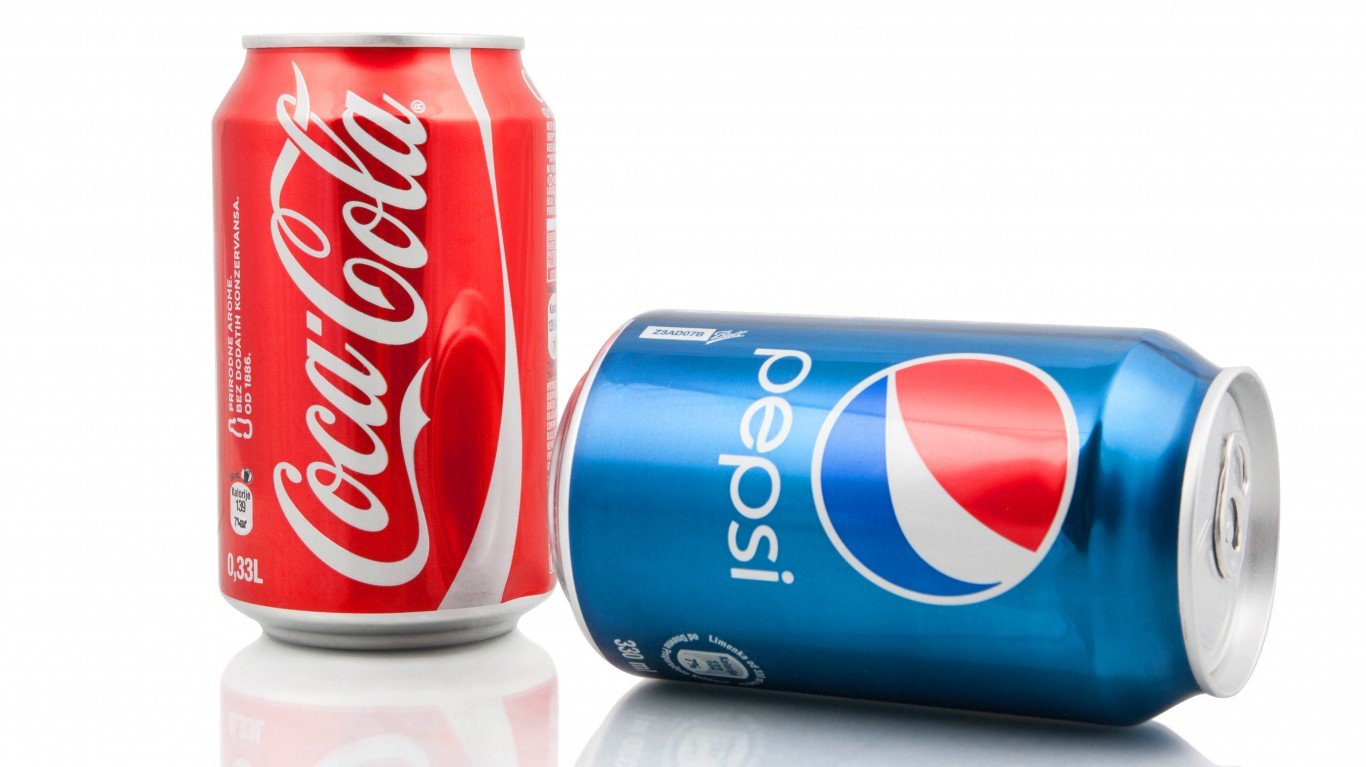
Andrew Sather: “Most Investors Are Missing Why” Coca-Cola Is Outperforming
Andrew Sather says most investors only understand one of the two engines driving stock returns, and missing the second one is exactly why a name as familiar as Coca-Cola keeps catching people off guard.

This post may contain links from our sponsors and affiliates, and Flywheel Publishing may receive compensation for actions taken through them.

The least exciting name on your watchlist can outrun the flashiest one when the market has priced in nothing and the business quietly grows. Andrew Sather, co-host of The Investing for Beginners Podcast, argues that most investors understand only one of the two engines driving stock returns. Engine one is straightforward: the stock roughly tracks a growing business. Engine two pays better and confuses more people: you buy a stock whose growth the market refuses to acknowledge, and you collect the difference when sentiment catches up.
Sather says he is “starting to lean more towards” the second engine again because “there’s just more opportunities there.” His worked example is Coca-Cola (NYSE:KO | KO Price Prediction), a name so often dismissed as dead money that the framework has room to embarrass its critics. The wrinkle is that the market may already be recalibrating. Shares are up sharply this year, so the real question becomes whether the re-rating still has room to run.
Two Engines of Return
Every stock return comes from either the business or the multiple. If earnings grow and the price/earnings ratio holds steady, the stock tracks earnings. If earnings hold steady and the multiple expands, the stock rises anyway.
Sather framed it this way: “it’s not always margin of safety, it’s not always high growth. It’s which combination of the two at any given point in time is going to lead to higher returns.” One factor without the other tends to disappoint.
What Margin of Safety Looks Like in Practice
Margin of safety is the gap between what a business is likely worth and what the market is charging you today. You look for durable free cash flow, a share count that isn’t drifting higher, and a story most people find boring.
Coca-Cola’s free cash flow yield sits around 1.40%, and the forward dividend is $2.12. The safety comes from durability: 63 consecutive years of dividend increases and $8.8 billion paid in 2025.
Coca-Cola as the Worked Example

Sather characterizes the dead-money bucket as businesses growing 4% to 6% a year, and Coca-Cola’s second quarter outran that. Revenue was $13.38 billion, up 6.7% year over year, and adjusted EPS of $0.97 against a $0.9323 consensus marked the fifth straight beat.
Guidance was raised: organic revenue growth of about 5%, comparable EPS growth of 9% to 10%, and free cash flow near $12.4 billion. The full detail sits in the Q2 2026 release filed with the SEC.

The stock has responded. Shares closed at $88.07 on September 4, up 27.67% year to date and 32.72% over the past year. Whatever dead money meant a few years ago, it does not describe the stock today.

Operating margin expanded to 34.9% from 34.1%, and net debt leverage sits at 1.4 times EBITDA. Trademark Coca-Cola volume grew 5% globally, the strongest in 17 years excluding COVID recovery, helped by a FIFA World Cup activation across 180+ markets.

At a P/E of 29x, the multiple no longer looks apologetic. If Sather’s thesis was that the market underappreciated the growth, the market has partly caught up.
When the Framework Fails
A cheap stock can stay cheap, and underappreciated often turns out to mean declining. Tell the difference by checking whether unit volumes are growing, and not simply revenue.
Coca-Cola’s global unit case volume rose 5%, led by India, China, the US, and Brazil. That confirms demand is real. When volumes shrink while price carries the top line, the runway is finite.
Applying the Two-Factor Check to Your Watchlist
For any stock, ask two questions. Is the business actually growing on volume and cash flow, or only on headline revenue? Is the multiple you are paying reasonable against a bearish version of that growth?
If both answers are yes, you own both engines. If growth is present but the multiple is stretched, you are paying for delivery with zero room for error. If the multiple is cheap and growth is absent, you are hoping sentiment shifts before fundamentals confirm the story.
Is KO Stock a Buy?
Coca-Cola today reads as a hold. The business is executing, guidance was raised, and the balance sheet is enviable, although the re-rating Sather’s framework anticipated is already visible in the stock. A 29 P/E on a mid-single-digit organic grower leaves a thinner margin of safety than the dead-money label suggests.
Against PepsiCo, which has wrestled with volume declines, Coca-Cola is the stronger operator right now. New capital at these prices needs patience; existing holders collect a 2.32% yield backed by 63 straight annual increases, the kind of streak we screened for in our free Dividend Kings guide.
Contact [email protected] for any questions or corrections.
Omor Ibne Ehsan is a writer at 24/7 Wall St. He is a self-taught investor with a focus on growth and cyclical stocks that have strong fundamentals, value, and long-term potential. He also has an interest in high-risk, high-reward investments such as cryptocurrencies and penny stocks.