Nvidia’s $12.9 Billion Hugging Face Bet Comes With One Huge Risk
Nvidia just paid nearly $13 billion to own the platform where the open-source AI community lives, works, and distributes its models. The question is whether that community will stay or walk.

This post may contain links from our sponsors and affiliates, and Flywheel Publishing may receive compensation for actions taken through them.

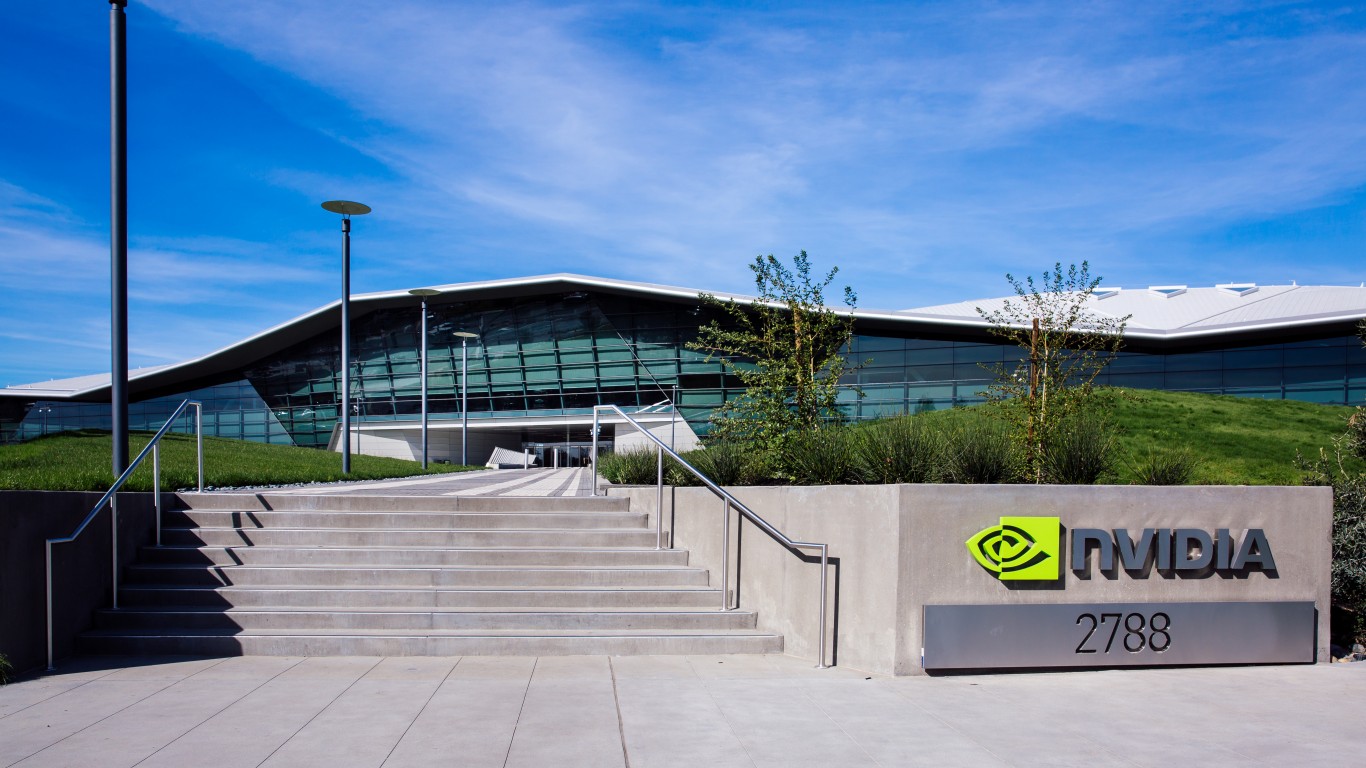
NVIDIA (NASDAQ:NVDA | NVDA Price Prediction) has closed on its purchase of Hugging Face, and the interesting work begins now. The New York Times reported the transaction at $12.9 billion, a figure WIRED framed as a $12.9 billion bet on open-source AI. The check has cleared. The community’s trust has not.

That is the asset Nvidia cannot wire-transfer for. Hugging Face is the default distribution point for open weights, datasets, and model cards. Owning the hub while also selling the silicon those models run on creates a structural conflict every rival accelerator program can now cite when courting maintainers.
What the Platform Owner Actually Said
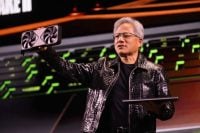
Nvidia has not disclosed binding governance commitments in an 8-K tied to the deal. What is on the record is Jensen Huang’s positioning on the Q2 FY2027 call. He argued that “the world will need both closed models and open models. and both closed models and open models are skyrocketing in use” and that “nearly all open models run on NVIDIA”. He added: “Our position in open models is very good, because the CUDA ecosystem is literally everywhere.”
Those remain strategic statements rather than binding covenants. Until Nvidia publishes model-hosting neutrality terms, contributor governance, and a policy on AMD, Groq, and Trainium optimizations shipped through the hub, the openness pledge is a talking point.
Why Neutrality Is the Whole Ballgame
Nvidia posted Q2 FY2027 revenue of $96.22 billion, up 105.85% year over year, with Data Center revenue of $89.02 billion and non-GAAP EPS of $2.22. Shares closed at $230.36 on September 4, 2026, up 23.67% year to date, against a market cap of roughly $5.56 trillion and a P/E near 46.

A vendor that dominant buying the neutral commons gives every competing silicon program a fundraising deck. Expect AMD, Intel, and the hyperscalers’ custom-silicon teams to underwrite an alternative registry or a fork the moment a hosting policy tilts. The buildout around all this silicon still has to be powered, cooled, and networked by somebody, and we rounded up seven of those suppliers in a free AI infrastructure report.
Signals Worth Watching
Grassroots reaction has already been mixed as Reddit’s aggregate sentiment on the announcement day registered a 49 score, considered relatively neutral. Also, skeptical threads about Nvidia’s circular financing have kept resurfacing.
Three checkable triggers over the next two quarters will settle the debate. First, whether the next frontier open-weight release from Mistral, Meta, or DeepSeek lands on Hugging Face first or on a mirror. Second, whether a competing registry, backed by an AMD or hyperscaler consortium, announces funding. Third, whether named senior maintainers depart publicly. If any of those three flip against Nvidia by the Q4 FY2027 earnings report, the $12.9 billion bought a liability, according to The New York Times. If none do, Huang bought the map.
Contact [email protected] for any questions or corrections.
Chris Lange is a writer for 24/7 Wall St., based in Houston. He has covered financial markets over the past decade with an emphasis on healthcare, tech, and IPOs. During this time, he has published thousands of articles with insightful analysis across these complex fields. Currently, Lange's focus is on military and geopolitical topics. Lange's work has been quoted or mentioned in Forbes, The New York Times, Business Insider, USA Today, MSN, Yahoo, The Verge, Vice, The Intelligencer, Quartz, Nasdaq, The Motley Fool, Fox Business, International Business Times, The Street, Seeking Alpha, Barron’s, Benzinga, and many other major publications. A graduate of Southwestern University in Georgetown, Texas, Lange majored in business with a particular focus on investments. He has previous experience in the banking industry and startups.