NVIDIA Wins. America Loses
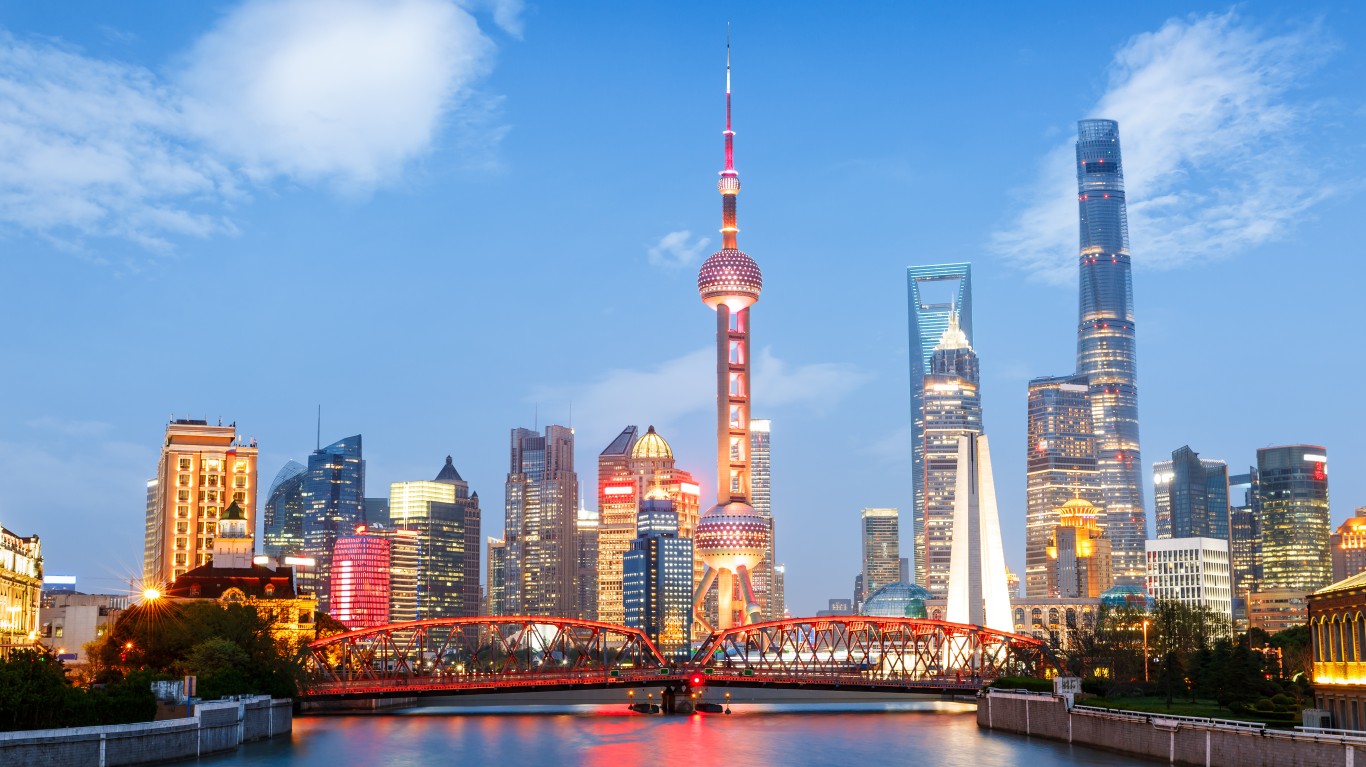
In a move that crystallized just hours before President Donald Trump touched down in Beijing for his May 14-15 summit with Xi Jinping, the United States quietly approved roughly 10 Chinese firms to purchase NVIDIA's H200 accelerators. The approved list…

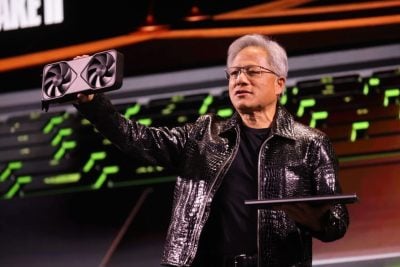
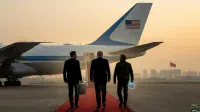
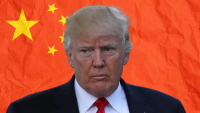
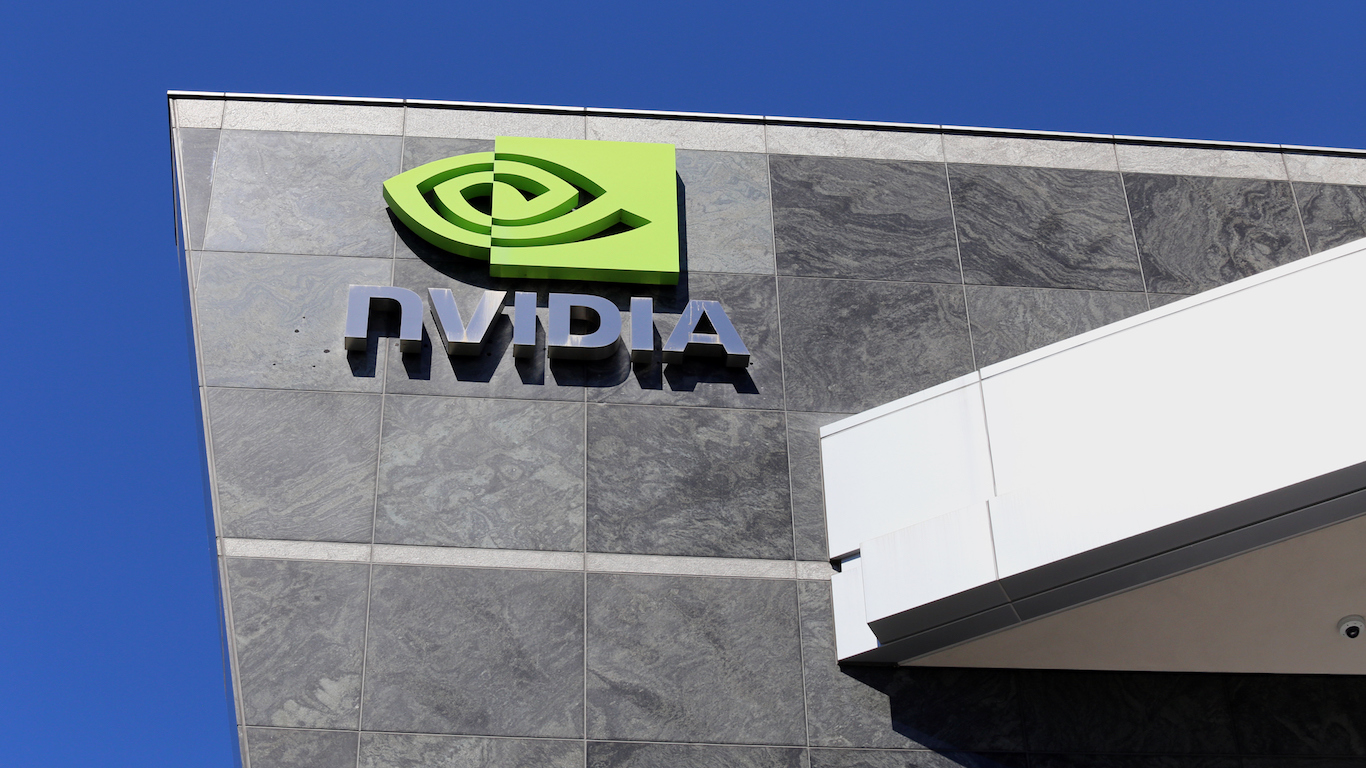
In a move that crystallized just hours before President Donald Trump touched down in Beijing for his May 14-15 summit with Xi Jinping, the United States quietly approved roughly 10 Chinese firms to purchase NVIDIA (NASDAQ:NVDA | NVDA Price Prediction) H200 accelerators. The approved list includes Alibaba, Tencent, ByteDance, and JD.com, with Lenovo and Foxconn cleared as distributors. NVIDIA shareholders, commanding a market capitalization of $5.2 trillion as of early June 2026 and a stock that climbed 19% in the month leading up to the summit, secured precisely what Jensen Huang flew halfway around the world to deliver. America, by contrast, received something far more troubling: a strategic retreat wrapped in the language of commerce.
Huang Prevails Over the Hawks
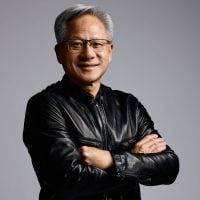
Huang’s name was conspicuously absent from the original summit delegation list. Trump reversed that decision at the eleventh hour, overruling advisors who have spent years building the export-control framework that finally began to constrain Beijing’s access to frontier compute. The reversal carried more weight than a simple guest-list addition. Polymarket traders, reading the tea leaves in real time, assigned a 73% probability that Trump would announce substantive AI export relief for China by May 22, with the AI-relief contract drawing heavier volume than any other summit-related market.
The stakes for NVIDIA are staggering. The company closed fiscal 2026 with $215.9 billion in revenue, a 65% surge, and posted Data Center revenue of $62.3 billion in Q4 alone, up 75% year over year. Management guided Q1 FY2027 to approximately $78 billion, explicitly excluding any China Data Center compute contribution. The company then proceeded to report actual Q1 revenue of $81.6 billion on May 20, beating that guidance and setting up Q2 guidance of $91 billion. Reopening the Chinese market layers billions in incremental revenue onto a franchise already operating at 75% non-GAAP gross margins. Wall Street analysts understand the math: as of early June 2026, 59 firms rated the stock a Buy, two issued Hold ratings, and just one maintained a Sell. The overwhelming consensus tells you everything about how the Street prices this policy shift.
The Strategic Cost: Surrendering a Decade-Long Lead
Treasury Secretary Scott Bessent framed the dialogue with Beijing around a single premise: the United States can afford to discuss AI with China “because we are in the lead.” That sentence describes a moat. The H200 approval begins to drain it.
H200 serves as the workhorse architecture for training and inference workloads that define frontier AI. Huang himself described Grace Blackwell as “the king of inference today, delivering an order-of-magnitude lower cost per token,” positioning H200 one generation behind on the same performance ladder. Approving its sale to Alibaba, Tencent, and ByteDance hands Beijing’s most sophisticated hyperscalers the one resource they cannot replicate at scale domestically: state-of-the-art compute. The export-control regime that forced NVIDIA to absorb a $4.5 billion H20 inventory charge in Q1 FY2026 and forgo an estimated $8 billion in subsequent quarterly revenue inflicted pain precisely because the restrictions were working. Actual Q1 FY2027 results confirmed the hit: no Data Center Hopper shipments to China occurred during the quarter, compared with $4.6 billion in the prior-year period.
Two factors prevent this from being a closed case. First, no H200 units have physically cleared Chinese customs yet, and reports indicate Beijing’s own regulatory scrutiny is stalling transactions. Second, sources suggest a broader U.S.-China arrangement may include Beijing easing pressure on domestic firms to bypass NVIDIA purchases. That structure describes a managed drawdown, one in which both governments calibrate how quickly America’s compute advantage erodes rather than whether it erodes at all.
Who Bears the Cost
NVIDIA shareholders capture the upside. American workers, the national security apparatus, and any future administration attempting to enforce AI sovereignty absorb the downside. The asymmetry is deliberate: a multi-quarter revenue lift for a single corporation against a generational realignment in which nation trains the next wave of frontier models on whose silicon.

Three markers will determine whether this becomes a permanent shift or a tactical gambit. First, watch whether actual H200 shipments to the named Chinese buyers clear customs, or whether Beijing’s stall tactics hold indefinitely. Second, NVIDIA’s Q2 FY2027 earnings call, scheduled for late August 2026, will reveal whether China Data Center revenue reappears in the guidance. Its presence would confirm the policy reversal has moved from approval to execution. Third, observe whether the Commerce Department publishes a formal licensing framework or maintains case-by-case discretion. The first cements NVIDIA’s win. The third determines whether America’s concession can be clawed back or becomes structural.
Editor’s note: This article has been updated to reflect NVIDIA’s actual Q1 fiscal 2027 results reported on May 20, 2026, current market capitalization as of early June 2026, verified Treasury Secretary Bessent’s remarks during the Beijing summit, and post-summit developments regarding H200 export approvals and shipment status.
Contact [email protected] for any questions or corrections.
Joel South covers large-cap stocks, dividend investing, and major market trends, with a focus on earnings analysis, valuation, and turning complex data into actionable insights for investors.
He brings more than 15 years of experience as an investor and financial journalist, including 12 years at The Motley Fool, where he served as an investment analyst, Bureau Chief, and later led the Fool.com investing news desk. He has also co-hosted an investing podcast and appeared across TV and radio discussing market trends.