As 10-Year Yields Close In on 5%, Piper Sandler Says Caterpillar and Industrials Are the New AI Winners
Craig Johnson sees the AI trade quietly abandoning its old leaders, and the bond market is the confession. Find out which industrial giant sits at the center of the rotation and what a move through 4.80% on the ten-year would…


On CNBC’s Power Lunch on September 8, 2026, Piper Sandler chief market technician Craig Johnson argued the AI trade is rotating into a new leadership group. His evidence sits in the bond market and leadership tables, where energy is printing new highs while the NASDAQ stalls.
Charles Schwab Asset Management chief executive Omar Aguilar sketched a wave framework: hyperscalers first, then semiconductors, and now the labor-heavy, low-return industries that stand to see the biggest productivity gains from adopting AI. Industrials, financials, materials, and energy sit at the front of that queue.
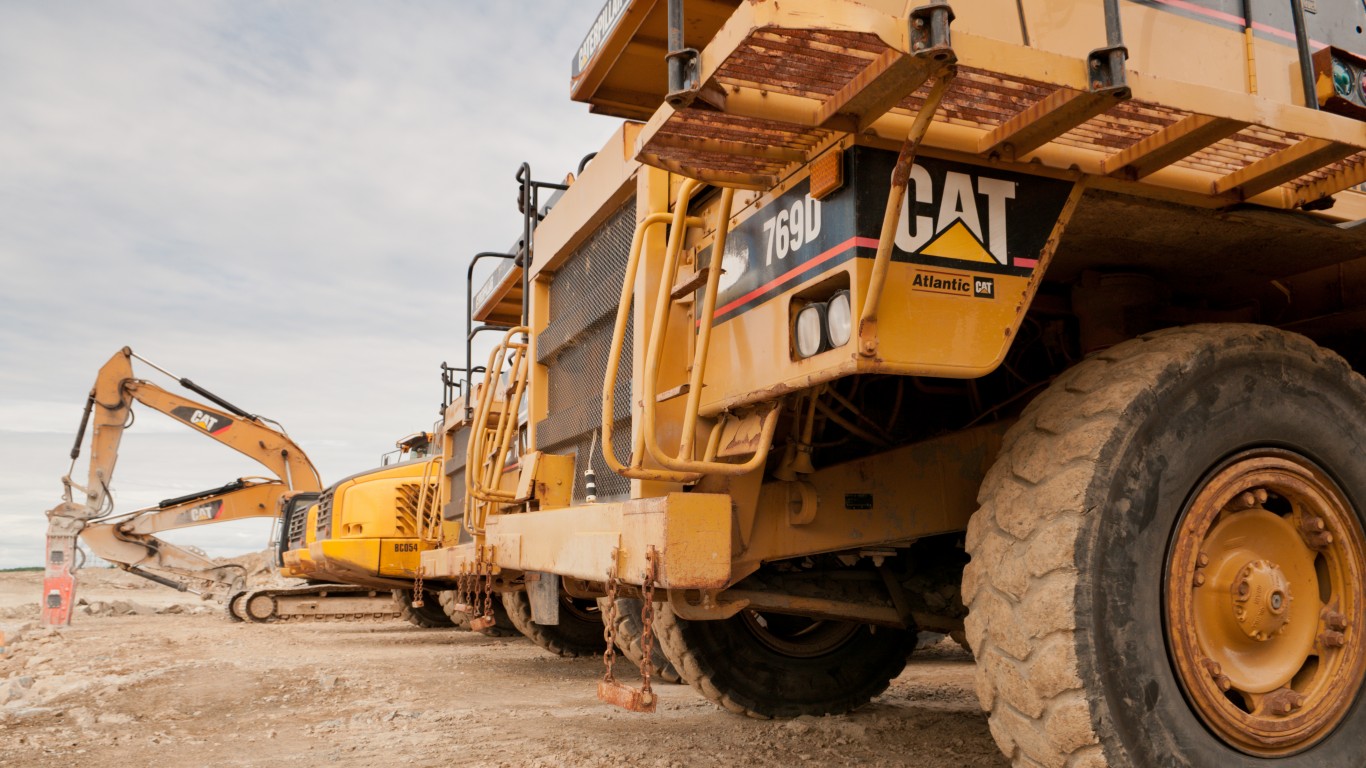
That framing puts Caterpillar (NYSE:CAT | CAT Price Prediction) in an unusual spot. Its gas turbines and reciprocating engines are keeping data centers powered (we profiled seven of these non-chip AI infrastructure suppliers, from power to cooling, in a free report you can grab here), and its backlog stretches years out. Johnson noted the NASDAQ had gone 14 weeks without a new record high, a leadership drought that usually precedes a rotation.
Rotation in the Charts, and What a Bear Steepener Actually Is

Johnson described a bear steepener in the yield curve: short rates pinned while long rates climb. That combination has historically preceded leadership shifts, and energy stocks are the tell.
The 10-year minus 2-year spread stood at 0.41% on September 8, 2026. Johnson said flatly, “Energy stocks. They are leadership in this market.”
Leadership from oil and gas typically arrives alongside inflation pressure, and inflation pressure keeps the long end sticky.
Why the 5% Level on the Ten-Year Matters
Johnson pegged the 10-year at 4.8% on the interview date. Treasury data cited on CNBC puts the 10-year at 4.8% on September 8, 2026, with the 30-year already above five at 5.25%.
In his words, “If we break above 480, we’re probably heading toward five and maybe even closer to five and a quarter just looking at the charts.”
Technicians treat round numbers as functional because option desks, corporate treasurers, and mortgage originators reprice at them. A move through 480 would drag discount rates on long-duration equities higher whether or not fundamentals changed.
The 12-month high on the 10-year sits at 4.79% on September 2, 2026, with the current reading in the 98.8th percentile of the past year.
Aguilar’s Wave Framework and Where Caterpillar Fits
Aguilar told CNBC, “The infrastructure that goes into the usage and capital expenditures for AI across health care, financial sector, across industrials, across materials could be as big as what we saw in the first wave of the hyperscalers.”
Caterpillar’s Q2 numbers argue that the wave is already funding orders. Revenue was $20.54 billion, up 23.98% year over year, with adjusted EPS of $8.17 versus a $6.1974 estimate.
Power Generation revenue reached $3.098 billion, up 29%, driven by data center demand for large reciprocating engines and turbines. Backlog swelled to $72 billion, up roughly 92% year over year, with large engines scheduled into 2028. Details sit in the Q2 2026 8-K.
Johnson connected the framework to head count: “Companies that have a lot of employees relative to their industries and low ROIs are going to get reset.”
What Could Break the Thesis
Aguilar’s caution was direct: “They’re concerned about what oil prices fluctuation eventually we do. And they’re concerned about what these long yields may do to their stock portfolio.”
AI capital spending presumes credit stays open and eventual returns justify the outlay. If long yields punch through Johnson’s 5.25 target, discount rates will rise, and marginal projects will get shelved.
Caterpillar carries its own risks. Full-year 2026 tariff costs are expected at roughly $2.2 billion, and the VIX sat at 15.3 on September 7, 2026.
The stock itself already reflects the setup. CAT is up 44.46% year-to-date and 96.3% over one year through September 8, 2026.
Is CAT Stock a Buy?


Caterpillar is the cleanest industrial expression of Aguilar’s third wave that the data supports. The backlog is scheduled into 2028, capacity constraints are the governor, and Power Generation growth is being locked in with escalators.
Against that, shares have doubled in a year, and the yield backdrop Johnson described is a live headwind for any long-duration industrial multiple. A move on the 10-year through his breakout level would likely compress the rerating already underway.
The business is executing at a level unlikely to be matched by peers, but the entry price already assumes the third wave arrives on schedule.
For investors who already own CAT, I would hold it. For investors looking to start a position, I would wait for either a meaningful pullback or another round of earnings growth that brings the valuation back down to earth.
Contact [email protected] for any questions or corrections.
Omor Ibne Ehsan is a writer at 24/7 Wall St. He is a self-taught investor with a focus on growth, cyclical, and dividend equities that have strong fundamentals, value, and long-term potential. He also has an interest in high-risk, high-reward investments such as penny stocks.