OpenAI to Spend $750 Billion on Compute by 2030 — But It’s Short on Capacity
OpenAI just raised its compute spending target by 25% and still calls itself short on capacity, which puts Oracle's $638 billion backlog and a bleeding cash flow statement on a collision course investors cannot afford to ignore.


$750 Billion, and Still Short
OpenAI now plans to spend roughly $750 billion on compute infrastructure through 2030, a figure that represents a 25% increase from earlier 2026 estimates. The company still calls itself “really short” on capacity. That gap, between three-quarters of a trillion dollars in planned spend and a stated capacity shortfall, is the number that reframes every AI infrastructure bet on the board, starting with Oracle (NYSE:ORCL | ORCL Price Prediction).
What It Means for Oracle
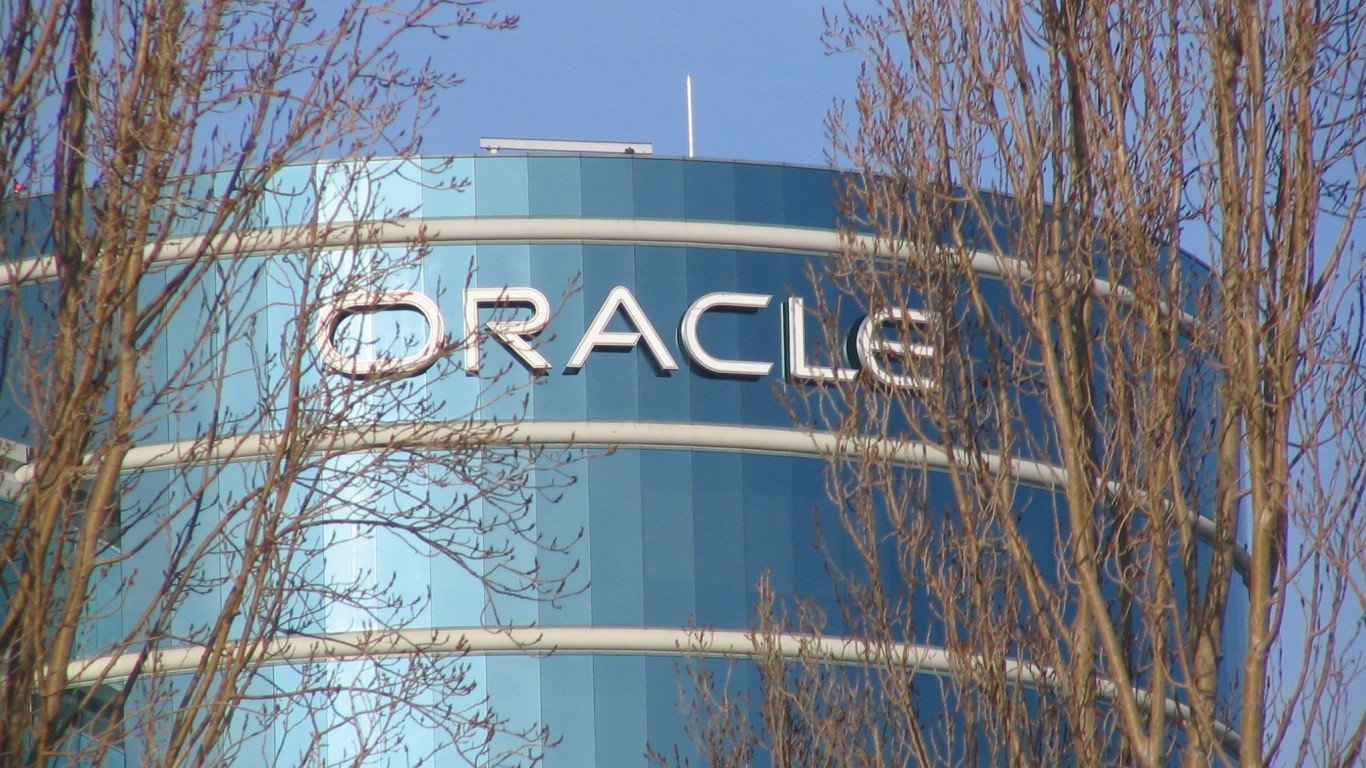
Oracle is the clearest public-market conduit for that OpenAI dollar. In Q4 FY26, Oracle disclosed remaining performance obligations of $638 billion, up 363% year over year, of which $75 billion is tied to prepaid or customer-supplied GPU arrangements. Cloud Infrastructure revenue reached $5.79 billion, up 93% year over year, and Oracle Multicloud AI Database grew 404% in Q4. Global GPU utilization sits at 97.5%, and management said “there’s still a massively higher demand than there is supply.”
The scale is real. So is the strain. Oracle delivered more than 1.2 gigawatts to customers in fiscal 2026, with Q1 FY27 delivery approaching nearly 1 gigawatt, on par with the entire prior four quarters combined. To feed that pipeline, Oracle plans to raise approximately $40 billion in FY2027 through debt and equity financing, including a $20 billion at-the-market equity program.
Market Reaction
Oracle shares are riding the demand story and absorbing the funding one at the same time. The stock is up 14.12% over the past week and 9.7% over the past month, trading at $161.28. Zoom out and the tone flips: shares are down 16.45% year to date and down 31.6% over the past year. The market is paying for backlog and marking down the cash-flow bill required to build it.

Bear Case
The bear case is written in the cash flow statement. Oracle posted Q4 free cash flow of negative $23.69 billion on capital expenditures of $55.66 billion. Total liabilities stand at $218.7 billion. FY27 net cash outlay for capex is guided to around $70 billion. That is the price of chasing a backlog that management says still cannot keep up with demand.
The strain extends across peers. CoreWeave (NASDAQ:CRWV) reported Q2 free cash flow of negative $5.743 billion, a net loss of $626 million, and interest expense of $640 million, up from $267 million a year earlier. Backlog reached approximately $104 billion as of June 30, 2026, with a stated target of more than 8 GW of active power by 2030. The buildout is being financed with debt, prepayments, and equity issuance.
The chip supply looks tighter still. NVIDIA (NASDAQ:NVDA) disclosed supply obligations of $279.00 billion, and CEO Jensen Huang told analysts “our entire supply chain is challenged. And everybody is really running flat out” and that “at this moment, we have supply for 70%. We have more supply than 70%, but about 70%. Our demand is much higher than that.” Broadcom (NASDAQ:AVGO) is shipping Jalapeno, OpenAI’s first-generation custom accelerator, with a planned deployment of 1.3 gigawatts in fiscal 2027 and management flagging that “land power and shell” dictates the timing of when capacity actually gets deployed.
OpenAI’s $750 billion pledge lands on a supply chain where four ecosystem leaders are already telling investors the constraint is physical: wafers, HBM, substrates, power, and shells. All of that buildout has to be powered, cooled, and connected by somebody, which is why we pulled together seven suppliers behind the AI data-center wave in a free report on the picks-and-shovels side of the boom. Oracle has booked the demand. It has not yet generated the cash to fund it internally.
Bottom Line
For long-term holders, the OpenAI number is a stress test for Oracle’s balance sheet, not a rubber stamp for it. Backlog conversion depends on gigawatts coming online at Abilene, Shackleford, Dona Ana County, Saline, and Port Washington, sites that begin customer delivery in the first and second halves of calendar year 2027. The next reading arrives with Oracle’s first quarter fiscal year 2027 earnings announcement, where investors will parse whether the RPO keeps compounding faster than the cash going out the door. Until it does, $750 billion is a demand signal and a funding problem in the same sentence.
Contact [email protected] for any questions or corrections.
After two decades of patrolling the dark corners of suburbia as a police officer, Rich Duprey hung up his badge and gun to begin writing full time about stocks and investing. For the past 20 years, he’s been cruising the markets looking for companies to lock up as long-term holdings in a portfolio while writing extensively on the broad sectors of consumer goods, technology, and industrials. Because his experience isn’t from the typical financial analyst track, Rich is able to break down complex topics into understandable and useful action points for the average investor. His writings have appeared on The Motley Fool, InvestorPlace, Yahoo! Finance, Money Morning, and, of course, 24/7 Wall St. He has been featured in both U.S. and international publications, including MarketWatch, Financial Times, Forbes, Fast Company, and USA Today.