Tim Cook: Apple “Reluctantly Raised Prices” as Memory Costs Spiral Out of Control
Tim Cook called it a hundred-year flood in memory pricing, and now Apple is betting a $2,400 foldable iPhone can keep margins intact while rivals have already lapped the category twice.

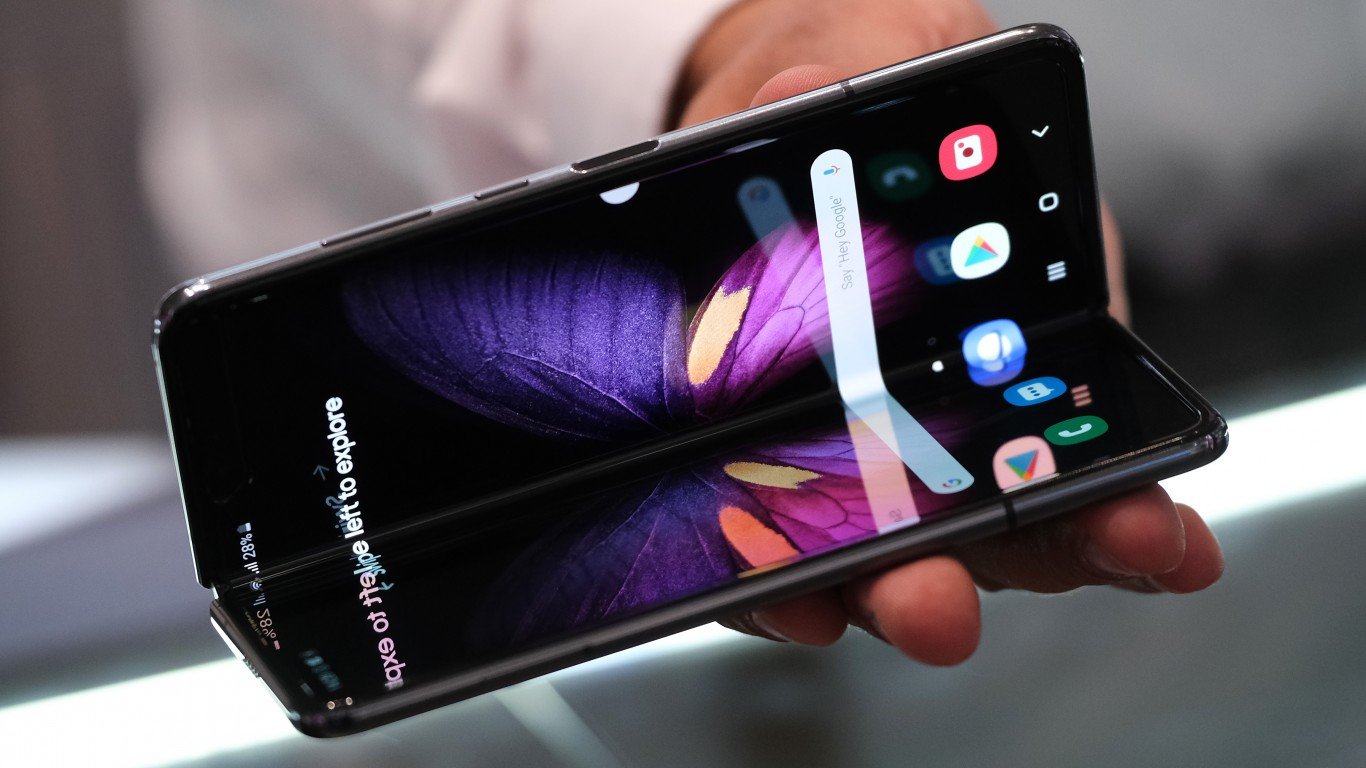
Apple’s (NASDAQ:AAPL | AAPL Price Prediction) product event lands tomorrow, and the story ahead of it has less to do with hardware romance than with margin arithmetic. On September 8, 2026, CNBC reporter MacKenzie Sigalos previewed a lineup she framed as a deliberate push upmarket, anchored by a foldable device reportedly called iPhone Ultra.
Apple enters the event with supportive fundamentals. The stock closed at $316.22, up 33.43% over the past year, and last quarter it reported $109.4 billion in revenue with company gross margin at 50.1%.

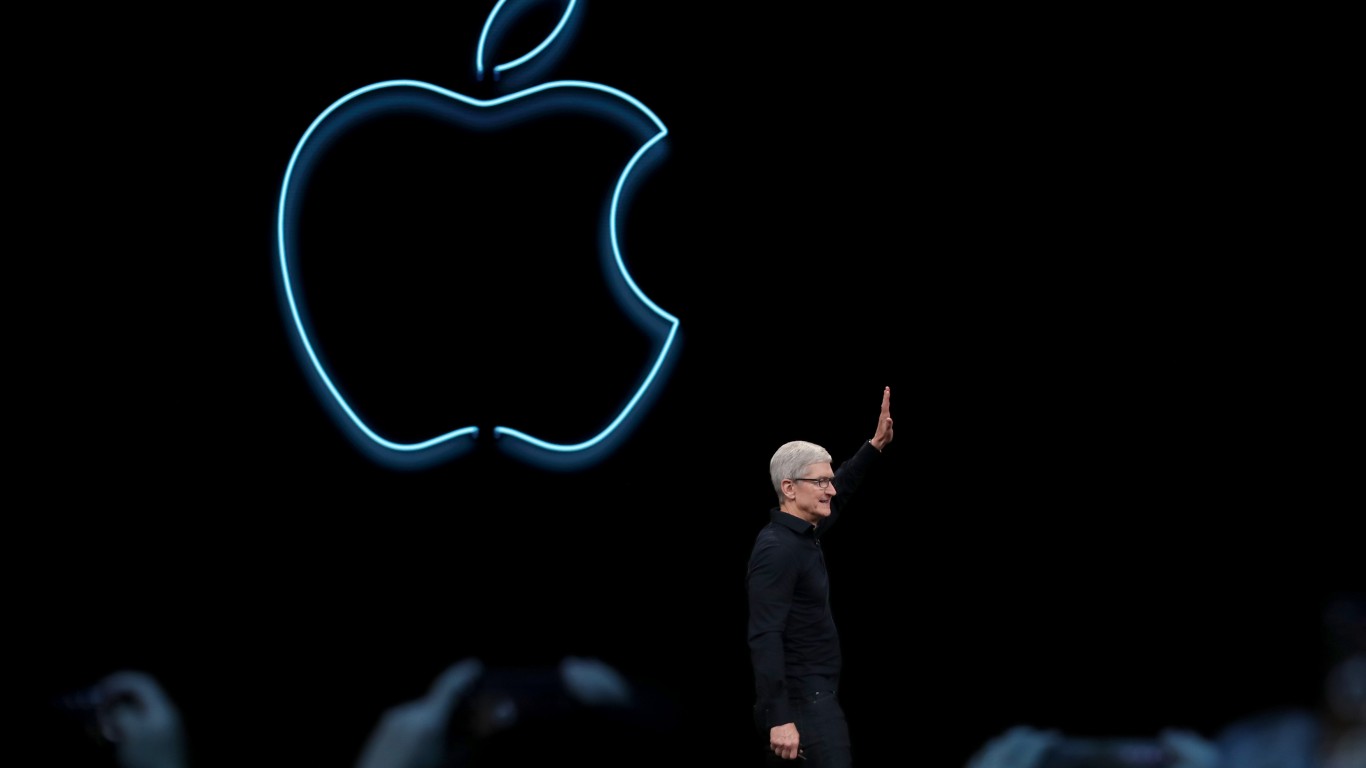
But those numbers arrive alongside a candid warning from Tim Cook about “a 100-year flood on the memory pricing”. Read the foldable as the response, and the event becomes a test of whether pricing power can carry the P&L while unit growth stays modest.
What Sigalos Says to Expect
Sigalos told CNBC viewers that Apple is expected to skip a regular iPhone 18 and lean into a foldable that would, per Sigalos, represent the first major iPhone design change in nearly a decade.
According to Sigalos, the iPhone Ultra is expected to start around $2,400 and top $3,000 at higher storage tiers. Early production is reportedly very limited, which Sigalos suggested could feed scarcity-driven demand.
She also cited a Morgan Stanley projection of $14 billion in December-quarter revenue tied to the foldable alone, according to CNBC. That figure remains a projection that depends on Apple hitting an aggressive ramp on a first-generation product.
A new A20 Pro chip is also expected, aimed at running more of Siri on device, according to CNBC. None of this is confirmed by Apple; treat every specification, price, and ship window as reported expectation until the keynote.
Pricing Architecture and the ASP Lever
Average selling price is the quiet variable that decides how this quarter looks. If mix shifts toward a $2,400 tier, iPhone revenue can grow even if the unit count barely moves, according to CNBC.
That matters because iPhone was $54.3 billion of last quarter’s revenue, still Apple’s biggest single line. A blended ASP lift compounds directly through a product’s gross margin that already ran at 40.1%.

Sigalos summarized the playbook plainly: push the mix toward more expensive devices, lift ASPs, and protect margins even with modest unit growth. Analyst models agree the top line has room to run, with the FY2027 revenue consensus at $526.35 billion.
The risk is that borrowed growth today makes next year’s comparison harder, an issue Apple has managed before but never at this price ceiling.
Passing Memory Costs to the Consumer
Cook already told investors Apple “reluctantly raised prices” because memory inflation was outrunning the company’s ability to absorb it. Sigalos reported that the street expects like-for-like price increases of $200 to $500 versus comparable iPhone 17 models.
Apple’s most recent 8-K shows why the pass-through matters: gross profit rose to $54.77 billion, and management flagged that memory costs will step higher again in the September quarter.
Charging consumers instead of eating the cost protects reported margin, but it strains the value proposition at the low end of the Pro line. Buyers, however, have real alternatives, including holding their current phone another year.
Cook was unusually direct about evaluating units, revenue, and margin together rather than optimizing any single line.
Competitive Pressure and the iPhone 17 Comp Problem, according to CNBC
Huawei and Xiaomi have sold foldables for years, particularly in Greater China, where Apple’s segment revenue was $18.82 billion last quarter. Apple is arriving late to a category rivals have already iterated through multiple generations.
Sigalos also flagged that Apple faces tougher iPhone 17 comparisons after that lineup drove 22% year-over-year iPhone growth. Lapping that result with a supply-constrained foldable is a demanding setup.
Services growth is also cooling, with the segment up 12% from a year ago at $30.7 billion, pressured by foreign exchange and App Store rule changes. A foldable buyer typically converts to higher iCloud and AppleCare spend, which helps explain the $2,400 anchor.
Retail sentiment reflects the ambivalence: Reddit’s most-upvoted AAPL thread this week asked whether a $2,500 foldable iPhone is really enough to move the stock.
Is AAPL Stock a Buy?


At a 41x trailing P/E and 2.14% free cash flow yield, Apple is priced for the pricing strategy to work. The margin math is defensible; the comparison math is the harder problem heading into FY2027.
Trading volume for price can hold for a cycle or two, especially with Services attach economics behind it, although it does borrow growth from later years if memory costs normalize and buyers resist another hike.
Given the defensive margin profile, the buyback pace of $62.09 billion over nine months, and neutral-to-positive sentiment at a composite 54.2, the risk/reward looks balanced heading into the event, with the setup skewed toward waiting to digest the keynote before adding exposure. I’d tag it a hold, as Apple is undergoing a transition with its new CEO.
Contact [email protected] for any questions or corrections.
Omor Ibne Ehsan is a writer at 24/7 Wall St. He is a self-taught investor with a focus on growth, cyclical, and dividend equities that have strong fundamentals, value, and long-term potential. He also has an interest in high-risk, high-reward investments such as penny stocks.