Apple’s New CEO Opened With a Foldable iPhone. The Real Story Is What He Cut
John Ternus opened his first Apple keynote with a folding iPhone, then made a quieter decision that signals a fundamentally different company than investors have owned for the past decade.


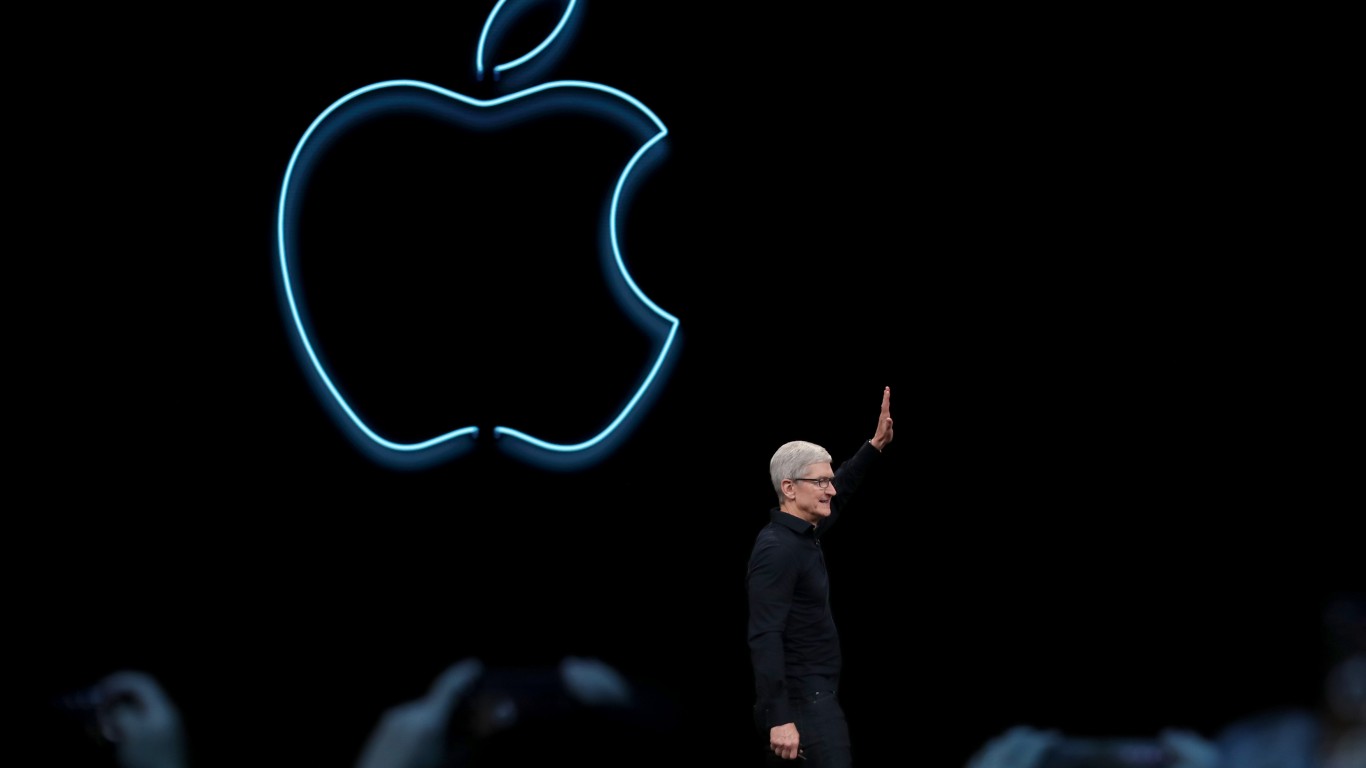
John Ternus walked onstage at Apple’s (NASDAQ:AAPL | AAPL Price Prediction) biggest hardware event of the year to introduce himself as chief executive, unveil a folding phone called the iPhone Duo, and outline what the next iPhone generation will not include. The consequential decision was to narrow the iPhone 18 lineup toward the Pro and Pro Max tier, according to CNBC.
That choice says Apple would rather earn more per unit than chase first-time buyers. It is a different company than the one investors have owned for a decade.
The company still generates enormous cash and commands a premium multiple, with shares at $315.34 and a market capitalization of roughly $4.6 trillion. What changes under Ternus is the mix, the pricing test, and a memory bill that made premium pricing a defensive move rather than a growth story.

A Premium-Only Signal in the Ternus Debut
The result is fewer models at higher prices.
The foldable itself was branded the iPhone Duo. Pre-event reporting placed the device in a two-thousand-to-three-thousand-dollar range.
iPhone revenue reached $54.25 billion in the June quarter, and management said the iPhone active install base hit an all-time high. Ternus is deciding which customers to serve first with a franchise that remains healthy.
Memory costs are mostly to blame.
The margin math shifted this year. Tim Cook told analysts on the July 30 earnings call that Apple was seeing “a 100-year flood on the memory pricing with exponential increases in memory prices”.
DRAM has three suppliers, and Apple expects even higher memory costs in the September quarter with a diminishing benefit from carry-in inventory. Products gross margin was 40.1%, and memory explained more than the entire sequential move in company gross margin.
Pushing volume through cheaper phones into a DRAM shortage compresses margin on purpose. Selling only Pro and Pro Max protects unit economics while the memory market resets.
Cook also said Apple “reluctantly raised prices” and evaluates pricing over the long term rather than a 90-day clock. That is the language of a company willing to trade near-term unit growth for a defensible income statement.
Growth Apple Is Willing to Skip
Apple’s installed base surpassed 2.5 billion active devices, and services revenue reached $30.7 billion in the June quarter with paid subscriptions past 1.5 billion. Every new user has historically flowed into that services annuity.
Dropping the cheapest iPhones puts a governor on that funnel. Samsung has sold folding phones for several generations, so the iPhone Duo is a high-end catch-up product rather than a category-defining device.
Deepwater’s Gene Munster argued the foldable matters less for its own unit share and more because it squeezes prices higher across the board. That is the premium anchor at work.
The risk is the replacement cycle. If Apple Upgrade financing and higher trade-ins fail to offset sticker shock, and if buyers of prior baseline iPhones defer or defect, the services growth engine slows two years from now.
Is AAPL Stock a Buy?
Apple trades at a trailing price-to-earnings ratio of 36x and a forward multiple of 33x, up 35.06% over the past year. That is a full price for a hardware company with a demand-forecast problem.

Q3 revenue rose 16.36%, EPS was $2.02, and the board authorized a fresh $100B buyback alongside $62.09 billion in nine-month repurchases.
Versus Samsung on folding hardware, Apple is late, and versus the broader replacement cycle, it is choosing margin over reach. Both bets are defensible for the next two years unless memory pricing normalizes faster than expected and rivals capture switchers Apple stopped courting.


I’d rate it a Hold. The premium pivot is likely the right call for fiscal 2027, but paying 33 times forward earnings for a company that just narrowed its addressable market leaves little room for a misstep.
Contact [email protected] for any questions or corrections.
Omor Ibne Ehsan is a writer at 24/7 Wall St. He is a self-taught investor with a focus on growth, cyclical, and dividend equities that have strong fundamentals, value, and long-term potential. He also has an interest in high-risk, high-reward investments such as penny stocks.